The pilea peperomioides, also known as the Chinese money plant, is a true gem. Pilea plants grows like crazy and then grows little babies so you can share it with friends! Each time I look at mine, I can’t help but smile. Pilea plants, or Chinese money plants, slowly spread through people sharing its “pups,” and within the last several years, it has made its way here to the States. I love learning/reading the history about this plant. Besides being an aesthetically pleasing plant, it’s also very easy to care for, and it’s quite hardy!
Choose the Right Pot and Soil
I find that repotting a pilea can really encourage growth-giving it some wiggle room will encourage the pups to spread out. I love the trusty terracotta pot since they are utilitarian and simple. Don’t get me wrong, you can use a plastic pot or a heavily glazed pot that has a drainage hole, but if you accidentally overwater your pilea, the terracotta will be more forgiving since it dries out a bit faster. To repot your pilea, pour some small stones on the bottom about 1-inch deep. The rocks aid with drainage and will help your plant not succumb to root rot. For soil, I use a quality, well draining potting mix. Your local greenhouse should have this, or you can pick some up at your local hardware store. My mix has a bit of fine sand in it.
Plant health hinges on drainage. Place a layer of rocks or stones at the bottom of the pot to improve drainage. Use a well-draining potting mix, ideally one with a light texture and a touch of sand for stability.
Watering: How Much and How Often
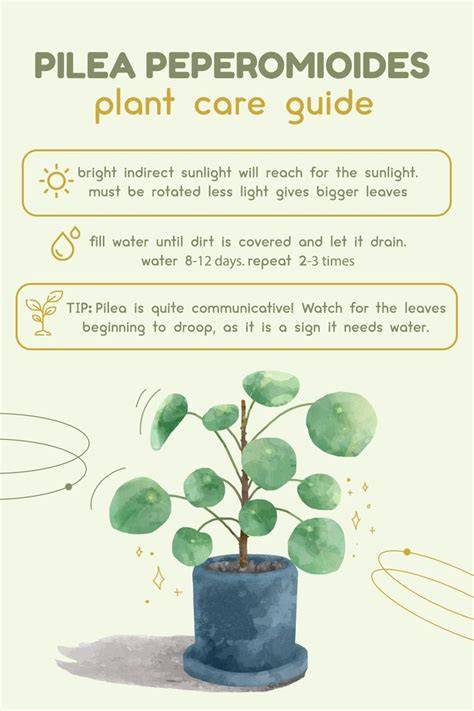
You have to water your pilea moderately, but do not overwater it. They like to dry out in-between waterings and they don’t like to stay soggy. If it feels dry to the touch, then I water it again. Let it dry out between waterings but be sure that it doesn’t get bone dry (although it is quite hardy and can handle it). If I check the plant and it still feels moist, I’ll wait a couple more days and check again. The other day, a friend texted me a picture of her pilea which was drooping quite a bit. We came to the conclusion that it needed to be watered. The plant will tell you what it needs and when it needs it, so just keep a watchful eye. I asked a local greenhouse about the pilea and watering and they said one of the only ways to kill it is by overwatering. When you water your pilea, never let it sit in water. Once you’ve watered it, make sure that you empty the excess water that catches in your bottom dish.
Watering should be thorough but infrequent. Allow the top layer to dry before the next drink, and never let the plant sit in standing water.
Light and Positioning
The pilea loves the light! Bright indirect sunlight is what it needs. What does that mean? Keep them indoors near a bright window (which is indirect light). I put mine in the brightest window in my house and they love it. It was trying to reach for the light and looked like it wouldn’t make it much longer. She put it outside under her covered porch where it gets lot of indirect light and it is thriving again. It is no longer long and leggy! I have run out of window space in the house and I’ve put some of my pileas outside under a covered porch. They seem to love the summer air and are growing beautifully!
Another tip about lighting is that the pilea will follow the light and start leaning towards it. I rotate mine each watering and that helps to keep them straight and balanced. Keeping the leaves dusted helps them get more light as well.
Propagation and Pups
One of the best parts of a pilea plant is how fast it reproduces baby plants! As it matures, little babies will pop out of the soil or grow from the stem (near the dirt). When the pups start growing, you can either cut them off of the mother plant or let them grow. It’s crazy how fast and full they’ll grow when you don’t make any cuttings. I also have a pilea that’s specifically for “sharing” that I will propagate and give to friends. I like to wait until the pup is at least three inches tall before I cut it. Give your cutting utensil a good rinse before cutting into your pilea. I once heard that you should think of pruning or propagating your plant like real surgery and always wash your tools beforehand. There is no need to tug or pull on the pup. Gently cut the pup where it meets the dirt and it should come right up. I prefer the water method because I like to see the roots growing through the glass. For best results, stick your little glass or vase in indirect but bright sunlight. If you want to give your pilea an extra boost of growth, you can fertilize in the spring and summer months. There is some debate on fertilizer, but I like to use a simple 10-10-10 formula. When I water, I pour a little liquid fertilizer into the watering can.
Fertilizing
Fertilize in spring and summer with a balanced formula such as 10-10-10. Use fertilizer sparingly and water well afterwards to prevent salt buildup in the soil.
General Care Tips
Looking for more plant tips? Plant in a well-draining potting mix. Place in bright, indirect light away from vents and drafty areas. Water thoroughly, but allow the soil to dry down between waterings. Feed regularly during the spring and summer months. Prune as needed or keep it shaped like a bonsai plant. Braid it from the bottom to give it its signature look.
Other Common Houseplants Mentioned
You most likely know it as that houseplant with the cool braided trunk and shiny green leaves, but the money tree-Pachira aquatica-hails from swampy regions of Central and South America, where it can grow up to 60 feet tall. Indoors, you can treat a money tree as a bonsai plant and prune it regularly, or let it grow to its maximum inside height of about 8 feet. Money tree goes by a few other monikers, including water chestnut and Guiana chestnut. Its monetary nickname comes from feng shui, which suggests that, when strategically positioned within the home, these plants bring their owner good fortune. While we can't make any promises on that (sorry!), with the right care, you'll at least have a successful houseplant.
How to Plant and Grow a Money Tree
Start with Miracle-Gro Indoor Potting Mix, a well-draining, nutrient-dense blend designed purposely for houseplants. This formula contains peat moss, which money tree enjoys thanks to its loamy nature. To increase the feng shui energy, you want to make sure you're keeping your plant in prime condition. Repot your money tree every 2 years to give it fresh soil and a slightly larger home.
Watering, Light, and Pruning for Money Tree
Money trees prefer bright, indirect light. Place yours near, but not right in front of, a sunny window. If the leaves look scorched, it's getting too much sun, and yellowing leaves means it's not getting enough. Keep it away from vents or drafty areas where temps fluctuate often. Money trees don't take too kindly to rapid change, so only move yours when you need to. Their swampy origins mean money trees love humidity. You could place yours in a bathroom that gets natural light, but note, this isn't exactly feng shui. To recreate other steamy conditions indoors, put a tray filled with pebbles and water beneath the pot, or spray your plant with a mister when you water. When it's time to water your money tree, water deeply. You want to give it enough H2O that it runs out the bottom of the pot. However, it's best to let the top 2 inches of soil dry down before watering again to avoid root rot. Fertilize with an all-purpose plant food weekly during summer and every other week in fall and winter. If you're planning on growing your money tree into a tree, it needs very little pruning. Simply remove any dead or unwieldy branches as needed. For a bonsai look, trim the top leaves as it reaches the desired height. Braiding is a popular feature-continue the pattern as it grows, pruning back any side shoots along the way.
If you're starting a new plant from a seed or cutting, you’ll need to braid your own money tree. With at least 3 stems that are green, flexible, and more than 14 inches long, start the braid from the bottom, loosely tie the top, and let the plant grow. Most braided money trees will grow straight, vertically; to keep it balanced, attach stakes in the soil opposite each other, then remove later as the plant strengthens. You can propagate money trees by cutting a 6-inch section with two or more leafy stems and placing it in a rooting medium until roots form.
Final Thoughts
Money trees make for eye-catching houseplants, whether you grow them tall or prune them back. And even better, they're relatively low maintenance.