There is a saying that the best time to plant a tree is twenty years ago and the second best time is as soon as possible. If you have been thinking about a tree planting project, consider using seedlings from one of Kentucky’s state-run tree seedling nurseries. These professional state-run tree nurseries grow their tree seedlings by planting seeds that have been regionally collected and planted in seedling beds which are maintained for one to three years depending on the species. These seedlings are then gently lifted out of the ground during the winter and made available to Kentucky landowners from January to April.
In total, the Kentucky Division of Forestry grows 51 different varieties of trees. The wide selection of tree seedlings includes: conifers, fruit producers (including pawpaws), trees in the legume family, nut producers, and seed producers. One-year-old seedlings can be purchased in bundles of 10 for $35, 5 bundles of 10 for $55, or bundles of 100 for $70. In addition, a number of the 2 and 3 year old tree seedlings are available for a small price increase. These tree seedling bundles are shipped free within the state of Kentucky and all prices include sales tax. Availability of tree seedlings is on a first-come, first-served basis and is updated frequently so check back if your preferred seedlings are not available at the moment.
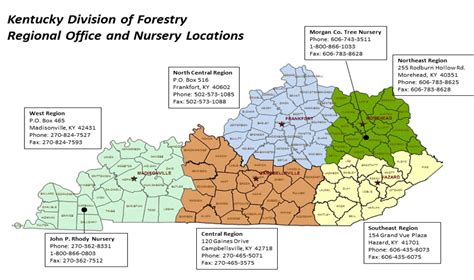
Submitted by William M. The KDF’s first nursery was started 103 years ago and was located at what is now the Louisville Fair Grounds. The current two nurseries in use are located in Marshall and Morgan County and have been in operation for approximately 50 years. The seedlings grown and sold from these nurseries throughout the years have enabled citizens to carry out reforestation efforts throughout the Commonwealth. Morgan County nursery main entrance sign. John P. Rhody Nursery sign. Persimmon at one of the nurseries. Oakbed at one of the nurseries. Rhodyash in one of the KDF nurseries. One of the seedlings from the KDF nurseries.
Call (811) to have your underground utility lines marked. Are you looking for something a little taller? Do you have a lot of space and want shade? Nursery seedlings are priced quite reasonably, due to the fact the KDF nurseries are the only large scale producers of bare root seedlings in the state. This means that no dirt is attached to the roots of the seedlings. “We really want people to take advantage of this great program we have, where consumers can get affordable trees,” said Gracey. “If you are eyeing a particular variety you should get them today. You may also call your local forestry regional office to learn more about species and price.
Hi Aubrey! Fruit trees are great - but take a while, especially if starting them from seed or seedlings. Larger trees that might start producing earlier can be pricey. So be patient, do your research, and find as local sources as possible. Louisville area, Southern Indiana and central KY in general have some options, look up Peaceful Heritage Nursery, as one example. If you are looking for easy to grow, cheap calories try first an early round of spring potatoes. The process of "hilling" (basically mulching) them while growing and digging them out for harvest will help you get to know your soil, and likely improve it's consistency. From there you could even plant sweet potatoes in the same spot to get a fall harvest, too. I'm trying it in a section of my garden this season.
But a better option would be sowing a legume based cover crop mix after the spring potato harvest to let grow thru summer until you feel like mowing it down or it dies off. I have found both regular and sweet potatoes do well even in not-so-great, virgin soils. I'm also giving sunchokes a try this year. Then after all that, apply more mulch (compost if you can) and let it sit idle all winter. Come spring next year, you'll be ready to put in some more perennial based stuff like fruit trees and shrubs, and you'll have some experience and time for research under your belt by then to make some hopefully good choices on types/varieties, placement etc.
Of course you could always just start sticking some baby trees in the ground over the next few weeks, along with any other woody cuttings just to see what happens, if you are able to get your hands on a supply for free or cheap it never hurts to try - sometimes things just live! Like, go find an Elderberry bush, take cuttings, place them in a jar of water or damp container of soil until they root out and walla!! Good luck, keep digging around here on permies, and in your new yard, congrats Kentucky woodlands are, generally, able to naturally regenerate themselves following a timber harvest or other disturbance through root sprouting and the growth of tree seeds, seedlings, and saplings.
However, you may be interested in adjusting the species composition by planting site appropriate species or converting an old field into a woodland through planting trees. The first step is to seriously consider what you plan to accomplish with the planting so that you can select the appropriate species. For example, you would not want to plant a yellow-poplar, Kentucky’s state tree, under a powerline or very close to your house as they will quickly outgrow their space. Also, if you are doing a large scale tree planting project try to plant a diversity of tree species that can all meet your goals. Not only should the tree match your goals but it should also match the site where it will be growing. Another important factor to consider is competition control around your newly planted trees-this is an important process to address so that your new trees will have the best chance at survival. Consult with your forester or county extension agent to get recommendations and a soil test to ensure the trees you select will not only meet your goals but are likely to be successful. Check out the links and publications on this page for more information about planting trees.
- Utilize regionally collected seed sources to ensure adaptation to Kentucky conditions.
- Choose from diverse categories: conifers, fruit producers, legume family, nut producers, and seed producers.
- Purchase according to bundle sizes that fit your project scale, noting prices and free state-wide shipping.
- Plan timing: winter lifting and spring availability align with landowner planting windows.
- Assess site conditions and space to avoid overgrowth of fast-growing species near structures or lines.
- Engage with local foresters or extension agents for species selection and soil testing.
Availability of tree seedlings is updated frequently, so check back if your preferred seedlings are not available at the moment. The Kentucky Division of Forestry operates two main nurseries in Marshall and Morgan County, with a history of supporting reforestation across the Commonwealth.