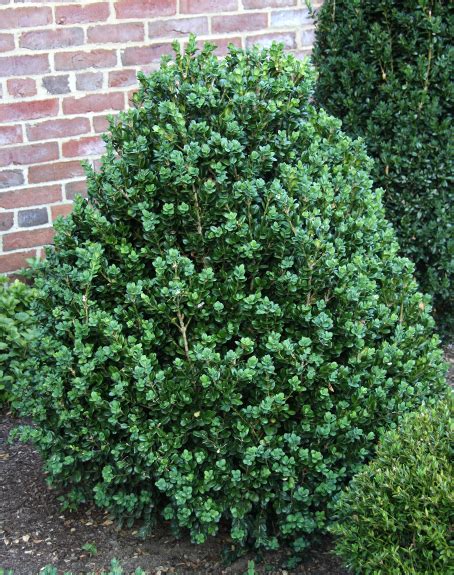
Evergreens, both trees and shrubs, enliven the winter landscape, providing form, texture and color during a time when our landscapes are sparse. Boxwoods are a common evergreen shrub used in many landscapes, prized for their dense compact shape and fine-textured, tidy, dark green foliage which is resistant to rabbit and deer feeding. However, boxwoods do have some drawbacks. First, their small dark green leaves are beautiful in summer, but can turn yellow or brownish in winter. Finally, boxwoods are more challenging to grow well in Nebraska due to frequent problems with winter hardiness and winter desiccation.
Boxwood species and hardiness by zone
Nebraska encompasses USDA winter hardiness zones 4b, 5a, 5b and 6a, with the warm southeast corner of the state rated as zone 6a and the norther tier of counties our coldest area at zone 4b. Annual extreme minimum temperatures, averaged from 1991 to 2020, for each zone are listed below. Notice there is a 20-degree difference in minimum temperature between zones 4b and 6a, so not all boxwood cultivars can be used throughout the state. Korean boxwood, Buxus sinica var. insularis (formerly B. microphylla var. koreana), is the most winter hardy species and reliably survives into Zone 4. However, Korean boxwood’s foliage tends to turn yellowish-brown in winter reducing its attractiveness. Common boxwood, B. sempervirens, is the next best choice for cold tolerance and can be winter hardy to Zone 5. Leaves are dark green above and light or yellowish green below in all seasons. However, new growth is very sensitive to cold temperatures, in either fall or spring. Plants should not be pruned too late in summer, enabling them to develop new growth which will be damaged by early fall frosts. Finally, littleleaf boxwood, B. microphylla, is only reliably winter hardy to Zone 6. Foliage is medium green in summer, changing to yellow/green/brown in winter.
To strive a good balance between cold hardiness and attractive winter foliage, look for cultivars created using Korean boxwood as one of the parents, to impart a higher level of cold hardiness, and common boxwood as the second parent for improved winter foliage color. Notable cultivars include Chicagoland Green, Green Velvet, and Green Mountain, among others. Be very careful when selecting other cultivars, especially littleleaf boxwood cultivars. It's unlikely they will survive or perform well given Nebraska’s cold, dry windy winter conditions. Plants perform best in a full sun to partially shaded location with well-drained soil. Boxwoods can grow in almost full shade, but shaded plants will be less vigorous, grow more slowly and develop a more open, sparse canopy of leaves.
Site, moisture, and general care
To prevent foliage desiccation in summer and winter, provide even soil moisture and maintain a 2-3” layer of organic mulch around the base of each plant. Make sure plants are well-watered in fall and are fully hydrated going into winter to minimize desiccation problems. Boxwood, “Man’s Oldest Garden Ornament,” was introduced to North America from Europe in the mid-1600s and reached its peak popularity in the United States in the 19th century. While the most familiar forms are what are commonly referred to as “American” (Buxus sempervirens) and “English” (Buxus sempervirens ‘Suffruticosa’) boxwood, there are 97 species and 261 valid cultivars, each exhibiting a wide variety of forms and foliage.
It is a popular myth that there are two kinds of boxwood - Buxus sempervirens (American) and Buxus sempervirens ‘Suffruticosa’ (English). Currently there are approximately 217 registered cultivars and about 148 different cultivars and species that can be obtained commercially. Different boxwood plants and species vary tremendously in size, shape, leaf characteristics, growth rates, and hardiness. Among the many commercially available boxwood, the following are most frequently found (in no specific order): B. harlandii, B. microphylla ‘Compacta’, B. microphylla var. japonica, B. sempervirens ‘Elegantissima’, B. sempervirens ‘Graham Blandy’, B. sempervirens ‘Suffruticosa’, B. sempervirens ‘Vardar Valley’, B. sinica var. insularis ‘Justin Brouwers’, B. sinica var. insularis ‘Winter Beauty’, B. sinica var. As boxwood blight begins to dominate, more and more attention is being paid to cultivar selection. All boxwood species, varieties, and cultivars are susceptible to this disease. However, their susceptibility levels differ greatly with some species and cultivars being much more susceptible than others.
Boxwood by zone: best varieties and growth characteristics
Boxwood plants may be used as individual specimens, hedges, parterres and groups. Special uses include growth in containers, topiary, and bonsai. The Box Tree Moth is a pest to watch for; report findings and educate others as a critical step in preventing spread. As professionals and home gardeners, we play an important role. There is no regular fertilization schedule; the most reliable guide is soil testing. The optimum soil pH for boxwood is between 6.8 and 7.5. If the pH is below the recommended range, add dolomitic lime, which persists in the soil for 4-7 years depending on application rates and soil type. Soil test recommendations can be obtained from your County Extension Service.
When selecting varieties by zone, consider cold hardiness and winter foliage color. Korean boxwood is the most winter hardy species and reliably survives into Zone 4, albeit with yellowing foliage in winter. Common boxwood is winter hardy to Zone 5, but new growth is sensitive to cold and pruning should be timed to avoid early frosts. Littleleaf boxwood is only reliably winter hardy to Zone 6. For balance, cultivars with Korean boxwood as a parent and common boxwood as the second parent are recommended to improve hardiness and winter color.
Specific cultivars with good winter color and reliability include Chicagoland Green, Green Velvet, Green Mountain, and Be very careful with littleleaf boxwood cultivars in colder areas. In Nebraska, full sun to partial shade with well-drained soil is ideal, though boxwoods can tolerate shade with slower growth and a more open canopy. A maintained mulch layer and even soil moisture help prevent desiccation in extreme seasons. In addition, winter bronzing can occur; bronzing is a natural winter color change in some varieties and does not necessarily indicate damage unless leaf color remains bronzed into spring.
Planting, spacing, and establishment
Boxwoods can be planted in spring or fall depending on climate; spring planting is generally preferred to allow establishment before heat of summer. For hedges, space plants at half their mature width; for example, if the mature width is 4 feet, space centers 2 feet apart. For stand-alone specimens, allow more space around the plants for good air circulation. Dig a hole twice as wide and slightly deeper than the root ball, loosen roots if root-bound, and position the crown slightly above soil level to facilitate settling and drainage. Backfill with a soil-compost mix and tamp gently. Water thoroughly after planting and maintain even moisture to encourage deep root growth during the first year.
Soil should be well-drained; boxwoods tolerate neutral to slightly alkaline soils and do not require highly acidic conditions. Mulching helps suppress weeds, retain moisture, insulate the root zone, and reduce disease pressure by limiting water splashing. Container plantings need high-quality potting mix and consistent irrigation through the growing season, with attention to drainage and root health.
Care through the seasons: pruning, feeding, and winter protection
Pruning is a common practice for boxwoods; most respond well to trimming and can be shaped into formal hedges or left to grow naturally. Sprinter and NewGen Freedom are fast-growing cultivars that require spring trimming to prevent flopping. Avoid pruning into thick stems; cut close to the thicker stems to minimize bare holes and ensure quick fill-in later. Fertilizing is usually unnecessary; if needed, apply in spring and avoid late summer or fall to discourage tender new growth susceptible to winter burn.
Winter care emphasizes avoiding winter burn and drought stress. Site selection and shelter from harsh winter winds are important. Ensure adequate watering until the ground freezes and apply a mulch layer to insulate the soil and retain moisture. Bronzing is a winter color change that may occur in some varieties; if bronzing persists into spring, it may indicate winter damage.
Boxwood diseases and pests
Boxwood blight is a significant concern, caused by a fungus that thrives in warm, humid locations. It presents as brown or black spots on foliage, defoliation, and stem dieback. Prevention focuses on healthy plants from reputable sources, good air circulation, proper drainage, and avoiding overhead watering. Plant blight resistant boxwoods, such as NewGen Freedom and NewGen Independence, which have shown excellent resistance in trials. If blight is suspected, remove the entire plant and debris, disinfect tools, and monitor surrounding plants; diseased plants should not be composted. Mulch around beds can help limit water splash and disease spread.
Pests commonly encountered include leafminer, mites, and psyllid. Nemotodes and some fungi may infect boxwood but are usually not major threats. Boxwood decline tied to Paecilomyces buxi is limited to certain cultivars and is not as widespread as in the past. Box tree moths (BTM) have appeared in North America and require identification and reporting to help prevent spread; early action is essential to containment.
Typical boxwood varieties by zone and growth habit
Common boxwood species and cultivars to consider include:
- Buxus sempervirens (Common/American boxwood) - Hardy to Zones 5-9; dense, compact habit with dark green foliage; often used for formal hedges.
- Buxus sempervirens ‘Suffruticosa’ (English boxwood) - Classic formal hedge, slow growth, small leaves; susceptible to certain diseases in some microclimates.
- Buxus microphylla (Littleleaf boxwood) - Compact habit, 2-4’ tall and wide; good for hedges and topiary.
- Buxus sinica var. insularis (Korean boxwood) - Highly winter hardy, Zone 4 through 9 in some selections; foliage can bronzing in winter; some cultivars more drought and wind tolerant.
- Hybrid and cultivar options include Chicagoland Green, Green Velvet, Green Mountain, North Star, Sprinter, and Winter Gem, each with distinct growth rates, leaf color stability, and hardiness profiles.
In regions with cold winters, selecting cultivars with robust winter color and cold hardiness is crucial. For example, Green Mountain is upright and pyramidal but slow-growing, while Green Velvet offers deep green foliage through winter with a rounded dense habit. North Star provides a compact globe, ideal for low hedges in zones 5-9. Sprinter and NewGen Freedom are faster growers that require annual pruning to maintain shape. Winter Gem (Buxus microphylla japonica ‘Winter Gem’) is a hardy option suitable for smaller hedges with bronze winter foliage that returns to green in spring.
Practical growing tips and uses
Boxwoods are versatile: they work as hedges, foundation plantings, edging, container specimens, topiary, and group plantings. They pair well with colorful perennials, bulbs, and shrubs to create year-round structure in the landscape. In the garden, they can create formal garden rooms when used as hedging or parterres, or provide a calm, evergreen backdrop for seasonal color.
Careful cultivar selection helps reduce disease risk and tailor growth habit to site. The Boxwood Society and extension services provide cultivar evaluations for blight resistance; however, performance can still vary by environment, so observe new plantings closely and adjust care accordingly.
Planting and care checklist
- Choose a site with 4-6 hours of direct sun and well-drained soil; some shade is acceptable but growth will be slower.
- Prepare the planting hole: twice as wide as the root ball and slightly deeper; loosen roots if pot-bound.
- Amend soil if heavy clay or poor drainage; mix in compost to improve structure and fertility.
- Set the crown slightly above soil level; backfill and water deeply to settle soil around roots.
- Mulch 2-3 inches to retain moisture and prevent disease spread from soil splash.
- Water regularly through the first year; after establishment, boxwoods become relatively drought-tolerant.
- Prune in spring after new growth has emerged but before it hardens off; avoid heavy pruning into thick stems.
- Fertilize sparingly in spring if growth is slow or leaves show nitrogen deficiency, but avoid late-season applications.
- Monitor for pests and diseases; remove and dispose of infected material and sanitize tools to prevent spread.
Usage ideas and practical considerations by zone
In colder zones (4b-5b), emphasize Korean boxwood or other highly winter-hardy cultivars with good winter color and wind protection. For zones 6a-8, a broader selection including common boxwood, English forms, and variegated cultivars can be utilized, with attention to sun exposure and drainage. In hot, dry climates, provide afternoon shade or reflect on drought-tolerant cultivars and ensure consistent moisture, especially in containers.
Boxwoods are an enduring garden staple, valued for their evergreen presence, deer resistance, and versatility. Proper cultivar selection, site preparation, and winter protection are the keys to thriving boxwood plantings across USDA hardiness zones.