Camellia sinensis leaf extract is an extract of the leaves of the evergreen shrub, camellia sinensis. Different type of extracts are obtained from the leaves and leaf buds of this shrub, white tea, yellow tea, green tea, oolong, and dark tea. Origin Camellia sinensis leaf extract is obtained by pressing or distilling the oils from the tea leaves. The leaves at different stages of the plant’s life are harvested for different types of tea extracts like white, green, black, etc.
What is Camellia Sinensis Leaf Extract used for in skincare?
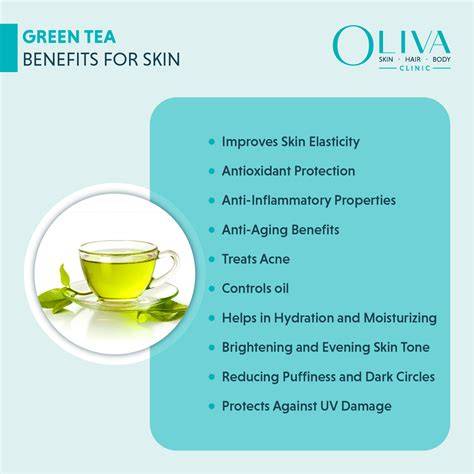
Camellia sinensis leaf extract has been used in the cosmetics industry for long due to its multiple positive effects on skin health. The extract contains four different types of catechins: epigallocatechin gallate (EGCG), epigallocatechin (EGC), epicatechin gallate (ECG), and epicatechin (EC), out of which EGCG is the most potent. Its antioxidant potential may protect the skin from the harmful UV rays that cause sunburn and premature aging. It also soothes dry skin. Topical application of this extract reduces the scaling of the skin and improves its elasticity and hydration. It can be used as an anti-cellulite agent due to its caffeine content. This extract is used as a conditioning agent, emollient, humectant, and astringent in personal care products. According to the Cosmetics Ingredient Review (CIR), it is safe up to 0.86% in leave-on products and up to 1% in rinse-off products.
What does Camellia Sinensis Leaf Extract do in a formulation?
ANTIMICROBIAL | ANTIOXIDANT | ASTRINGENT | EMOLLIENT | HUMECTANT | SKIN CONDITIONING | UV ABSORBERS.
In addition to offering benefits to your body when consumed, Camellia sinensis has many things to offer to your complexion when applied topically. Much like when consumed, applying Camellia sinensis to your skin offers natural soothing benefits. This is crucial when it comes to fighting off visible signs of aging, as well as reducing redness and supporting your skin’s natural renewal process. Because your skin’s collagen production will naturally reduce as you age, it’s important to nourish and protect your skin early on so you don’t accelerate this process!
Camellia sinensis is also shown in studies to promote a smoother-looking skin texture. If you struggle with blemishes or rough patches that detract from your complexion, Camellia sinensis may help to even things out and restore your skin’s overall texture. Additionally, Camellia sinensis has qualities which promote skin hydration, both in the short and long term. While it’s no replacement for a powerful barrier cream, it’s helpful to use skincare ingredients that are beneficial on multiple levels. While you may not be reaching for a Camellia sinensis leaf extract product specifically to hydrate your skin, it’s reassuring to know that your moisturizer has a bit of backup elsewhere in your routine.
Basically - Camellia sinensis leaf extract is an all-around heavy-hitter when it comes to keeping your skin nourished and youthful. No matter what your skincare priorities are, finding a product that includes Camellia sinensis as a base can go a long way toward helping you meet your skincare goals (which is why we use it in place of plain water in our own skin-nourishing formulas!).
How Do You Use Camellia Sinensis Leaf Extract in Skincare?
While upping your consumption of green tea or other types of tea may offer other benefits to your body, when it comes to your complexion, you’re going to want to add products to your skincare lineup that provide your daily dose of Camellia sinensis topically. There are a couple of different ways to go about adding Camellia sinensis leaf extract into your routine. One way is to make it the focal point of one of your products. If your main goal is to reap the benefits of Camellia sinensis, or you live somewhere particularly bright and sunny and are wary of sun damage even with SPF, then you’ll want to find a product that makes green (or another type of) tea extract the star of the show. Such products should have a high concentration of those ever-helpful polyphenols, so it’s important to give the label of any prospective product a good read. A really concentrated Camellia sinensis product will highlight green tea as a main ingredient, and should combine this rejuvenating powerhouse with other powerful natural ingredients. Alternatively, the benefits of Camellia sinensis leaf extract work well as a complimentary ingredient, like a base, alongside other nourishing botanicals - it doesn’t have to be the focus to benefit your skin!
Incorporating Camellia Sinensis Leaf Extract into routines
For instance, a serum that includes Camellia sinensis leaf extract can be used before moisturizer, after cleansing, in the morning and evening. If you’re using a serum that incorporates Camellia sinensis leaf extract, you can work it into your routine before you moisturize, but after you cleanse your face. Just work a couple of drops of your chosen serum into clean skin in the morning before you moisturize and apply your SPF, and then again in the evening after washing your face and before your night cream.
Fermentation enhances the bioavailability of green tea’s bioactive compounds, allowing for deeper epidermal penetration and increased antioxidant efficacy. Microbial fermentation transforms the chemical landscape of the standard Camellia Sinensis Leaf Extract. During this biotransformation process, microorganisms like Saccharomyces or Lactobacillus Ferment break down complex plant polymers into smaller, low-molecular-weight metabolites. Polyphenols, specifically epigallocatechin gallate (EGCG), become more concentrated and stable through fermentation. These molecules act as potent antioxidants by donating electrons to neutralize free radicals generated by UV exposure and pollution. Humectant properties are naturally amplified in this ferment. The process often yields amino acids and organic acids that work in tandem with Glycerin and Aqua to draw moisture into the skin. Fermentation technology has roots in traditional East Asian medicine and skincare, where “aging” ingredients was a common method to boost potency. In modern cosmetic chemistry, this biotech approach ensures that the high caffeine content of green tea is delivered without the potential for localized dehydration.
Dermatological safety assessments by the Cosmetic Ingredient Review (CIR) have evaluated Camellia sinensis leaf-derived ingredients and concluded they are safe for cosmetic use in both leave-on and rinse-off applications. Studies indicate that the fermentation process does not introduce harmful byproducts when performed under controlled laboratory conditions. Green tea's primary active compound is EGCG (epigallocatechin gallate), a catechin polyphenol and one of the most potent antioxidants identified in botanical research. EGCG neutralizes reactive oxygen species by donating hydrogen atoms from its multiple hydroxyl groups - essentially intercepting free radicals before they can damage cellular structures like DNA, lipids, and proteins. Beyond antioxidant defense, EGCG targets the enzymatic pathways behind visible aging. UV exposure upregulates matrix metalloproteinases (MMPs), the enzymes responsible for breaking down collagen and elastin in the dermal matrix. EGCG counteracts this by inhibiting MMP activity, which helps preserve the structural proteins that keep skin looking firm and supported. Simultaneously, EGCG downregulates NF-κB signaling - a central inflammatory pathway - reducing the production of pro-inflammatory cytokines like IL-6 and TNF-α.
Safety and tolerability
Green tea leaf extract is well-tolerated by most skin types, including sensitive and reactive complexions. It has a long history of safe topical use and is not associated with significant irritation or sensitization at typical concentrations used in skin care. As with any botanical, those with known allergies to Camellia sinensis should avoid products containing it. The CIR safety assessments support safe use in leave-on and rinse-off products at typical usage levels.
Supporting active ingredients and formulations
Green tea is not a single-compound ingredient. Alongside EGCG, it contains other catechins (EGC, ECG, EC), caffeine, and L-theanine, each contributing to its broad-spectrum profile. This polyphenol diversity means green tea addresses oxidative stress from multiple angles. In the context of brightening, antioxidants like those in green tea neutralize the free radicals that trigger excess melanin production - preventing new pigmentation from forming rather than fading what already exists. Not all antioxidants work the same way. Green tea's strength lies in broad-spectrum defense - it scavenges ROS, inhibits collagen-degrading enzymes, and suppresses inflammatory signaling all at once. Green tea (EGCG): Broad-spectrum ROS scavenger + MMP inhibitor + anti-inflammatory. Vitamin C (ascorbic acid): A direct cofactor in collagen synthesis and a tyrosinase inhibitor that reduces existing pigmentation. Vitamin E (tocopherol): Lipid-soluble, so it protects cell membranes where water-soluble antioxidants cannot reach. Green tea leaf extract is often used in daytime products, where it pairs with SPF actives in routines designed to support skin's appearance against environmental exposure.
Applications and product use
Green tea leaf extract is a versatile ingredient in serums, moisturizers, sunscreens, and masks. It is commonly included to support hydration, soothe irritation, provide antioxidant protection, and assist in maintaining a more even skin tone. When used in serums, it can enhance soothing effects and amplify overall skin resilience, especially when layered with other actives like vitamin C, vitamin E, and SPF.
Green Tea Extract for Weight Loss: The Scientific Evidence
Sample data and notes
1. Tamargo A, Ceballos L, Lomba L, et al. Applications of Tea (Camellia sinensis) and Its Active Constituents in Cosmetics: A Review. Molecules. 2. Bertrand V, André V, Deloche S, et al. Pleiotropic effects of a Camellia sinensis leaf extract on in vitro and in vivo skin health characteristics. International Journal of Cosmetic Science. Fermentation enhances the bioavailability of green tea’s bioactive compounds, allowing for deeper epidermal penetration and increased antioxidant efficacy. Microbial fermentation transforms the chemical landscape of the standard Camellia Sinensis Leaf Extract. During this biotransformation process, microorganisms like Saccharomyces or Lactobacillus Ferment break down complex plant polymers into smaller, low-molecular-weight metabolites. Polyphenols, specifically EGCG, become more concentrated and stable through fermentation. These molecules act as potent antioxidants by donating electrons to neutralize free radicals generated by UV exposure and pollution. Humectant properties are naturally amplified in this ferment. The process often yields amino acids and organic acids that work in tandem with Glycerin and Aqua to draw moisture into the skin. Fermentation technology has roots in traditional East Asian medicine and skincare, where “aging” ingredients was a common method to boost potency. In modern cosmetic chemistry, this biotech approach ensures that the high caffeine content of green tea is delivered without the potential for localized dehydration. CIR safety assessments confirm safety for leave-on and rinse-off products; studies indicate fermentation does not produce harmful byproducts when controlled.
Ключевые идеи для применения
- High polyphenol content provides antioxidant protection against UV-induced damage and environmental stress.
- EGCG and other catechins contribute to anti-inflammatory and anti-aging effects.
- Fermentation can increase bioavailability and humectant properties, enhancing efficacy.
- Safety profile is favorable at typical cosmetic concentrations with rare sensitivities in tea-allergic individuals.