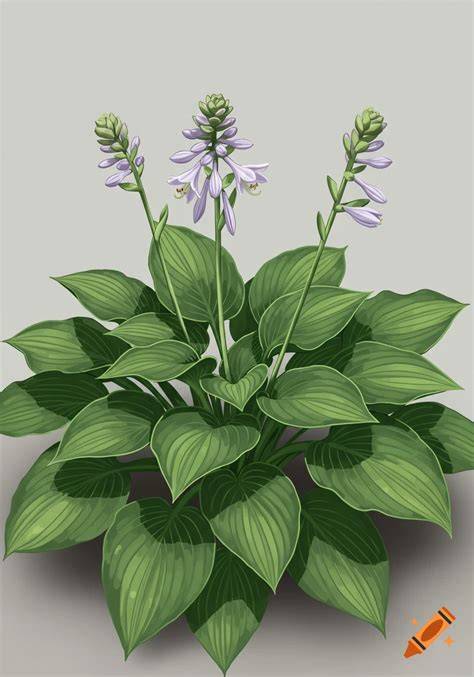
Hostas are a very popular perennial because of the wide variety of leaf shape, size, texture and color. The bell-like flowers hover over the top of the plants and add a delicate beauty to the landscape. Almost everyone who has plants has encountered the process of propagation. Propagation is the process of creating a new plant from an existing one.
Types of propagation
There are two general types of propagation: sexual and asexual. Sexual propagation involves pollination of the plant and fertilization of an egg with sperm to create a seed. If the seed germinates successfully, it will produce a new plant. Asexual propagation involves taking another part of a plant (stems, roots and/or leaves) to produce a new genetically identical plant or plants. Both methods have their advantages and drawbacks.
Sexual propagation produces genetically varied plants, which decreases the risk of spreading disease and may make them more adaptable to changing growing conditions. However, some of these plants may have undesirable traits and may take longer to flower and mature. Asexual propagation gives the cloned plant a head-start in reaching maturity and usually perpetuates the desired traits of the parent plant.
Which method to use?
The best methods of asexual propagation (cuttings, layering, division, budding/grafting or tissue culture) vary from plant to plant based on its growth habit. Some plants can be propagated by only one method or one method produces a plant sooner than another. For vegetable and annual flowering plants, the fastest method is to sow the seeds, which mimics the natural way these plants reproduce. Tropical plants and houseplants are often propagated by rooted cuttings, which can reproduce these types of plants faster and more reliably than propagation by seed.
Mature perennial plants with a thick fleshy crown (the root-shoot junction) and a clumping tightly packed root system are often propagated by division. Although hostas can be propagated from seeds or tissue culture, division is the easiest, fastest and most reliable way to produce them at home. Hostas can be divided in either the spring or the fall.
However, many sources recommend dividing perennials after active growing and flowering is over, so that the plant’s energy can be directed to the roots and foliage rather than to the flowers. In the spring, divide the plants just as new shoots are beginning to emerge. Their roots will have stored up energy during the winter and the plants will benefit from spring rains and an entire growing season to become established. Dividing the plant in the fall will give the root system the winter to become established and will save the new divisions the stress of the summer heat.
When to divide hostas
For the easiest and most successful results, divide hosta plants that are between three and five years old. Hostas are clump-forming plants that send up new shoots from the rhizomes. Inspect the plant to determine which sections to transplant and then lift the clump from the border with a fork or tip out from containers. Divide by chopping through with a sharp spade or an old kitchen knife, cutting down between the shoots. Make sure each piece has between 1 and 3 good buds and trim away damaged roots with a knife. Replant the divisions at the original depth with the shoots just poking through the soil surface, and water well after replanting.
Hostas can be divided in spring or autumn, but divisions are most reliably established when given time to develop roots before harsh conditions. If planting in spring, water sufficiently to prevent stress during dry periods as temperatures rise. Fall divisions gain a winter to establish their roots and typically endure summer heat less stressfully.
Choosing a site and preparing soil
Choose areas in your landscape suitable for growing hostas. Hostas perform best in part shade but can survive in deep shade (less than 4 hours of sun). Do a soil test and follow any recommendations if one has not been done in the last two to four years.
Plant the new divisions with roots pointing downward and eyes visible at the soil surface. Space plants to allow mature size without crowding. Water thoroughly after planting and ensure consistent moisture, especially during dry spells in spring and summer.
Care after division
Watering: Plants in the ground may need watering in dry spells-keep the soil slightly damp to a depth of 15 cm (6 in). Plants in containers need regular watering in summer as they dry out quickly.
Feeding: In borders, apply a general fertilizer in early spring if soils are not rich; otherwise mulch with well-rotted manure. In containers, use a liquid feed monthly during growth with a general-purpose fertilizer.
Deadheading and overwintering: Allow flower stalks to remain until late autumn if you prefer tidier plants, or remove them after blooms fade to conserve energy for foliage. Hostas are hardy; foliage dies back in autumn and re-emerges in spring. Protect young leaves from frost if needed, using lightweight coverings in very cold spells.
Growing from seed or other methods
Hostas can be grown from seed collected in autumn, but plants from seed will not come true to the parent color or form. Seed propagation is slower and less reliable for maintaining specific cultivars. Seed pods can be collected and dried during late summer. Stem cuttings are possible by placing the lower part of the stem in water or soil to encourage rooting.
Problems and troubleshooting
Slugs and snails can damage hostas, especially in moist, fertile soil in shade. If growth slows or leaves are damaged, consider slug control or choosing thicker-leaved cultivars such as 'Devon Green' which are less susceptible. Hostas generally resist disease, but ensure even moisture and good air circulation to minimize issues. In containers, be mindful of potential waterlogging during winter.
Additional practical notes
- Divide hosta clumps in spring or autumn, aiming for 3-5 shoots per division.
- Plant with eyes at soil level and ensure soil is well-drained and fertile.
- Water generously after planting and during the first growing season.
- Keep divisions away from overcrowded spots to allow mature size.