Houseplants and coffee tables are a classic combination, like tea and biscuits. Adding coffee table plants is a simple way to breathe some fresh style into a room. With TLB’s range of specially curated plants, succulents and cacti, it couldn’t be easier to refresh your space. Here at Team TLB, we have done the hard work for you.
But what are the best plants for coffee tables we hear you cry. Well, the possibilities here are vast depending on a few different factors. These include your own personal style, the size of your space and the amount of natural light in the room. Keep reading for our top 10 picks of coffee table plants. From cute and compact, easy-care succulents to large and leafy greenery, houseplants are a fab way to bring the outdoors in. These green beauties are easy to incorporate on a smaller table thanks to their miniature size. They are also some of the easiest plants to look after too. So, it’s clear why our top 10 list kicks off with a range of succulents and cacti.
Top picks for coffee table plants
This distinctive little succulent has zebra-like markings that inspire his ‘Zebra Cactus’ nickname. It fits nicely on a coffee table without taking up too much room. The gorgeous Haworthia is available in a choice of our signature metallic-dipped pots or our reactive glazed ceramics. With thick, shiny, oh-so-cute leaves, the stunning Crassula is another noteworthy option for your coffee table styling. Also known as a Money Tree, a Lucky Tree or a Jade Plant, this deep green, leafy beauty is available in a choice of our iconic ceramics. Let him take centre stage on your coffee table. Or pair him with a TLB candle in matching glazed ceramic.
When it comes to succulents, the Miranda is an all-time favourite. With rigid, green leaves and almost flower-like appearance, this easy-care, pet-friendly little succulent is a delight to behold. Add some height with a beautifully unique Aloe Vera. Cacti are famously low-maintenance plants. They’re just perfect to add style, texture and interest to a coffee table in a home filled with busy people. They are brilliantly adept at coping with neglect as they can be left for up to 4 weeks without water. Choose from our mini or medium cactus or even our particularly cool Bunny Ear Cactus. These all come in a choice of our bespoke metallic-dipped ceramics.
Why not increase the textured style and add some height with our stunning and sustainable mango wood coasters. A hard-leaved tropical beauty, the Sansevieria Snakey, commonly known as a Snake Plant, is hard to beat. He brings oodles of style with his upright, gorgeously patterned leaves, he’s a top performer when it comes to air purifying abilities (just ask NASA!) and he will tolerate low light conditions too. All in all, there’s really no reason not to pop this striking houseplant atop your coffee table. For an injection of warmth, check out our Snakey in the ultra-cool copper bullet stand for real wow factor.
Well known as a ZZ Plant, the Zamioculcas is definitely worth considering if you are a newbie plant parent or particularly time-poor. This vibrant green beauty with its hardy leaves is one of our most low-maintenance plants. He will tolerate being left without water for many weeks. Choose from our classic stoneware pots in charcoal, almond or grey for a dose of urban chic or perhaps an injection of crisp clean and white lines is what you’re looking for. If that’s the case, take a look at our Marble Plant Gang. If you love a little bit of retro chic, then look no further than the Spider Plant and channel those 70s vibes.
A luscious, leafy beauty, the Peperomia Obtusifolia is more commonly (and easily) known as a Baby Rubber Plant. Its shiny, green leaves will provide a gorgeous focal point for your coffee table. This guy likes light but even fluorescent lights will do, making them a top choice for an area of low natural light. Another trailing beauty, the Devil’s Ivy will cascade gorgeously over the side of your coffee table. This will give you a fab view of its vibrant, variegated foliage.
Succulent display and care ideas
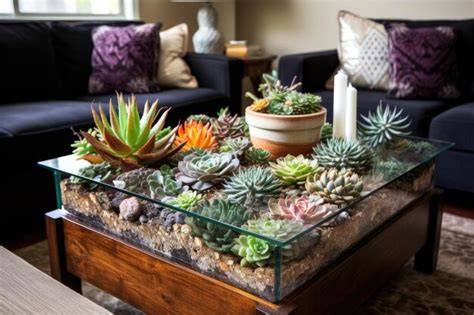
Succulent displays aren’t about pricey plants - they’re about smart placement and simple systems. Match the species to your light, use real drainage, and style with intention. Then let the routine carry you: rotate, brush, water on proof, not on habit. It’s honestly relaxing once the setup is right. Ready to try? Start with one shallow bowl on the coffee table, add a clean gravel top-dress, and watch how the whole room feels calmer.
Display ideas and placeholders
- Paper Wrapped succulents for a rustic placeholder or party favor
- Paint Dipped Mini Terracotta Pots for a natural, albeit artistic, look
- Distressed Mini Terracotta Pots to blend with light palettes
- Mini Glass Jars layered with decorative rocks or moss for elegance
- Mini Glass Terrariums for a classy but costly display
- Mini Mason Jars painted or left natural with moss accents
- Tins as versatile, easy-to-match containers
- Tea Cups succulents for a dainty, vintage vibe
- Burlap Wrapped pots for a simple, graceful finish
- Seasonal arrangements to suit Christmas, Halloween and more
Read the Room: Light, Microclimates & Placement. Containers That Work (and Look Good). Soil, Drainage & Tools for Long-Lasting Displays. Tabletop Centerpieces that Steal the Scene. Shelf, Mantel & Bookcase Styling. Windowsills & Small-Space Hacks. Hanging & Vertical Displays. DIY Planters & Upcycles (Budget to Luxe). Maintenance for Styled Displays. Final Tips. Succulents look like tiny sculptures, which is probably why I keep “just one more” on every surface. Still, the way you display them matters. I learned this the hard way-one gorgeous echeveria stretched like taffy because I parked it on a dim shelf (rookie move). Now I “read the room” first: light, heat, drafts. Then I style the vignette. Simple formula. I’ll walk you through containers with real drainage holes, fast-draining soil, and styling tricks that make a $4 plant look gallery-ready.
You’ll see vertical succulent garden ideas, shelf décor, and small-space hacks. My biggest aha: the window’s direction decides the plant, not the other way around. South and west windows are bright-perfect for echeveria and sedum. East is gentle morning sun, great for haworthia and gasteria. North? Honestly low light; go slow there or add a discrete grow light. Beware microclimates. A mantel over a fireplace bakes plants; a drafty entry chills them. I lift pots on small risers to catch more light and avoid cold sills. If a rosette leans, I rotate 90° every week. I love pretty cachepots, but drainage holes are non-negotiable. My trick: keep the succulent in its nursery pot and drop it into the decorative container-instant style, easy watering.
Terracotta breathes (for over-waterers like me), ceramic looks polished, concrete reads modern. Metal and wood? For proportion, I use a 1/3 rule: plant height about one-third of the container height. Shallow bowls showcase rosettes; tall cylinders suit aloe and columnar cactus cousins. Top-dressings-gravel, sand, tumbled pebbles-finish the look and reduce fungus gnats. A low ceramic bowl planted with contrasting textures-striped foliage and coral-tipped succulents-finished with smooth river-rock top dressing. Keep the nursery pots inside the mugs and water at the sink. Fast-draining mix is the whole game. I do 2 parts cactus mix + 1 part pumice or perlite. If the mix compacts, I add chunky orchid bark. Mesh over the drainage hole keeps grit from escaping, then a thin layer of coarse gravel, then soil.
Tools I actually use: a soft makeup brush to clean leaves, a ketchup squeeze bottle for targeted watering, long tweezers to place tiny pups. I refresh top-dressings every few months; it’s like skincare but for pots. Centerpieces that work are low, wide, and calm. I build a shallow bowl with one “thriller” (say, echeveria ‘Lola’), two “fillers” (sedum, graptosedum), and one “spiller” (string of pearls, gently draped). I keep candle heat at least 10-12 cm away because scorch marks… happen. For seasonal looks, I swap top-dress: white sand for winter minimalism, warm pebbles in fall, crushed shell for summer coastal vibes. It’s cheap styling. Shelves get busy fast. I use the rule of thirds: one anchor (a medium planter), two supporting minis, then negative space so the eye can rest.
Heat matters on mantels. If the fireplace gets used, move them or elevate on a heat-safe stand. I dust leaves with a soft brush every couple weeks; dusty plants look dull in photos and block light absorption. Narrow sill? Use a slim trough planter with three small succulents shoulder-to-shoulder. On rentals, I like suction-cup planters on glass (rated for weight) and magnetic pots on the frame. It looks kinda magic. I rotate displays on the first Sunday of the month. Even growth, fewer floppy stems. Drip trays that actually fit the footprint keep sills clean. For privacy, a frosted film plus hanging frames lets light in but hides the neighbor’s spicy cooking show. Macramé hangers are forgiving, but I always water at the sink, not over the rug (ask me how I know).
Wall pockets and modular living walls look amazing; I mount them into studs or use proper anchors. Shadow-box frames are my guilty pleasure. I glue a plastic liner, add the fast mix, then plant hardy options like sedum, crassula, and small echeveria. Let it root flat for 2-3 weeks before hanging so everything doesn’t… slide. On balconies, shallow bowls with gravel top-dress stay tidy in wind. I mix succulents with other drought-tolerant friends-lavender, thyme, and santolina-so it looks like a mini Mediterranean garden. Rain is sneaky. If storms are coming, I slide bowls under the eave or clip on a clear rain shield. In cooler months, I bring tender succulents inside when nights dip below about 7-10 °C. Shallow bowls packed with mixed succulents line a porch ledge beside a bright window. Matching saucers catch drips, while partial shade keeps colors rich.
Teacups and candle jars are cute, but they need a false bottom. I add a layer of leca or chunky gravel, then a plastic nursery pot tucked inside so water never sits at the roots.
Driftwood planters look like art. I chisel shallow pockets, line with plastic, punch tiny holes, then add the fast mix. Wood gets sealed lightly so it doesn’t rot. I water only when the soil is dry 2-3 cm down. A wooden skewer is my cheap moisture meter-if it comes out clean, it’s time. In spring and summer, that might be every 7-10 days; in winter, it’s more like every 3-4 weeks. Leaves get a quick brush to remove dust. I rotate pots a quarter-turn for even symmetry. Fertilizer? Half-strength in the growing season, once a month. That’s it. Succulent displays aren’t about pricey plants-they’re about smart placement and simple systems. Match the species to your light, use real drainage, and style with intention. Then let the routine carry you: rotate, brush, water on proof, not on habit.
It’s honestly relaxing once the setup is right. Ready to try? Start with one shallow bowl on the coffee table, add a clean gravel top-dress, and watch how the whole room feels calmer.
How to Water Succulents | Succulent Care Tips & Tricks
tags: #coffee #table #succulents