With most gardeners using compost to sow seeds, top-dress pots and transplant seedlings, knowing which is the best compost to use can be problematic. Then there's the peat issue. If the compost isn't labelled as being peat-free, it won't be. For most plants, and for many seeds and cuttings, a good peat-free multi-purpose compost is suitable, both from an environmental and convenience point of view.
Peat-free vs peat-based and the right context
Multi-purpose composts are soil-less, so they shrink more than loam-based composts when they dry out, and don’t always reabsorb water when wetted. It's therefore important to keep the compost gently moist at all times and don’t let it dry out. The nutrients are also more rapidly leached out of soil-less composts than those containing loam. Read the bag for how long the nutrients are expected to last, but you will usually need to start applying a fortnightly liquid feed six weeks after planting plants that are in growth.
Specialized options for containers and larger plants
For trees and shrubs in containers outdoors, use John Innes soil-based compost, which has the weight necessary for stability and the ability to hold onto its nutrients for longer - add grit to prevent it from becoming too hard and ‘claggy’. If you're determined to avoid peat, the alternative is to mix a peat-free, multi-purpose compost with good-quality topsoil, to provide stability and moisture retention, and add fertiliser, such as blood, fish and bonemeal. Proprietary compost is tested to make sure it's suitable for a range of plants. Yours will be a process of trial and error, but you will have the satisfaction of knowing you're doing your bit for conservation.
Acid-loving plants and ericaceous options
For acid-loving plants, such as rhododendrons and camellias, use John Innes ericaceous compost or mix a peat-free ericaceous compost with neutral or acidic topsoil.
Making and sourcing compost: home-made vs bagged
If you want to make your own compost from kitchen or garden waste, try our guide to the best compost bin as we talk through all the available options, the benefits of each and share advice on how to get started. For any additional help you may need, we also have a trouble-shooting video on common problems with composting. Whatever compost you choose, for best results always buy fresh bagged compost rather than an old, stale or waterlogged sackful. Only buy as much as you can use within six to eight weeks, and seal after use to stop bugs and weed seeds getting in, and prevent decomposition. Store it where it won’t get waterlogged.
How to pick the best compost for each task
Find out which is the best compost for which job, below. Sowing most seeds and sowing seed trays: use peat-free, multi-purpose compost. Rooting cuttings: use peat-free, multi-purpose compost with half as much vermiculite or perlite added. Plants in pots for less than a year: use peat-free, multi-purpose compost. Plants in pots for more than a year: use equal parts peat-free multi-purpose compost and John Innes No.3, or a good topsoil if you want to avoid peat. Large plants in large pots outdoors for several years: use John Innes No.3 with one quarter its bulk of added grit, or a good topsoil if you want to avoid peat. Acid-loving plants: compost in large pots should be John Innes ericaceous or peat-free ericaceous mixed with neutral or acidic topsoil.
Compost in practice: seed sowing, potting, rooting and hanging baskets
Sowing seeds and preparing seed trays: use peat-free, multi-purpose compost. Potting on plug plants: use peat-free, multi-purpose compost. Rooting cuttings: use peat-free, multi-purpose compost with half as much vermiculite or perlite added. Hanging baskets, summer bedding and veg: use peat-free, multi-purpose compost. Plants in pots for more than a year: mix peat-free multi-purpose with John Innes No.3. Large outdoor shrubs and fruit in pots: John Innes No.3 with added grit is recommended. Acid-loving plants: use ericaceous compost mix with topsoil as needed.
Compost quality and usage tips
Compost is an amazing soil amendment that improves soil structure, moisture retention and nutrient availability. Finished compost should be dark, crumbly and smell earthy, with a moisture level that is moist but not waterlogged. Fresh bagged compost is preferable to old stock, and avoid composts that smell foul or strongly pungent. For lawn care, topdressing with a thin layer of compost can improve turf health; for raised beds, spread 3-4 inches and mix into the top 6-8 inches. When using compost blends, ensure you understand the presence of salts and potential herbicide residues, and screen finished compost to remove large undecomposed bits.
- Determine the volume needed and desired soil depth.
- Prepare the soil by mixing in compost to the appropriate depth.
- Use appropriate compost type for the plant and container size.
- Keep compost moist, not wet, and avoid waterlogging.
Composting at home: methods and benefits
Composting reduces waste and builds healthy soil by returning organic matter to the garden. Backyard composting, vermicomposting (worm composting), and community composting programs are viable options. Vermicomposting yields vermicompost, a rich soil amendment produced by red wriggler worms, typically harvested after three to six months. The end product improves soil structure, moisture retention, and supports beneficial soil organisms.
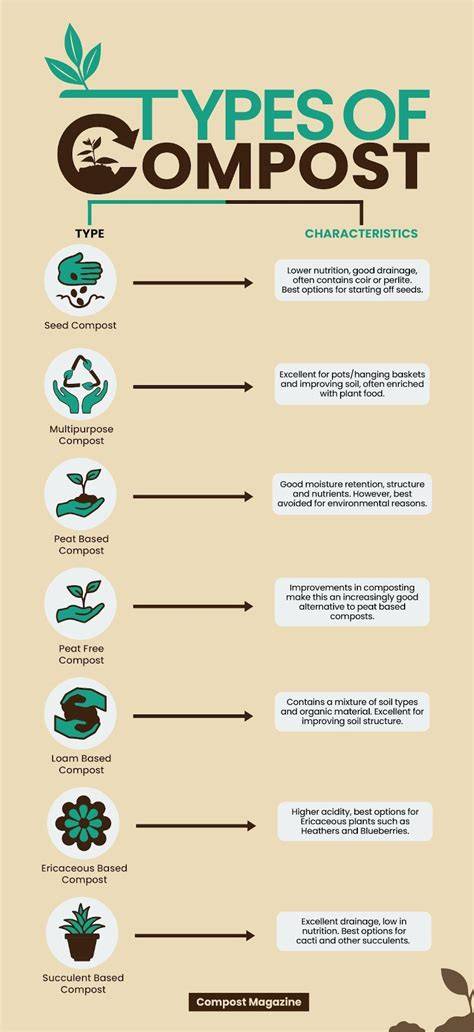
Infographics can help visualize peat-free options and their suitability for seed sowing, containers, and ericaceous plants.
How Compost Is Made: A Field Trip!
Video content can complement the guide by showing turning, moisture checks, and curing of homemade compost.
Practical tables and calculations
| Task | Recommended compost | Notes |
|---|---|---|
| Sowing seeds | Peat-free multi-purpose | Light, open structure |
| Rooting cuttings | Peat-free with half vermiculite | Better drainage |
| Plants in pots < 1 year | Peat-free multi-purpose | Balanced nutrients |
| Plants in pots > 1 year | Peat-free mix + John Innes No.3 or topsoil | Stability and nutrient retention |
| Acid-loving in pots | Ericaceous compost | Mix with neutral/acidic topsoil |
Finished compost is a soil amendment with many benefits, including improved water retention, nutrient availability and soil biodiversity. For larger landscape projects, raised beds and lawn renovations, compost helps reduce erosion and supports sustainable gardening practices.