Introduction: The fall and spring are times when humidity related diseases usually peak in greenhouses. Sunny days increase the transpiration of moisture from leaf surfaces and evaporation from soil. The warm air holds the moisture in the vapor form. At night as the air cools to the dew point, condensation occurs and water droplets are formed on cooler surfaces such as the leaves and glazing. This moisture promotes the germination of fungal pathogen spores such as Botrytis and powdery mildew. Dripping water from condensation on the greenhouse covering also wets plant surfaces and spreads plant pathogens from plant to plant by splashing soil and plant debris. The key to successfully suppressing diseases is to keep the plant canopy dry, especially from dusk to dawn. This is accomplished through cultural practices and environmental control strategies.
Relationship Between Temperature and Humidity
The amount of moisture in the air is generally expressed as relative humidity (RH), which is the ratio between the weight of moisture actually present in the air and the total moisture-holding capacity of a unit volume of air at a specific temperature and pressure. This term can sometimes be misleading, because it is temperature-dependent. Warm air has a higher moisture-holding capacity than cooler air; therefore as the temperature of air increases, the relative humidity decreases even though the amount of water remains constant. Air at 70° F will hold twice as much moisture as air at 50°F. In the range of temperatures encountered in a greenhouse, for every 20° F rise in dry bulb temperature, the water-holding capacity of the air doubles, and the relative humidity is reduced by one-half. This relationship is important in managing humidity in the greenhouse.
Dewpoint temperature indicates the temperature at which water will begin to condense out of moist air. Condensation on plants occurs when leaf surface temperature is below dew point. This is when there is too much moisture in the air to remain in the vapor state. The moisture will fall out and condense as free-moisture on surfaces that are at or below the dewpoint temperature. In other words, condensation will occur on the coldest surfaces first. The coldest surfaces will be the piping, door knobs, roof and eventually the plants. For example, when the greenhouse is 85% RH and 60°F, condensation occurs when leaf temperature is lower than 55°F. At 95 % RH and 60°F, condensation occurs when leaf temperature is only one degree lower than air temperature.
How To Reduce Humidity
Proper watering and adequate plant spacing, having well-drained floors, warming plants, moving air and venting moisture are ways to reduce humidity in greenhouses. The least expensive method is to keep the greenhouse dry, especially going into the night, when the temperature drops. Puddling water on the greenhouse floor and water on leaf and growing media surfaces evaporate, which adds moisture to the greenhouse environment. Evaporation makes the environment humid and it takes away energy that is intended to keep a house warm.
Cultural Practices to Reduce Humidity
Cultural practices include watering just enough to prevent excess water on the floor, and watering early enough in the day to allow plant surfaces to dry before evening. The highest relative humidity in a greenhouse is generally found inside plant canopies, where moisture is generated from transpiration and trapped due to insufficient air movement. Adequate plant spacing and mesh benches will help to improve air circulation at the plant level. Weeds also contribute to high humidity by holding moisture in the leaf canopy and generating moisture through transpiration. Maintain well-drained greenhouse floors that are free from weeds.
Bottom Heat
Bottom heat will improve air circulation inside plant canopies and will help to prevent condensation on leaf surfaces. The warm air that rises creates air movement around the plants. Bottom heat also keeps the plant surfaces warm, preventing condensation on the plants.
Anti-drip Plastic
The use of a wetting agent, either sprayed on the interior surface or as part of the formulation of the glazing on poly covered greenhouses can also help to reduce the humidity level. The moisture that condenses on the glazing will drain to the eave or foundation rather than forming droplets and dripping onto the plants. Glass greenhouse with a steep roof pitch (6:12) will allow moisture to run off without a wetting agent. More condensation will occur on single glazing than with double glazing since the dew point is reached sooner.
Ventilation and Heating
A combination of ventilation and heating is also very important for reducing humidity. Ventilation allows the exchange of moist greenhouse air with drier air from outdoors. Heating is necessary to bring outdoor air up to optimum growing temperature, and also increases the capacity of the air to carry moisture, thus avoiding condensation. Neither practice alone is as efficient as both combined. Ventilation without heating would chill the greenhouse and the crop, and heating without venting the moist air would raise the temperature beyond optimum levels and result in excessive heating costs.
The method and time it takes for heating and venting will vary according to the heating and ventilation system in the greenhouse. To vent the humid air in greenhouses with vents, the heat should be turned on and the vents crack open an inch or so. When doing this the warmed air will hold more moisture (RH), escape from the greenhouse through the vents and be replaced with outside air of lower RH. This natural rising of the air will result in a greenhouse of lower relative humidity. In houses with fans, the fans should be activated and operated for a few minutes and then the heater turned on to bring the air temperature up. The fans should then be shut off. A clock could be set to activate the fans. A relay may be needed to lock out the furnace or boiler until the fans shut off so that both the fans and heating system do not operate at the same time and flue gases are not drawn into the greenhouse. The venting and heating cycle should be done two or three times per hour during the evening after the sun goes down and early in the morning at sunrise. The time it takes to exchange one volume of air depends on several factors including whether or not fans are used and the size of the fans and vents. For some greenhouses it may take as little as 2-3 minutes air exchange. For greenhouses using natural ventilation, it may take 30 minutes or longer. Heating and venting can be effective even if it is cool and raining outside. Air at 50°F and 100% RH (raining) contains only half as much moisture as the greenhouse air at 70°F and 95% RH.
What is a Desirable Humidity Level?
To vent and heat the greenhouse most energy efficiently, growers might consider purchasing a device to measure humidity, and then heat and vent accordingly. The desirable humidity varies with temperature. Plants in warmer environments can tolerate higher relative humidity. The chart below provides corresponding temperature and relative humidity set points for disease prevention.
- 50°F: 83% RH
- 61°F: 89% RH
- 68°F: 91% RH
- 86°F: 95% RH
What Does it Cost?
Based on 1,000 sq.ft. of greenhouse floor area (approximately 10,000 cubic feet of air) it would take 4,000 Btu of heat to raise the temperature of the air 20°F (for example from 50° to 70°). At $1.00 per gallon of fuel oil or $0.70 per therm of natural gas, this amounts to about $0.04 per cycle. Usually this is done two or three times per hour during the evening after the sun goes down and early in the morning at sunrise.
Air Movement
Air movement is another important consideration when managing diseases in the greenhouse. Air that is moving is continually mixed resulting in very small temperature differences. Adequate air movement around the plant occurs when the leaves move slightly. The moisture does not get a chance to condense on the leaf surfaces because the mixing action caused by the movement prevents the air along the surface from cooling to below the dew point. This results in less Botrytis. The fan-jet system, horizontal air flow (HAF), and continuous operation of fans are described as methods to achieve this air mixing.
Measuring humidity: The sling psychrometer is still one of the most accurate methods for determining relative humidity. This device uses two thermometers, one with a wick, contained in a holder that can be swung like a fan. Wetting the wick with water and rotating the thermometers for about a minute will give the wet-bulb and dry-bulb temperatures. After subtracting the wet-bulb temperature from the dry-bulb temperature to get the depression, the relative humidity can be determined. Humidity measurement tools include sling psychrometers, humidity pocket meters, and hydrothermographs.
Types of Greenhouse Humidification Systems
Humidification systems add moisture to the air, and can be standalone or integrated with climate controls. Common types include:
- Misting and Fogging Systems: increase humidity and provide cooling; droplets evaporate quickly, reducing plant wetting and disease risk.
- Ultrasonic Humidifiers: energy-efficient with precise control; suitable for small to medium greenhouses.
- Steam Humidifiers: rapid, large-scale humidification; can be integrated with heating.
- Evaporative Humidifiers: pass air over a wet medium; simple and reliable for dry climates.
Benefits and Best Practices
Benefits of proper humidification include improved plant growth, reduced plant stress, disease prevention, energy efficiency, and enhanced worker comfort. Modern automated systems with sensors, climate control computers, wireless sensor networks, and remote monitoring enable precise humidity management and data logging for optimization. Humidification should be coordinated with temperature control, ventilation, irrigation, and shading to maintain stable and optimal conditions.
Selecting and Installing a Humidification System
Choosing the right system depends on greenhouse size, crop type, climate, and budget. Installation requires reliable water supply and drainage, proper electrical connections, and regular calibration. Maintenance includes cleaning nozzles and filters, monitoring water quality to prevent mineral buildup, and checking for leaks. Seasonal adjustments may be necessary to align with changing conditions and crop growth stages.
Maximizing Success with Humidification
Effective humidification is a foundation for thriving crops and reliable harvests. Advances in sensor technology and automation improve precision and energy efficiency. Climate variability underscores the importance of reliable humidity control for consistent production, whether in a small hobby greenhouse or a large commercial facility.
Resource-efficient heating and dehumidification strategies are evolving to reduce energy use while maintaining crop quality. Studies show that venting before heating and the use of dehumidification can significantly cut energy consumption while stabilizing transpiration and nutrient uptake. Data-driven approaches, utility incentives, and microclimate management help growers optimize systems and reduce costs.
Note: N/A
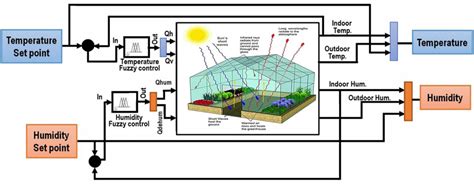
Humidity Management Part 1 Key Parameters
Practical Recommendations
- Monitor humidity with reliable sensors placed around the canopy and in a few representative zones.
- Ventilate when external air is drier and temperatures permit, combining with heating if needed to avoid condensation.
- Use bottom heat and proper air movement to minimize leaf surface condensation.
- Keep floors well-drained and remove standing water to reduce evaporation sources.
- Consider integrating dehumidification with heat recovery to improve energy efficiency.
Humidity management is an essential component of integrated pest management. It helps reduce disease pressure, lowers pesticide reentry intervals, and supports consistent production under variable weather. By combining cultural practices, proper equipment, and automation, growers can achieve optimal humidity levels that promote healthy growth and high yields.
tags: #humidity #control #systems #for #greenhouses