Few shrubs offer the beauty, versatility, and season-long appeal of hydrangeas. With their lush blooms and vibrant foliage, they’re a standout in landscapes, containers, and cutting gardens. This collection brings together expert care tips, plant comparisons, and variety lists to help you grow your best hydrangeas yet-whether you’re learning to prune, choosing the right type, or finding ways to protect them from deer.
Types of Hydrangeas
From panicle to oakleaf to bigleaf varieties, there’s a hydrangea for nearly every garden setting. Understanding the differences-like bloom shape, sun tolerance, and pruning needs-can help you choose the right fit.
- Bigleaf Hydrangeas (Hydrangea macrophylla) Known for their large, rounded or lacecap blooms that may turn blue or pink depending on soil pH. Many varieties offer re-blooming capabilities.
- Panicle Hydrangeas (Hydrangea paniculata) Recognized for their cone-shaped blooms and excellent sun tolerance. These are some of the most reliable bloomers in a wide range of climates.
- Oakleaf Hydrangea (Hydrangea quercifolia) Valued for their bold, lobed foliage (which turns brilliant shades in fall) and native performance in North American landscapes.
- Smooth Hydrangeas (Hydrangea arborescens) Known for their classic mophead blooms on new wood. Native to North America and ideal for colder regions.
Need help comparing types? Hydrangeas Demystified provides quick distinctions, and there are options like Fairytrail cascade hydrangeas for something a bit different.
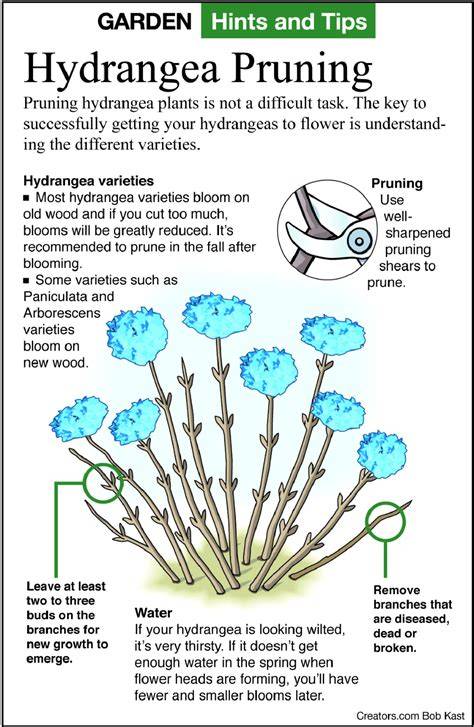
Tip: Hydrangeas that bloom on old wood form flower buds the previous year, so pruning them in fall or spring may remove blooms. Those that bloom on new wood form buds in the current growing season and are more forgiving of pruning and winter damage.
“What’s good for my garden is not necessarily going to be good for your garden, and everything depends on where you live, how you garden, the form that you’re looking for, and what you like in hydrangea.” - Erin, The Impatient Gardener
Growing & Caring for Hydrangeas
Hydrangeas are surprisingly easy to grow once you understand their needs. Whether you’re planting them in garden beds or containers, learning how to prune, protect, and maintain them will help you enjoy bigger, healthier blooms year after year.
- Planting and site Hydrangeas like mostly shady spots, but some varieties can take more sun. Plant in the spring after spring frosts but before the hottest summer months, with an active growth period from March through September.
- Soil and drainage Use well-draining soil rich with organic matter. Test drainage and amend with sand or bark if needed. If your soil holds too much water, adjust accordingly; hydrangeas don’t like roots sitting in water.
- Watering Hydrangeas like lots of water, but overwatering on slow-draining soil can cause issues. Signs of too much water include brown leaf edges and leaf drop; signs of not enough water are droopy leaves that perk up after watering.
- Fertilization Use a balanced time-released fertilizer a few times a year-spring and early fall. Some plants bloom better with a light feeding or even a period of relative nutrient restraint. If buds form and bloom, yellowing leaves in the center can indicate a need for fast-acting fertilizer. For blue and purple blooms, use fertilizer low in phosphate and ensure soil is acidic to facilitate aluminum uptake.
- pH and color Hydrangeas (except white ones) are pH sensitive. In acidic soil (pH below 6) with available aluminum, blooms tend toward blue and purple. In neutral soils (pH 6-7.5), blooms tend toward red and pink. To increase acidity, amend soils with aluminum sulfate, coffee grounds, rusty nails and coins, or conifer needles on established plants.
- Pruning Pruning timing depends on the type and whether you want to maintain bloom quantity. Fall pruning may reduce next season’s blooms for old-wood bloomers; spring pruning after frost can be effective for some varieties. For many hydrangeas, prune 1/2" to 1" above a budding node at a 45-degree angle. Older stems often die back, while new growth will form the next season’s blooms.
- Cut flowers Hydrangeas don’t cut well when freshly flowering. Wait 6-8 weeks after blooming for the head to have a papery appearance, then cut in the morning and remove leaves from the stem. Hang or place in a vase with minimal water, away from direct sun and in a well-ventilated area.
- Pest and disease management Watch for powdery mildew, black spot in shady locations with poor air circulation, and rust spots after overhead watering in bright sun. Discard affected leaves and ensure good air flow. Slugs and snails can affect hydrangeas, particularly in damp spots; appropriate slug/snail control may be needed.
- Protection In colder climates, provide winter protection and consider container relocation indoors for the winter in zones with severe cold.
Video resources offer practical demonstrations on pruning, planting, and care strategies from experienced gardeners.
4 Minute Guide to Pruning Hydrangea Macrophylla
Geraniums: True Geraniums vs Pelargoniums
Geraniums, also known as Hardy Geraniums or Cranesbill Geraniums, are hardy perennials that survive down to zone 5 in many varieties. They differ from pelargoniums (often sold as geraniums in stores) in several key ways: true geraniums are perennials and hardy, while pelargoniums are typically grown as annuals or half-hardy perennials in cooler climates.
Geraniums (Pelargonium spp. are often confused with true geraniums) are sun-loving plants with brightly colored flowers throughout spring and summer. They thrive in full sun in well-drained soil. Pruning helps maintain shape and encourages branching; cut back new growth several times in late spring to early summer to stimulate denser growth. Deadheading encourages continued flowering. Regular, balanced fertilizer in spring and early summer supports bloom production, and consistent watering is important, though they tolerate some drought once established.
There are many types of pelargoniums and true geraniums with a range of flower colors from white to pinks, purples, and reds. Zonal geraniums (a type of pelargonium) display distinctive leaf patterns, while scent-scented geraniums (also pelargoniums) carry citrus, clove, or chocolate fragrances. Seed geraniums offer an economical option for planting many in the ground. True geraniums (Genus Geranium) are often used as ground covers, with some varieties like Geranium ‘Biokovo’ reaching around 10 inches tall and providing spring blooms.
Geranium care tips include:
- Plant in full sun with well-drained soil; some Regal varieties tolerate partial shade.
- Water when the top inch of soil dries; avoid overwatering to prevent root rot.
- In winter or during non-growing seasons, protect from extreme cold and bring potted plants indoors as needed.
- Propagation is easy via cuttings taken in spring, late summer, or early autumn; stem cuttings root readily in warm, damp potting soil.
Geraniums are valued for their long-lasting blooms and resilience. They can be grown in containers or grown in garden beds, and many varieties are deer-resistant once established. Pelargoniums are commonly grown in pots and outdoor planters, while true geraniums excel as hardy perennials in suitable climates.
Additional notes from experienced gardeners highlight that geraniums can spread to form drifts and are useful for weed suppression in some settings. They’re typically hardy, sun-loving, and provide a reliable color display from spring through fall.
Video resources and images can help illustrate pruning techniques for hydrangeas and general care for geraniums, including propagating cuttings and winter preparation.
4 Minute Guide to Pruning Hydrangea Macrophylla
Practical Tables and Quick Reference
| Plant | Sun | Water | Soil | Pruning notes |
|---|---|---|---|---|
| Hydrangea macrophylla | Partial shade | Even moisture | Rich, well-drained | Buds form on old wood; prune with care |
| Hydrangea paniculata | Full sun to partial shade | Moderate to high | Well-drained, organic | Typically prunes well; robust bloomers |
| Hydrangea quercifolia | Partial shade | Consistent moisture | Moist but well-drained | Fall color notable; prune after bloom |
| Geranium (true geranium) | Full sun | Moderate | Well-drained | Deadhead for continuous bloom |
| Pelargonium (zonal geranium) | Full sun | Regular | Well-drained; fertile | Pinch for branching; winter indoors if needed |
Are geraniums toxic? The ASPCA notes that geraniums are toxic to dogs and cats. Keep plants out of pets’ reach to avoid ingestion or dermatitis symptoms.
For starting and cultivating hydrangeas and geraniums, consider local availability first. If not available locally, Proven Winners® hydrangeas can be ordered online and shipped directly to your door.
tags: #hydrangeas #and #geraniums