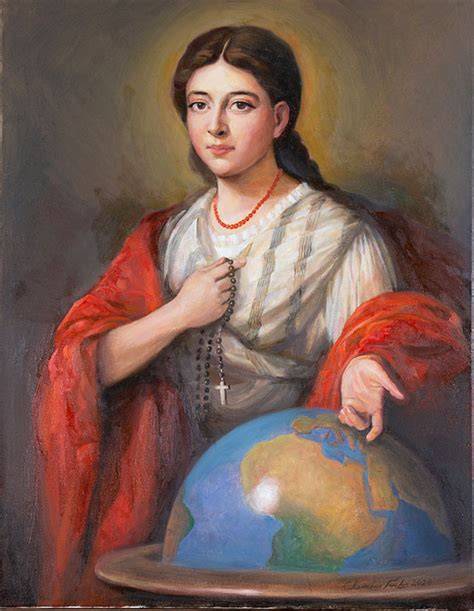
The Society for the Propagation of the Faith (Latin: Propagandum Fidei) is an international association coordinating assistance for Catholic missionary priests, brothers, and nuns in mission areas. Founded in 1822 by laywoman Pauline Marie Jaricot, the Pontifical Society for the Propagation of the Faith focuses on fostering global evangelization efforts.
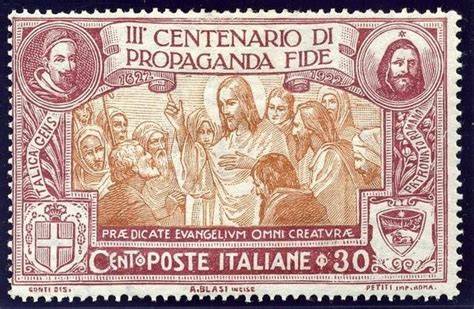
The Sacred Congregation for Propagation of the Faith (the Propaganda) was established for this purpose in 1622. Gregory XV established the Sacred Congregation for the Propagation of the Faith (Propaganda Fide). It provided a library for research and a school for training priests and missionaries, assigned territories, and directed ecclesiastical matters overseas.
Pauline Jaricot and the Founding in Lyon
In 19th-century France, the Church was emerging from the intense persecution of the French Revolution. During the Napoleonic period (1804-1815), the Paris Foreign Missions Society (MEP) could send only two missionaries to the Far East due to restrictions. Amid this challenging time, the Holy Spirit inspired a young woman from Lyon, Pauline Marie Jaricot.
Once accustomed to a life of comfort, she experienced a deep conversion and dedicated herself entirely to Christ. In 1820, Pauline Jaricot of Lyon received a letter from her brother, a student at the Seminary of St. Sulpice, in which he described the extreme poverty of the members of the Paris Foreign Missions Society. She conceived the idea of forming an association whose members would contribute one cent a week for the missions.
Pauline gathered a group of young women from the local factories, forming a spiritual association called the "Reparatrices." This movement grew into a simple but powerful initiative: a group of ten people, each committed to finding ten others who would pray and contribute one penny a week for the missions. Her plan was to form groups of ten persons into “circles”, each of which would organize another group of ten. These groups would be formed into units of one hundred and the hundreds into thousands, each with its own leader.
Pauline was only 23 years old when she founded the Society for the Propagation of the Faith. Five years earlier, in prayer, she had seen a vision of two lamps: One of the lamps was empty, representing faith in post-revolutionary France. The other was overflowing with oil, symbolizing the vibrant faith in mission territories. Pauline believed that every Catholic, through her or his prayer and daily work, could participate in the Church's missionary mandate.
Early American Connections and the 1822 Establishment
In 1815, Bishop Louis William Valentine Dubourg of New Orleans, Louisiana was in Lyon collecting alms for his diocese, which was in a precarious condition. In 1822, Father Inglesi, Vicar-General of New Orleans, was sent to Lyon by Bishop Dubourg to visit his benefactors and reanimate their zeal.
Seeing the success of Miss Jaricot, they thought at first of establishing a similar society for American missions, but decided to unite, instead of dividing, efforts. A meeting of the friends of the missions called by Father Inglesi was attended by twelve ecclesiastics and laymen, and on 3 May 1822, the Society for the Propagation of the Faith was formally established, with a declared mission to help Catholic missionaries by prayers and alms.
The first collection, in 1822 was sent to the missions in China, Kentucky, and the Diocese of Louisiana - which at the time included all of the territory from the Florida Keys to Canada. The society's goal was to support missions worldwide, which excluded majority-Catholic countries like France, Italy, Austria, Spain, and Portugal.
Traveling with pets & life abroad in Lyon, France, with the Founder of Avvinue
Growth, Papal Support, and Pontifical Status
In 1840, Gregory XVI placed the society in the rank of Universal Catholic institutions, and on 25 March 1904, in the first year of his pontificate, Pius X recommended it to the charity of all the faithful, praising its work, and raising the feast of its patron saint, Francis Xavier, to a higher rite. A large number of provincial and national councils (especially the third of the Plenary Councils of Baltimore, 1884), as well as thousands of bishops from all parts of the world, have likewise enacted decrees and published letters in favour of its development.
Pontifical status was granted to the Society on May 3, 1922 and its central administration was transferred to Rome. The Society is under the direction of the Dicastery for Evangelization. Today, more than 120 countries around the world have a National Office of the Pontifical Mission Societies, which includes the Society for the Propagation of the Faith.
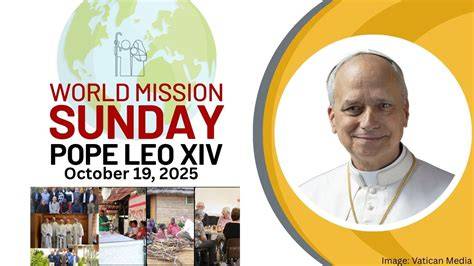
In 1926, Pope Pius XI established an annual collection for the missionary work of the Church called "World Mission Sunday". World Mission Sunday is organized by the Society for the Propagation of the Faith.
Mission Scope and Allocation of Resources
The Society for the Propagation of the Faith concentrates its efforts to communities in Africa, Asia, the Pacific Islands, and remote area of Latin America. It provides financial support to mission bishops for day-to-day expenses and special projects.
Allocations are based on the reports of the superiors of the missions, bishops, vicars and prefects Apostolic; and in consideration of the desires of the pope. As soon as missions are able to exist by their own efforts the society discontinues its aid, because demands are many and resources inadequate.[1] It is a law of the society to make its affairs public, and each year an integral account of all money received, all appropriations made, and all expenditures is published in the "Annals".
All money received is distributed each year to more than 1,100 mission dioceses and vicariates around the world. The Society for the Propagation of the Faith is one of the four Pontifical Mission Societies. The International Secretariat of the Society plays a crucial role in urging local churches to embrace global missionary cooperation.
Selected Early Grants and Projects
- In 1827, The Diocese of New York received its first grant of $1,776.00.
- In 1842, the Church of St. Vincent de Paul, on Canal Street, a parish for French-speaking residents, was built with money received from the Propagation.
Organizational Relationships and the Pontifical Mission Societies
The Society works in England and Wales with the Mill Hill Missionary Society. The Society for the Propagation of the Faith is one of the four Pontifical Mission Societies.
Founded in 1843 by Father Charles de Forbin-Janson, the Pontifical Missionary Childhood Association (MCA) encourages children to embrace their call to mission and to become involved in supporting their less fortunate peers around the world. Founded in 1889 by laywoman Jeanne Bigard, the Pontifical Society of St. Peter the Apostle is dedicated to promoting and supporting the formation of priests and religious (men and women) in mission territories.
Founded in 1916 by Father Paolo Manna, a PIME missionary, the Pontifical Missionary Union seeks to foster a spirit of mission among priests, religious, and all the people of God. Once firmly established, these young churches aid others on their journey to faith in Christ.
Spirituality, Practice, and Local Engagement
Missionary spiritualityencouraging prayer and sacrifice to rekindle the missionary zeal of individuals and Christian communities. Through prayer, financial support, and raising awareness, it aids the growth of local churches in mission territories, helping them become self-sustaining and vibrant communities.
The Society for the Propagation of the Faith seek to foster an ever-deeper spirit of universal mission, to inform Catholics of the life and the needs of the Catholic Church in the Missions, and to encourage prayer and financial help for those mission churches. The central administrative offices of these Societies are located in Rome, Italy, under the direction of the Congregation for the Evangelization of Peoples.
World Mission Sunday and Funding Flow
It is also responsible for distributing the funds collected on World Mission Sunday, held on the second to last Sunday of October. All money received is distributed each year to more than 1,100 mission dioceses and vicariates around the world.
| Year/Aspect | Key Development |
|---|---|
| 1822 | Formal establishment in Lyon; first collection to China, Kentucky, Diocese of Louisiana |
| 1840 | Rank of Universal Catholic institutions by Gregory XVI |
| 1904 | Pius X recommendation and elevation of St. Francis Xavier’s feast |
| 1922 | Pontifical status and administration transferred to Rome |
| 1926 | World Mission Sunday established by Pius XI |
Historical Context of Propaganda Fide
Further, the establishment of the Congregation for the Propagation of the Faith in 1622 demonstrated the importance of the papacy in the missionary movement. Missionaries received their mandate from Rome; the administration was given over to apostolic vicars (bishops of territories having no ordinary hierarchy) and prefects (having episcopal powers, but not necessarily… Read More
After considering the arguments of the Jesuits, however, the same congregation lifted the ban in 1656. In 1645 the Congregation for the Propagation of the Faith, on the basis of a brief submitted by the Dominicans, condemned the rites. Rome in 1622 of the Congregation for the Propagation of the Faith. XV (reigned 1621-23) created the Congregation for the Propagation of the Faith (Congregatio de Propaganda Fide, hence propaganda).
To many Roman Catholics the word may therefore have, at least in missionary or ecclesiastical terms, a highly respectable connotation. The papacy also attempted to implement the policies of the Council of Trent but encountered political and diplomatic obstacles, as well as the reality that Christendom… Read More… Roman Catholic foreign missions, the Congregation for the Propagation of the Faith, whose missionary work helped the church recover many of its losses from the Protestant Reformation.
Enduring Mission and Contemporary Presence
Today, more than 120 countries around the world have a National Office of the Pontifical Mission Societies, which includes the Society for the Propagation of the Faith. The Society for the Propagation of the Faith concentrates its efforts to communities in Africa, Asia, the Pacific Islands, and remote area of Latin America.
It provides financial support to mission bishops for day-to-day expenses and special projects. The International Secretariat of the Society plays a crucial role in urging local churches to embrace global missionary cooperation.
tags: #propagation #of #the #faith