Plants require light to photosynthesise, but some can cope with less sunlight than others. Discover some of the best low-light indoor plants ideal for dark rooms. Dark rooms all have varying degrees of light, and there are many indoor plants that prefer shady or semi-shaded spots and do not tolerate direct sunlight. Read on to discover some of our top houseplants for dark rooms.
Small houseplants for dark rooms
Our first low-light indoor plant is mind-your-own-business (Soleirolia soleirolii), a creeping herbaceous perennial originally from Sardinia and Corsica. It can be kept as a ground cover or hung in pots. The threadlike stems can reach up to 50 cm in length and can grow up to 25 cm high in a bush-like manner. Baby’s tears grow densely and look good in hanging baskets.
Location: hallway, bedroom, stairwell
Light to partial shade
Well-ventilated
Room temperature and cooler, min. 5 °C in winter, max. 15 °C in summer
High-quality potting soil with organic nutrient supply
Care: Water regularly and keep moist, but avoid wetting the leaves. Apply organic liquid fertiliser every 4 weeks from March to August. Repot in spring into wide, shallow pots or hanging baskets with drainage hole. Potential pests & problems: Long shoots due to the location being too dark or too warm. Dying tips due to dry soil. Old plants that are bare in the centre can be pruned in the spring. Propagation: Divide the plant in spring or take many cuttings and plant them into loose, slightly acidic soil. Tip: Avoid waterlogging and do not let the plant dry out! You can prune your mind-your-own-business to retain the ball shape if necessary.
Golden pothos (Epipremnum aureum) is an evergreen climber that develops aerial roots and so makes a wonderful hanging or climbing houseplant for dark rooms. It belongs to the arum family known as Araceae and rarely blooms. And as another humidity-loving plant, golden pothos also make lovely hanging plants for darker bathrooms in particular.
Location: bedroom, kitchen, bathroom, living room
Light to shady, room temperature and warmer, min. 16 °C
High humidity
Standard potting soil
Care: Keep soil moist. Repot every 2 to 3 years. Easy to prune and propagate. Potential pests & problems: Yellowing leaves normal to some extent. Leaves may lose variegation (turn green) and suffer if they do not get enough light. Propagation: In spring, plant several cuttings together or place them in water; these plants root very easily and therefore very easy to propagate.
Spider plants (Chlorophytum comosum) belong to the asparagus family known as Asparagaceae. It is a clumping plant, meaning it grows in a large, compact clump and spreads by forming other clumps nearby. Native to Africa, spider plants are also found in the wild in Australia and the USA and can grow up to 60 cm tall. Aside from being some of the easiest indoor plants for dark rooms, they are also said to purify the air from formaldehyde, xylenes, and toluene. However, this has not yet been confirmed in any reliable studies.
Location: anywhere
Light to partial shade
Moderately warm all year round, tolerates temperature changes (12 to 22 °C)
Humus-rich, nutrient-rich, slightly acidic soil, ideally pre-fertilised and peat-free
Care: Tolerates short dry periods, avoid waterlogging and water sparingly in winter. Fertilise every 8 to 14 days from spring to autumn. Repot when roots start showing at the top of the soil. Potential pests & problems: Brown leaf tips due to dry soil or air. Limp or bent leaves due to excessive heat or lack of light. Propagation: Separate and plant overgrown offshoots or allow to root in water. Tip: Spider plants are tough plants that tolerate a fair bit of neglect and are said to help purify the air.
Aglaonema leaves can be large and variegated, with grey-green or silvery patterns. Aglaonema (Aglaonema commutatum) rarely flowers, so the red berries that develop from the flowers are a rare sight. The colourfully variegated aglaonema is native to the Philippines and Sulawesi.
Location: bedroom, kitchen, bathroom
Light to partial shade, no direct sunlight
Room temperature or warmer, min. 18 °C
Warm soil
High humidity
ZZ Plant (Zamioculcas zamiifolia) is ideal for dark rooms. They are low-maintenance and require only a moderate amount of nutrients. The plant arrived here about 20 years ago from the forests of East Africa. ZZ plants almost never flower.
Location: hallway, living room
Partial to full shade
Temperature between 17 °C and 22 °C, min. 16 °C even in winter
Tolerates dry air and can be placed near a radiator
Care: Can survive a 4-week dry period; water sparingly and avoid waterlogging. Fertilise moderately from April to September, for instance with a liquid houseplant fertiliser. Propagation: Division or leaf cuttings. Potential pests & problems: Yellowing of lower leaves or root rot due to excess water. No pruning necessary.
Cast-iron plants (Aspidistra elatior) are a reliable choice for dark rooms, tolerate different temperatures and require little water. They do not demand high humidity.
Location: hallway, bedroom, living room
Light to shaded, no direct sunlight
10 to 20 °C
No high humidity
All-purpose potting soil with 30% sand added
Care: Water infrequently but generously, allow surface to dry in between watering and avoid waterlogging. Repot every 3 to 4 years in spring. Low nutrient requirements, fertilise once a month during growing season. Potential pests & problems: May be prone to pests such as scale insects, spider mites and thrips if air is dry. Yellow leaves due to waterlogging. Sunburn from direct sunlight. Propagation: Divide the root ball in the spring and pot up individually. Tip: Varieties with white variegation always need a little more warmth than their non-variegated counterparts.
Low light trees, shrubs, and palms for dark rooms
There are various palms, trees and shrubs that are suitable indoor plants for dark rooms. Here are our top shrubs, palms and indoor trees that like low light conditions.
Calathea (Prayer plants, Calathea spec.) belong to the arrowroot family known as Marantaceae. They are a little fussy and do not like direct sunlight, so are good if you are looking for an indoor plant that likes shade. Calathea are beautiful, bushy indoor plants for darker rooms and grow up to 50 cm tall. As they love high humidity, they would even be ideal plants for darker bathrooms.
Location: bathroom, kitchen, bedroom
Light to partial shade, no direct sunlight
20 to 24 °C during growing season, min. 18 °C year-round
High humidity
Loose potting soil
Care: Keep soil evenly moist. Regularly mist leaves with lukewarm water that is low in lime to keep humidity levels high. Fertilise every 3 to 4 weeks from April to October. Potential pests & problems: Spider mites in dry air. Propagation: Divide in spring.
Kentia palms (Howea) are upright growing palms with simple pinnate, overhanging leaves. They originally come from an island east of Australia and are one of the larger and quite popular examples of a low-light indoor plant. Just like calatheas, kentia palms love high humidity, so would also be great if you are on the hunt for plants for dark bathrooms.
Location: anywhere
Light to shaded, no direct sunlight
Keep young plants at above 18 °C, older ones can tolerate cooler temperatures
Well-ventilated
High humidity
Possible to keep outdoors in summer
Care: Water once a week once soil has dried out, water less frequently in winter, but do not let it dry out completely. Small amount of fertiliser weekly between April and September. Repotting required at most every 4 years. Mist regularly with water low in lime, especially in drier rooms. Propagation: Seeds, though this is difficult. Tip: Although the Kentia palm prefers high humidity, it will also tolerate somewhat dryer air.
Umbrella plants (Schefflera arboricola), also sometimes known as schefflera, are native to Taiwan. These plants are tall and sparsely branched. You can buy monochrome (green) species and some with yellow variegation. Schefflera species can grow up to 30 cm per year.
Location: bathroom, bedroom
Bright to semi-shade, east or west facing windows, a few hours of direct light are enough for umbrella trees
Well-ventilated, without draughts
Min. 12 °C, ideally cooler temperatures at night than during the day
Higher humidity
Humus-rich and permeable soil
Care: Keep soil moderately moist, avoid water logging at all costs, use room temperature water low in lime and mist frequently. Fertilise weekly from March to October, every 4 weeks in winter. Repot young plants annually, older plants every 2 to 3 years. Potential pests & problems: Spider mites, mealybugs, scale insects and aphids due to dry air and/or high temperatures. Drops its leaves if kept somewhere too cold. Propagation: Air layering or growing from seed. Tip: Even in winter, umbrella trees need a few hours of sunlight, so place in as bright a location as possible.
Japanese aralia shrubs (Fatsia japonica) grow quickly and can reach an impressive height within three years. Dark and cool rooms are suitable places for paperplants.
Location: hallway, kitchen, staircase
Light to shady, avoid full sunlight
Well-ventilated, but draught-free
Moderately warm, preferably a little cooler, keep somewhere cooler in winter (between 6 to 10 °C)
Higher humidity
Humus-rich, nutrient-rich soil
Care: Keep soil moderately moist, requires lots of water in summer. Fertilise frequently, for instance with a Plantura Liquid Houseplant Food. Repot every 2 years into a larger container, old plants less frequently. Potential pests & problems: Spider mites, scale insects and thrips in dry air and higher temperatures. Fungal infection of the roots due to waterlogging. Drooping leaves when the air is too warm or too dry. Propagation: Cuttings, air layering, or by growing from seed. Tip: Pruning young plants encourages them to branch and grow bushier.
Low light succulents and cacti for dark rooms
Cacti and succulents are well-adapted to droughts and usually need light, but shade-tolerant species exist. Bear’s paw (Cotyledon tomentosa) has thick, velvety leaves and grows up to 50 cm high.
There are many other shade-tolerant options, including certain bear’s paw varieties, and a few low-light cacti like Rhipsalis, which hails from shady rainforests and makes a tough houseplant that can tolerate a fair degree of shade. Most varieties are spineless too, making them one of the least cactus-like cacti out there.
Indoor spaces often lack natural light, especially in north-facing rooms or spaces with small windows. By selecting these resilient low-light plants, you can achieve a lively display even in darker corners. For added brightness, combine trailing pothos with sculptural ferns or the bold foliage of calatheas and zz plants.
- Mind-your-own-business
- Golden pothos
- Spider plant
- Aglaonema
- ZZ plant
- Cast-iron plant
- Calathea
- Kentia palm
- Umbrella plant
- Japanese aralia shrubs
- Bear’s paw
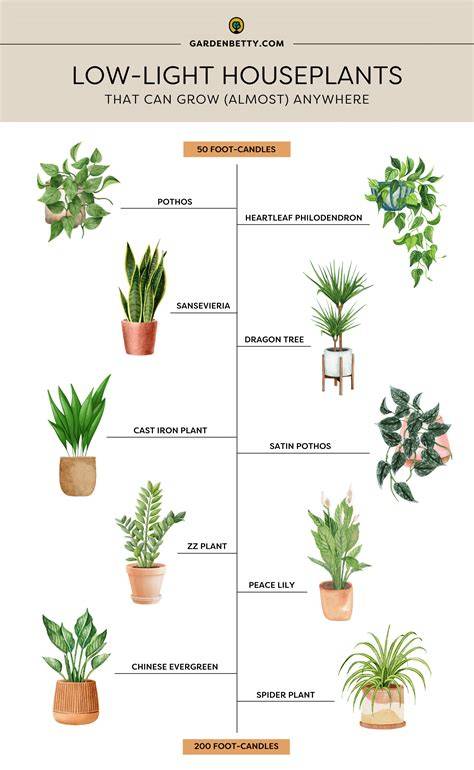
Images are suggested to enhance comprehension and are placed where they naturally illustrate the plant descriptions and care tips.
10 houseplants that THRIVE in low light 🌿 I purposely grow these in darker areas!
Video could show ideal lighting setups and simple watering routines for shade-tolerant species.
Practical tips for thriving in darkness
Where do you put low-light plants? Place near a window that receives indirect light. Plants displayed further away from windows can be rotated between brighter and darker spots in a room to give them a boost of natural light.
How do you keep plants alive in a low-light apartment? Some plants are more resilient to low-light conditions than others. If plants display symptoms of too little light such as leggy growth or faded coloring, move to a brighter spot near a window. Can low-light indoor plants survive in windowless rooms? Plants may survive with no light from windows or other sources, but may fail to thrive. In rooms with no windows, light levels for plants can be boosted with an artificial grow light.
How often should I water low-light indoor plants? Watering needs depend on the individual plant. Most low-light plants originate in tropical rainforests, preferring consistent moisture. Water when the top 1 to 2 inches of soil is dry. Don’t allow soil to dry out completely, and avoid overwatering to prevent root rot and other fungal diseases. Follow instructions for each type of plant, and group plants together with similar watering needs. Reduce watering during winter months when plant growth slows down.
Do low-light indoor plants need fertilizer? Most low-light tropical houseplants perform best with regular fertilizing during warmer months when they are actively growing. Research each plant and fertilize according to instructions. Cease fertilizing during winter months when plant growth slows down.
How do I prevent low-light indoor plants from getting leggy? Provide the minimum amount of light for plants to thrive. If growth becomes tall and leggy, move plants to a spot with more light. Cut back leggy growth to encourage new growth and a bushier habit.
What are some pet-friendly low-light indoor plants? Many houseplants can be toxic to curious pets; place toxic plants out of reach or only grow houseplants that are non-toxic. Low-light houseplants that are non-toxic to pets include bird’s nest fern, calathea, cast iron plant, Chinese money plant, nerve plant, parlor palm, peperomia, polka dot plant, prayer plant, rubber plant, spider plant and wax plant.
Are there flowering low-light indoor houseplants? Though most plants don’t bloom indoors, there are a few houseplant varieties that will flower in low light when given the right growing conditions. These include African violet, anthurium, bromeliad, kalanchoe, peace lily, pothos and spider plant.
Do low-light indoor plants need humidity? Many low-light indoor houseplants are native to humid tropical regions and benefit from additional room humidity, particularly in winter when home and office environments are dry from heating. To boost humidity, use a humidifier, mist foliage, or place pots on a tray with pebbles and water. Don’t let the pot sit in water to prevent root rot.
How do I identify if my plant is getting too little light? If growth is leggy or color fades, move to a brighter spot. In darker rooms, shade-loving options like cast-iron plants, pothos variegates, and ferns often display their best resilience with carefully managed light exposure.
There are many old-fashioned favorites that thrive in shade and can brighten gloomy spaces. Cast-iron plants, mother-in-law’s-tongue, and radiator plant are classic options. Ivy, the philodendron family, and many begonia varieties are also excellent for darker corners, offering attractive textures and patterns.