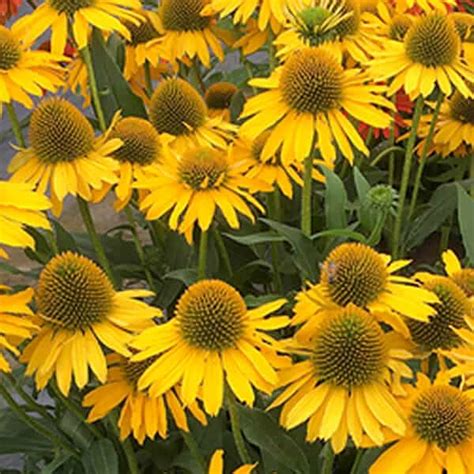
Kismet Yellow Coneflower (Echinacea hybrid) is a compact perennial known for its prolific bloom, long-lasting yellow daisies, and sturdy upright habit. It thrives in full sun, attracts butterflies and hummingbirds, and offers reliable summer to fall color in a variety of garden settings.
Overview and botanical profile
Kismet® Yellow Coneflower is an interspecific hybrid valued for its large, bright yellow blossoms with gold eyes. It grows up to 16 inches tall with a spread of about 24 inches and features a dense, ground-hugging foliage that remains relatively tidy through the growing season. This coneflower is hardy, adaptable to both dry and moderately moist soils, and well suited for borders, prairie-style plantings, or container gardens.
Native to North America in a broader sense, coneflowers have a long horticultural history as hardy perennials that support pollinators. Kismet Yellow stands out for its continuous flowering from early summer into mid-fall, provided at least some care and proper conditions are met.
Growing conditions and care
Light: Full sun with a requirement of at least 6 hours of direct sunlight per day. Water: Average; water regularly the first season to establish strong roots, then keep consistent but avoid waterlogging. Fertilizing: Minimal fertilization is needed; a light, balanced feed suffices. Winterizing: Avoid damp spots and do not heap mulch over crowns in winter, as this can promote rot.
Planting and spacing: Plant one liner per 4-inch or gallon pot, ensuring the crown is not buried too deep. Spacing depends on the final width, typically guided by ranges like 3-5 feet, but individual plans may adjust based on climate and desired density. For faster filling, use the lower end of the spacing in cold climates, or the higher end in warm climates or when budget constraints apply.
Transplant and establishment: Plants ship as dormant in spring or fall and should establish quickly once planted. If transplanted in fall, winter protection is recommended. In fall, consider transplanting to a 4-inch pot from a plug for easier establishment if you receive them late in the season.
Photoperiod and flowering: Echinacea is a facultative long-day plant with a critical day length between 12 and 13 hours, depending on variety. Providing extended day lengths (up to 16 hours) can promote flowering, while overly long days without a short-day break can sometimes delay or alter flowering patterns. Natural short-days or black-out cloth can be used to manipulate flowering if needed.
Care after planting
Watering: Maintain a balance between wet and dry cycles; overwatering can invite Pythium and Phytophthora, while under-watering can stress plants and reduce vigor. A broad-spectrum preventative fungicide after transplanting is often recommended, with labels followed for rates and intervals, and testing on a small group before broad application.
Pests and diseases: Thrips can be problematic during flowering, and botrytis can occur with poor air circulation or dense spacing. Ensure sufficient spacing and airflow to minimize disease risk. Pythium and Phytophthora may occur if soils stay waterlogged for long periods; allow the soil to dry moderately between waterings.
Pruning and maintenance: These plants are best left largely undisturbed after establishment, as they do not transplant well. Clean up in early spring before resuming active growth to encourage stronger vigor for the new season.
Garden performance and design ideas
Kismet Yellow Coneflower is a standout in perennial borders, prairies, and patio containers. Its compact habit and abundant blooms make it an excellent filler plant in mixed borders, contrasting well with taller thriller plants in container combos. It is an adaptable plant that tolerates a range of soils and urban conditions, and it is relatively drought-tolerant once established.
The flowers’ long vase life makes them ideal for cut arrangements, and they attract butterflies and hummingbirds, contributing to a lively garden ecosystem. In container plantings, be aware that outdoor pots in cooler climates may require more frequent watering, especially during hot or dry periods.
Hardiness, propagation, and longevity
The plant is herbaceous and perennially returning from the crown each spring. Under ideal conditions, it can be expected to live for about 10 years. In winter, it dies back to the crown and regrows from the base in spring. It is not particularly picky about soil type or pH and tolerates urban pollution well, even thriving in inner-city environments.
Practical notes for buyers and gardeners
Ideal shipping window for procurement is January through May, and there is a dedicated guarantee policy that covers plant health and true-to-name issues within a stated period. If problems occur, photos of the plant and order details may be required to process refunds or replacements. Plants shipped dormant in spring are guaranteed to break dormancy, though timing may extend beyond the guarantee period in some cases.
In cold climates or for fall-planted stock, winter protection is advised. When growing outdoors in containers, be mindful that most plants may not survive winter in containers in certain climates; plan accordingly and consider overwintering in sheltered locations or bringing plants indoors if necessary.
| Aspect | Recommendation |
|---|---|
| Light | Full sun (6+ hours) |
| Water | Average; consistent after establishment |
| Soil | Well-drained, adaptable to various soils |
| Spacing | Based on final width; typically 3-5 ft |
| Bloom time | Early summer to mid-fall |
Whether used in a mixed perennial border or as a bold focal point in containers, Kismet Yellow Coneflower offers bright color, reliable performance, and a useful blend of ornamental value and pollinator appeal.
Echinacea Coneflower Plant Care - Growing Instructions from Season to Season
tags: #kismet #yellow #coneflower