New Guinea impatiens (Impatiens hawkeri) are prized for their vibrant colors, lush foliage, and versatility in shade gardens, containers, and indoor spaces. They can be propagated by seed or cuttings, with cuttings offering exact clones of parent plants and seeds providing broader color and variety options.
Overview and uses
Quick Facts They provide long-lasting summer flower colour Available to buy as bedding plants in late spring and early summer Suitable for summer container displays Impatiens can be propagated by seed or cuttings They grow well in part-shade Some Impatiens are grown as houseplants Hardy varieties grow well year-round in shady gardens
Choosing the right Impatiens for you
There are several commonly grown Impatiens; the type you choose will depend on where you want to grow it and how long you intend to keep individual plants for. For summer borders and containers: In part to full shade, cultivars of Impatiens walleriana (busy Lizzie), or I. hawkeri (New Guinea hybrids) grow well. These are compact in habit and grow up to 50cm tall. For something taller, up to 75cm, consider growing I. balsamina. Some cultivars grow well in full sun, such as the SunPatiens and Sun Harmony series. They flower from early summer to autumn. For growing as houseplants: I. hawkeri (New Guinea hybrids) thrive in bright but indirect light indoors, often flowering year-round. Their leaves are sometimes or have reddish-purple tints, adding further interest. For something unusual try I. niamniamensis (parrot plant) with dramatic hanging yellow and red flowers. For outdoors year-round: Grow hardy species like I. arguta and I. stenantha in a sheltered shady position. I. tinctoria will survive outdoors in sheltered areas if protected with a winter.
Buying and sourcing
Buying Impatiens for seasonal colour are widely available in multi-plant trays or individual pots from most garden centres, nurseries and some supermarkets in late spring. Growing plants from seed may provide you with greater choice in terms of colour and variety. Cultivars of Impatiens hawkeri (New Guinea hybrids) and I. niamniamensis (parrot plant) are commonly grown as houseplants. You may find these sold alongside other houseplants in garden centres, but those sold as bedding plants will also grow indoors. Hardy cultivars of Impatiens are less frequently sold in garden centres. You may need to source these online from a specialist nursery - search RHS Find a Plant here.
Planting and seasonal considerations
Planting Impatiens grown as summer colour: Bedding and container displays are killed by frost and set back by low temperatures, so plant them outdoors when nighttime temperatures are above 7°C, usually in late May or early June. Harden off young plants, to acclimatise them to outdoor conditions, before planting them out.
How you plant your Impatiens
- In containers: Impatiens make a long-lasting summer display of flowers in pots, hanging baskets and window boxes. They are especially useful for areas that are shaded, or only get morning or late afternoon sun. A peat-free multi-purpose compost is suitable for growing Impatiens in containers outdoors and indoors.
- In borders: You can plant tender cultivars into beds and borders as part of a summer bedding display, or use them to fill in gaps around or under permanent planting. Hardy cultivars are best planted in late spring in a sheltered spot. Impatiens grow well in most garden soils; if you have light, poor soil, add one bucketful of well-rotted organic matter per square metre/yard before planting.
Ongoing care
Impatiens need very little regular maintenance after planting but to keep plants happy and healthy follow these tips. Watering: Keep or soil moist (not soggy) and don't allow your plants to dry out entirely. Water houseplants freely during spring and summer, but reduce watering in winter, keeping compost just moist. Deadheading: You don't usually need to deadhead your plants (unless they form lots of seedpods), but removing faded flowers keeps plants looking tidy. Feeding: Plants growing in containers can be fed with an organic-based liquid seaweed fertiliser as per the instructions on the label. Adding garden compost or any well rotted organic matter when planting into a border should provide sufficient for good plant growth. If plants start to show signs of poor growth or nutrient deficiencies then see our feeding plants page for more information. Houseplants can be fed with a houseplant feed from March to October, as per the instructions on the label. Overwintering: Impatiens grown for seasonal summer colour are tender perennials and are usually dug up and composted at the end of autumn. If you wish to take cuttings rather than buying new plants next year, pot up your plants and bring them into a greenhouse or conservatory with a minimum temperature of 10°C. You can treat tender species, such as Impatiens tinctoria, like dahlias by lifting or mulching. Hardy cultivars will survive outdoors in a sheltered position.
Pruning and training
Impatiens are naturally bushy plants, so you don't need to do much pruning. However, if they become leggy, pinching or snipping out the tops of stems often encourages new growth from lower down.
Propagating Impatiens
The two main methods of propagating Impatiens are by seed and by cuttings. Seed propagation can provide greater color and variety, while cuttings produce exact clones of the parent plant.
Seed: Sow collected (or bought) seed undercover in spring. Sow into modular seed trays filled with moistened peat-free compost. Place a couple of seeds into each cell and cover with a light dusting of sieved compost. Cover with a plastic lid and place in a bright spot at 18-20°C. After germination, which can take two to three weeks, keep in a frost-free place, such as a greenhouse or windowsill, in good light but out of direct sunlight. In some varieties, seeds must be started indoors 10-12 weeks before the last expected frost. Seeds germinate best at temperatures between 70 and 75°F (21-24°C); temperatures above 80°F (27°C) can cause leggy seedlings.
Cuttings: Impatiens root easily from taken cuttings in spring from overwintered or bought plants. Cuttings taken in early spring should be ready to plant outside in early summer. Stem cuttings will root by removing the lower leaves and immersing the bottom couple of centimetres in water. Cuttings can be rooted in water or in a well-drained potting mix. For water rooting, place cuttings in a glass or jar, keeping the cut end and leaf node submerged, and refresh the water every week or two. For soil rooting, use a rich, well-drained mix and keep evenly moist. Rooting typically occurs in two to four weeks. After rooting, pot up in appropriate containers with good drainage. When propagating indoors, provide bright, indirect light; outdoors in partial shade is suitable for cuttings that have not hardened off yet. Rooted cuttings can be transplanted to larger pots or garden beds as conditions permit.
Note: Some Impatiens are protected by Plant Breeder’s Rights, and you are not allowed to propagate them for sale. New Guinea impatiens can tolerate more sun than traditional varieties, but they perform best with morning sun and shade from harsh afternoon heat.
Problems and tips
- Damping off: keep seedlings moist but not soggy and sow into fresh peat-free seed compost.
- Downy mildew mainly affects I. walleriana; dispose of affected plants. Some resistant cultivars are available. I. hawkeri cultivars are less affected.
- Grey mould (Botrytis): remove affected growth; high humidity and overcrowding encourage its spread.
- Vine weevil larvae can damage roots, especially in containers; use nematodes for control.
- Glasshouse red spider mite and aphids may affect houseplants and outdoor plants in hot, dry weather.
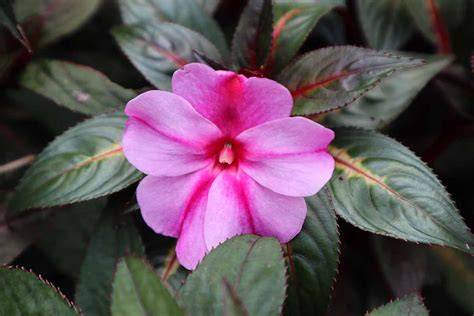
New Guinea impatiens are easy to grow and respond well to pruning, returning bigger and better. They are among the most popular shade-loving flowers, available in a range of colors including pink, red, mauve, purple, orange and white. The foliage is bold and often tinged with red-bronze or splashed with bright green or yellow.
Practical notes on size and growth
New Guinea impatiens can grow up to about 38 cm (15 in) tall, with variability depending on cultivar and growing conditions. They are typically used in shade gardens, borders, containers, and indoor spaces where bright indirect light is available. They are evergreen or semi-evergreen in warmer zones and are often grown as annuals in cooler climates.
Would you like to try seed propagation?
Seeding New Guinea impatiens can be challenging for some varieties because many hybrids do not produce viable seed or revert to parent types. However, for varieties such as Java, Divine, Spectra, Sweet Sue, and Tango, seed propagation is possible with careful attention to warmth and light. If you want quick results and exact plant characteristics, cuttings remain the most reliable method.
How To Water Propagate New Guinea Impatiens
Summary of propagation options
- Seed propagation: broader color range, longer seed-to-flower timeline, possible for some cultivars; requires warm, bright conditions and patience.
- Cuttings: clones of the parent plant, reliable and faster, suitable for most varieties including New Guinea hybrids.
Note: You can propagate impatiens year-round in optimal conditions, but outdoor planting for seasonal bedding should wait until night temperatures consistently exceed 7°C.
Whether you propagate by seed or cuttings, New Guinea impatiens offer versatile beauty for shade gardens, containers, and indoor spaces. With careful attention to light, moisture, and temperature, you can enjoy a long season of colorful blooms.
tags: #new #guinea #impatiens #propagation