By harnessing solar energy, solar-powered greenhouses create sustainable growing conditions for plants, regardless of external climate variations. This guide explores how solar greenhouses work, their key benefits, and the different types available. Whether you're a gardening enthusiast, a professional farmer, or simply passionate about sustainable technology, this resource aims to inform and inspire you toward a greener, more efficient future.
What Is a Solar-Powered Greenhouse?
A solar-powered greenhouse is a structure that uses the sun’s energy to heat up and provide light and energy for plants and crops. There are different types of solar greenhouses, and each comes with its own strengths and weaknesses. Solar-powered greenhouses can utilize renewable solar energy to provide the greenhouse with power and maintain a comfortable environment for plant growth. Even if the weather outside the greenhouse is less than ideal for plant growth, a solar greenhouse’s controlled internal environment can be tailored explicitly for successful growth.
How Do Solar-Powered Greenhouses Work?
Solar greenhouses should be south-facing for best results; this area is designed to maximize sunlight retention and optimize energy generation. The north end will be well-insulated to prevent heat loss, while the longest axis of the greenhouse stretches from east to west. You’ll also notice that most solar greenhouses are made of glass to ensure complete absorption of sunlight. Natural ventilation features help maintain the temperature, keeping things cooler in the summer and minimizing heat loss in the winter. Greenhouse solar panels work like regular panels, capturing sunlight and converting it into usable energy.
A solar-powered greenhouse offers numerous benefits for growing plants and crops. From saving you money and improving plant results to doing good for the environment, here are several benefits you’ll gain if you rely on the sun’s power to keep your greenhouse running.
Reduced Energy Cost: The initial cost of installing a solar-powered energy system for your greenhouse can be significant, but the long-term savings it provides can’t be ignored. Using renewable energy sources to power your greenhouse can significantly reduce your monthly energy costs.
Improved Yield: With reliable and renewable energy from the sun, your plants and crops can take advantage of the light and warmth to produce higher yields. Even during colder months when crops outside the greenhouse can’t survive, your solar-powered greenhouse can maintain thriving plants.
Eco-Friendly: The energy that comes from the sun is clean, renewable, and sustainable. Traditional energy sources emit pollutants and harmful greenhouse gases, but not solar. By choosing solar as your greenhouse energy source, you’ll help the environment by utilizing natural resources instead of traditional energy sources like oil.
Low Maintenance: Once you’ve installed a solar-powered system in your greenhouse, you won’t need to worry about it beyond a bit of annual cleaning and inspection by a professional. Your installed panels require little maintenance and don’t need frequent repairs or replacements.
Energy Independence: With a system that runs on the sun’s power, if you’ve paired it with a solar battery, you won’t have to rely on an energy provider or worry about blackouts. Your greenhouse will be fully self-sufficient and independent of any other energy sources, so there’s no concern about rising energy prices or what to do in the case of a blackout. With solar-powered energy systems that incorporate a solar battery, you can store any excess energy your system generates but doesn’t use, giving you a source of energy to draw from in cases like a blackout. There will be no worry about how to keep your crops happy because you’ll always have power for things like your heaters, lights, and vents.
Government Incentives: For those who want to switch to solar energy, governments worldwide are offering some attractive incentives. Other benefits may include net metering programs developed by your state or local municipality and more. Make sure to look into what incentives you might be eligible for in your area!
Scalability: Solar-powered greenhouses are an excellent option for anyone looking to customize their gardening experience. You can easily scale up or down your renewable energy system, depending on the size of your greenhouse and how much power you need. Your panel installations can be designed to fit the exact needs of your greenhouse to maximize sustainability.
Versatility: Solar energy can power various applications, from heating and cooling systems to lights and even machinery. There are several ways to harness the sun’s energy needed to power your greenhouse, but three methods are the most widely used: passive solar greenhouses, panels, and generators. Each requires different equipment, comes with different costs, and creates different energy outputs. Learn how each method works and discover the pros and cons of each so you can determine the best method for your greenhouse and goals.
Passive Solar Greenhouses
A passive solar greenhouse uses the natural energy from the sun to heat a structure or space. The sunlight enters through large windows on the structure’s south side and is then absorbed by materials like concrete, water, or stone that store and slowly release the heat throughout the day. This method helps maintain consistent crop temperatures without relying on additional energy sources. It also requires fewer mechanical systems and relies on natural energy, meaning the ongoing costs to keep it operating are often lower than a traditional greenhouse. However, since it’s passive (vs. active), it’s more climate-dependent than other options and requires a location and design with high sun exposure.
Pros: Energy-efficient; Eco-friendly; Cons: Dependent on climate; Design constraints.
Solar Panels for Greenhouses
Solar panels are commonly used as a solar energy source for greenhouses, especially among sustainably-minded people. Made of photovoltaic cells, solar panels and systems can be installed to convert sunlight into usable electricity. Solar panels can create energy to power electrical systems that provide your plants with an ideal environment to thrive. You can use solar panels to capture and use the sun’s powerful energy all year. In the summer, you can use it to ventilate excess heat; in the winter, your solar panel system can provide additional heat for plant health. Depending on the structure of your greenhouse, you can choose between flexible or rigid panels. Flexible panels, like EcoFlow’s Flexible Solar Panels, help maximize surface area on irregular or curved surfaces, while rigid panels, such as our 400W Rigid Solar Panel, are best for permanent installations. A combination of both may help you to maximize electricity generation while taking advantage of as much space as possible.
Pros: Renewable energy source; Reduced monthly costs; Versatile enough to use elsewhere as needed. Cons: Higher upfront investment; Dependent on direction and sun exposure.
Solar Generators for Greenhouses
A solar generator combines solar panel technology and battery storage to power appliances, which can include things like lights and other equipment. Used in greenhouses, this combination of reliable energy production and storage makes it easy to maintain the perfect temperature, light levels, and humidity needed for plants. A solar generator can help power multiple appliances at once, including greenhouse lights, water pumps, heating systems, and more. For a high-capacity need such as a greenhouse, you can rely on EcoFlow’s solar panels paired with a portable power station from the EcoFlow DELTA Series.
Pros: Can power a variety of devices; Gives you energy independence. Cons: Limited power depending on the generator; Can take several hours to recharge, especially in cloudy conditions.
Choosing the Right Option for You
The type of solar greenhouse you choose will depend on your budget, greenhouse size, location, and unique needs. A passive solar greenhouse could work best if you live somewhere with lots of sunlight and a mild winter, while a solar panel greenhouse is a good choice if you have several devices you need to power in your greenhouse and don’t mind an upfront investment. To understand how much power a greenhouse will need, you need to determine what operations you’ll need solar power for, how many watts of energy each process requires, and how many hours you need for each function. Once you know how much energy is required by each operation you need to power, then combine them to determine the energy usage your greenhouse will need. Don’t forget to include things like lighting, heating, and watering! The amount of electricity your greenhouse might need may vary depending on the size of your greenhouse, the location of the greenhouse and its weather, and other features you may have, like wall insulation, vents, or energy screens. Once you know how much solar power your greenhouse requires, you’ll want to consider the number of solar panels it needs.
Q1: How Many Solar Panels Does It Take to Run a Greenhouse?
A1: The number of solar panels you’ll need to run your solar greenhouse can vary drastically, depending on how large your greenhouse is, your electricity requirements, the rated power and efficiency rating of your solar panels, and more.
Q2: What Is the Disadvantage of a Solar Greenhouse?
A2: The main disadvantage of a solar greenhouse is the upfront cost. Depending on the type and size of your solar greenhouse, you could end up investing a significant amount of money into solar panels and a portable power station. However, once installed, solar greenhouses are low-cost and low-maintenance.
Q3: Is a Solar Greenhouse Worth It?
A3: Solar greenhouses are worthwhile. Solar greenhouses offer several benefits, from reducing energy costs and improving crop yields to being eco-friendly and requiring little maintenance. Solar greenhouses are a great way to use renewable energy sources and reduce your environmental footprint. They offer various benefits, from energy independence and low maintenance requirements to improved yield and scalability.
I'm building a 17x8 insulated greenhouse on a paltry budget. I have a 260w solar panel, and am awaiting an MPPT 30A controller based on recommendations from my brother. I already understand that running any sort of growing light or electric heat would require enormously more power than this will generate. This system is only needed to power a robot (400w daily requirements), a fan, a few low-power LED lights, and a pump to circulate water through a solar hot water panel. If there's the power to spare, I might also add a diesel heater, which requires around 12w/hr to run and a bit more to initially start (call it another 300w a day). As this is stationary and I'm short on cash, I'd prefer to run this on deep cycle batteries rather than the newest LiFePo batteries that I won't be able to afford in the next year or two, but I'm open to suggestions. I'm located in New England, so during the winter I can't count on much more than 5 hours a day of reasonable sunlight. You can use 2 12 volt Marine/RV batteries from Wal-Mart about $120 each with a 2 year warranty so if they die early you are covered. Deep cycle marine/starting batteries are the least expensive (up front) way to get some cycles and the amp hours to get up and running. If you have 30$, you can get a 'kill-a-watt EZ' indispensible, inexpensive small instrument for gathering real numbers for consumption and for battery sizing. Then you can take the module spec over to pv watts site and model it or refer to an insolation chart for your region. You dont have to obey them, just knowing is good stuff. Thank you both. I have a Kill-o-Watt for 110vac, but unless the fan, LEDs and pump take a lot more power than expected, I think 1000w will be more than sufficient. I may not be able to run everything I want at the height of winter, but this is enough to start out, I can upgrade later. From the videos I've been watching on YouTube, I'd gotten the impression that my options were "sell your soul and/or body so you can buy several grand worth of LiFePo4" or "just give up entirely". I run led valoya lights to start veggies.... You did list quite a bit of stuff as loads or potential loads. Sounds like a tall order for a single 260. It means 26W or even 10W or less on many days in winter where you are at. I’m building a 17x8 insulated greenhouse on a paltry budget. I have a 260w solar panel, and am awaiting an MPPT 30A controller based on recommendations from my brother. I already understand that running any sort of growing light or electric heat would require enormously more power than this will generate. This system is only needed to power a robot (400w daily requirements), a fan, a few low-power LED lights, and a pump to circulate water through a solar hot water panel. If there's the power to spare, I might also add a diesel heater, which requires around 12w/hr to run and a bit more to initially start (call it another 300w a day). As this is stationary and I'm short on cash, I'd prefer to run this on deep cycle batteries rather than the newest LiFePo batteries that I won't be able to afford in the next year or two, but I'm open to suggestions. I'm located in New England, so during the winter I can't count on much more than 5 hours a day of reasonable sunlight. The power needs of a greenhouse can vary significantly based on its size, the climate, and the specific plants being cultivated. But in any circumstances, you can rely on solar power to meet its energy needs. Greenhouse essential systems that typically require electricity include lighting, heating, ventilation, and irrigation. Grow lights are crucial for providing the necessary spectrum of light for photosynthesis, especially during the winter months or in regions with limited sunlight. Heating systems are vital for maintaining optimal temperatures for plant growth, which can include electric heaters or more advanced systems like heat mats and radiant heating. Ventilation is necessary to regulate temperature and humidity levels, often involving exhaust fans, circulation fans, and automatic vent openers. A solar panel kit for a greenhouse can take care of all of these needs - provided it is large enough. The kit usually contains solar panels, an inverter, a battery and a charge controller. Cost Savings: Solar energy can significantly lower electricity bills, reducing operational costs over time. Environmental Impact: Solar power is a clean, renewable energy source that reduces the greenhouse’s carbon footprint. Any solar panels can be used to provide power for a greenhouse. The difference is in how you choose to install them. A greenhouse can be powered by a nearby ground-mounted installation. If the structure is solid enough, you can even put bifacial solar panels on the greenhouse roof since they let the light through. The Growing Dome® is a solar greenhouse system designed to stabilize temperature swings and support year-round growing with a passive-first approach. Its geodesic shape spreads light more evenly throughout the day, and its core features, including high-quality polycarbonate glazing, thermal mass, and ventilation, are engineered to help you manage heat gain, heat loss, and airflow in real-world conditions.
The Most Efficient Solar Greenhouse Design: The Growing Dome
The Growing Dome is a solar greenhouse system designed to stabilize temperature swings and support year-round growing with a passive-first approach. Its geodesic shape spreads light more evenly throughout the day, and its core features, including high-quality polycarbonate glazing, thermal mass, and ventilation, are engineered to help you manage heat gain, heat loss, and airflow in real-world conditions.
Why a geodesic dome performs so well as a solar greenhouse: The dome’s curved surface captures sunlight across more angles as the sun moves from morning to afternoon. In practical terms, that means less “all-at-once” midday intensity and more usable light earlier and later in the day compared to many flat-walled structures. The dome shape also distributes loads efficiently, helping the Growing Dome stand up to wind and snow when built and maintained as designed.
Passive solar greenhouse fundamentals: Passive solar means using the sun’s energy to warm the greenhouse directly, then slowing heat loss so that warmth is available longer into the night. Light transmission & polycarbonate glazing: Growing Spaces dome kits come standard with 16mm multi-wall polycarbonate with about 65% light transmission, delivering diffused light that reduces harsh hot spots. Polycarbonate glazing is covered by a 10-year warranty against yellowing and hail damage in many cases.
Automatic vent openers help protect the greenhouse from overheating by opening and closing based on temperature, without electricity. They rely on a wax piston that expands and contracts with temperature changes. The above-ground pond acts as a core part of the Growing Dome’s passive solar design. Water stores heat during the day and releases it back into the greenhouse when temperatures drop, reducing temperature swings. The pond is typically located on the north side to preserve south-side growing space and support winter solar performance. The pond can also serve as a living ecosystem or as part of an integrated aquaponics system.
Reflective north wall insulation (Reflectix) covers the northern portion of the dome to reduce heat loss during winter nights and to direct light towards the thermal mass above-ground pond when the sun is low. Active solar components & ventilation: While passive design carries much of the load, ventilation remains the practical control lever for day-to-day stability. Fans move hot air off the ceiling, exchange interior air with outside air when possible, and reduce stagnant pockets that stress plants. In a Growing Dome, fans supplement the natural chimney effect of the dome and the vent layout. In shoulder seasons and winter, controlled ventilation helps humidity management, but must be done deliberately to avoid wasting heat. An undersoil ventilation system recirculates air from the pond to other areas for more even temperature and humidity across day/night and seasons.
Solar-powered components and off-grid capability: Solar power can run key ventilation components in smaller domes, which is valuable for customers who want basic ventilation without depending on grid power. For larger domes, standard ventilation typically uses 115V fans, which requires an electrical supply. Off-grid performance depends on the chosen fans and controls, pumps or other accessories, and whether supplemental heating or cooling is needed. If off-grid is a priority, define your target outcomes and choose the power and ventilation configuration with a Growing Dome Advisor.
Put together, the Growing Dome’s geodesic light capture, diffused insulated polycarbonate, thermal mass pond, reflective north insulation, and ventilation controls function as a single passive-first solar greenhouse system. The goal is to give you more stability and more control over heat, humidity, and airflow so you can grow more reliably across the year. If you tell us your climate, goals, and whether you are grid-tied or off-grid, we can help you choose the right dome size and options. If you tell us your climate, goals, and whether you are grid-tied or off-grid, we can help you choose the right dome size and options.
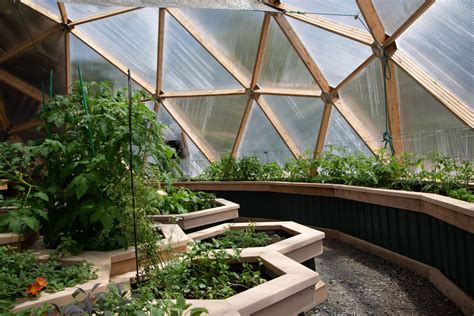
In summary, solar-powered greenhouses come in multiple designs-from passive solar structures to panel-based systems and standalone solar generators. Each option offers unique advantages for energy savings, yield improvements, and environmental impact. The Growing Dome exemplifies a high-efficiency, passive-first approach with diffuse lighting and integrated thermal mass, aiming to stabilize conditions year-round without heavy reliance on grid power.
tags: #solar #for #greenhouse