Aeration is often recommended as a way to relieve soil compaction and improve air, water, and nutrient movement throughout your lawn. But not all aeration methods are created equal. One of the most commonly marketed options, spike aeration, is often misunderstood. While it may look like an easy fix for compacted soil, it can actually do more harm than good in many situations. Come discover why the downsides of spike aeration may not be worth the convenience, and learn about better options for aerating your lawn in the post!
What Spike Aeration Is & How It Works
Spike aeration involves poking holes in the lawn with a solid, narrow tine or spike, often attached to a manual tool, a rolling drum, or even a pair of special “aerator” shoes. These spikes push into the ground to create channels that supposedly improve the movement of air, water, and nutrients to the roots. At first glance, the process seems logical. After all, poking holes in a compacted surface sounds like it should relieve pressure and create pathways for moisture and nutrients.
But the key to understanding spike aeration lies in how it actually affects the soil beneath the surface. Instead of removing soil, spike aerators simply displace it. As each tine drives into the ground, it pushes surrounding soil outward and downward, creating a dense wall around the hole. While the hole itself may look like an open channel, the surrounding compacted soil can actually become more tightly packed than before, which may negate or even reverse any potential benefit.
Common spike aeration tools include: Hand-held or foot-operated aerators with solid spikes; Rolling drum aerators with solid tines; “Aerator” shoes or sandals with spikes attached to the soles; Tow-behind attachments for riding mowers or lawn tractors.
Why Spike Aeration Falls Short
The main problem with spike aeration is that it doesn’t truly alleviate compaction; it simply rearranges it. This is especially important for lawns with clay-heavy soils or areas that experience heavy foot traffic. In these conditions, soil particles are already tightly packed, leaving little room for air or water. Driving a solid spike into that environment compresses the surrounding soil even more, which can worsen drainage problems and limit root growth.
Another drawback is that spike aeration produces very shallow holes compared to other methods. Because the spikes don’t pull anything out of the ground, the channels they create tend to close up quickly after watering, mowing, or even normal foot traffic. This means the benefits, if any, are extremely short-lived.
Notable issues with spike aeration include:
- Increased soil compaction: Instead of pulling cores of soil out, spikes push soil to the sides, creating denser areas around the holes.
- Shallow penetration: Most spike aerators only penetrate 1-2 inches deep, often not enough to reach the root zone where compaction matters most.
- Short-lived effects: Any improvement to water infiltration or oxygen movement disappears quickly as the soil settles back into place.
- Potential turf stress: In some cases, spike aeration can damage grass roots, especially during dry conditions, further stressing the lawn.
Pros & Cons of Spike Aeration
It’s not all bad news. Spike aeration does have a few advantages in very specific scenarios. It can be useful as a quick, temporary fix when you don’t have access to heavier equipment, or if your lawn’s soil isn’t severely compacted. But even then, it’s important to understand the trade-offs.
Benefits of Spike Aeration
- Low cost compared to renting or hiring a core aerator
- Easy to perform on small lawns without specialized equipment
- Less disruptive to the lawn’s surface appearance
- Useful for very sandy soils that don’t compact easily
Drawbacks of Spike Aeration
- Can increase compaction around each hole
- Benefits are extremely short-term and superficial
- Ineffective for clay soils or heavily trafficked lawns
- May require repeated passes for minimal results
Better Lawn Aeration Methods
If your goal is to genuinely improve soil health, reduce compaction, and create a stronger root system, core aeration (also called plug aeration) is a much better choice. This method uses hollow tines instead of solid spikes to actually remove plugs of soil from the ground. By physically extracting soil cores, it relieves pressure, opens up space for root growth, and creates channels for air, water, and nutrients to flow more freely.
Core aeration offers multiple long-term benefits:
- True compaction relief: By removing cores of soil, it reduces density rather than increasing it.
- Improved root growth: Roots expand into the open spaces created by the removed plugs.
- Enhanced water and nutrient absorption: Water and fertilizer move deeper into the soil where they’re needed most.
- Longer-lasting results: Benefits persist far longer than spike aeration because the removed soil creates lasting air pockets.
- Improved overseeding: Pairing aeration with overseeding helps new grass seed establish in loosened soil.
- Regular dethatching: Removing excess thatch prevents a dense layer from forming above the soil, which can block water and nutrient absorption.
When Spike Aeration Might Still Be Acceptable
Although core aeration is widely considered superior, spike aeration can occasionally be useful in limited circumstances. For example, on sandy soils that naturally resist compaction, the risk of worsening soil density is minimal. Spike aeration can also be used as a stopgap measure if your lawn is too wet for a core aerator or if you need a quick touch-up before a special event.
If you decide to use spike aeration, keep these tips in mind:
- Use spikes only on sandy or lightly compacted soil.
- Aerate during the growing season so grass can recover quickly.
- Water the lawn before and after to minimize stress.
- Follow up with a more effective aeration method as soon as possible.
Consider Liquid Lawn Aeration
Consider Liquid Lawn Aeration From Summit Lawns! If you’re ready to give your lawn the benefits of aeration without the disruption of traditional equipment, Summit Lawns offers liquid lawn aeration. Instead of using machines or spikes, liquid aeration applies a specialized soil-conditioning formula that breaks apart compacted particles at the microscopic level, creating deep pathways for air, water, and nutrients to move freely into the root zone. This means no unsightly soil plugs left behind, no heavy equipment on your yard, and a more even treatment across the entire lawn. For homeowners looking for a cleaner, more convenient way to aerate their lawns, liquid lawn aeration may be just what you need.
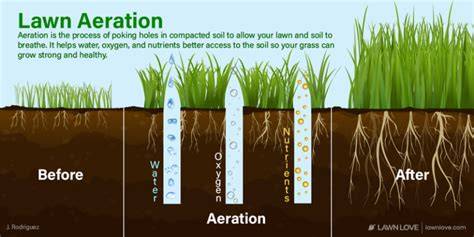
Differences In Aeration Types
A: I think he won’t get much benefit from using a spike aerator. When a core aerator passes over a lawn, it pulls up thousands of soil plugs. The holes left behind have rough sides and their large interior surface gives lots of places for air and water to penetrate. Spike aerators tend to compact the soil because they just push the soil out of the way as they pass over. Golf courses sometimes use spike aerators but they do so because their soils are usually sand-based and the spikes break through the water-repelling black layer under the sand. Your lawn's soil can become compacted over time, making it difficult for your grass to thrive. That’s why most landscapers, including The Grounds Guys®, recommend that homeowners aerate their lawns at least once a year.
Heavy foot traffic and plain old time can gradually compact your soil. The solution? Lawn aeration creates small holes or openings in the soil to allow important elements like air, water, and nutrients to hit the grass roots more efficiently. Aeration is performed using a special device called an aerator.
What are the differences between spike aerators vs. plug aerators? Spike aerators are any type of aerator that uses solid tines to make holes in the ground. Plug aerators (also called core aerators) use hollow tines that pull soil plugs out of the ground, leaving them scattered on the lawn's surface. While spike aerators can loosen soil temporarily, they often create more problems than they solve. In fact, spike aeration can actually worsen soil compaction!
Which Is Better A Spike or Plug Lawn Aerator?
Core aeration removes compacted soil entirely, creating genuine pathways for air, water, and nutrients to reach grass roots. Additionally, core aerators penetrate deeper into the soil than most spike aerators, addressing compaction issues at the root level where your grass needs the most help. Water pooling, tough soil penetration, unhealthy grass, thatch buildup, and high usage are signs your lawn may need aeration. The article is intended for general informational purposes only and may not be applicable to every situation.
When To Use Core Aeration For Best Results
Core aeration can be performed with manual, gas-powered, or tow-behind machines. The best time to aerate is during the active growing season. For cool-season grasses, that’s in the fall. The three most common types of plug aerators are manual, gas-powered, and tow-behind. Manual aerators are the least expensive option but also the most physically challenging to use. Entry-level tow-behind core aerators can be purchased for under $100, but you’ll need a lawn tractor to hook them up.
We recommend choosing a core aerator for long-term lawn health. Spike aerators may be tempting for convenience, but they don’t truly relieve compaction and can increase it over time. The Grounds Guys emphasize that core aeration is the superior choice and that long-term health matters, even if it requires more effort.
< tagimg>comparison core vs spike aeration diagram| Method | Depth | Soil Impact | Longevity | Best For |
|---|---|---|---|---|
| Spike Aeration | 1-2 inches | Displaces soil | Short | Sandy, lightly compacted lawns |
| Core Aeration | 2-3+ inches | Removes plugs | Long | Most lawns, clay soils, high traffic |
How To Use A Spike Aerator (If You Choose This Route)
If you decide to use spike aeration, follow these practical steps to minimize harm: aerate during the growing season, water before and after, and limit passes to avoid excessive compaction. Use spikes only on sandy or lightly compacted soil. After aeration, plan a transition to a more effective method as soon as possible.