To grow good plants, you need good soil. The only way to tell what your soil really needs is to take a soil test. Applying too much fertilizer could be detrimental to your plants. You could waste money or pollute the environment. Adding too little fertilizer or the wrong fertilizer could produce little or no results. Proper soil sampling techniques are essential to obtain accurate soil test results. A basic soil test measures phosphorus, potassium, pH, and organic matter. A proper pH is important for nutrient availability to plants. Take the soil sample well before planting so there is time to add what the soil needs. For the most accurate results, use the services of a commercial soil testing lab rather than a soil testing kit.
Purdue does not do soil testing for homeowners, but you can get your soil tested in central Indiana by contacting one of several labs. Generally, you need to collect enough soil to fill a plastic sandwich bag and indicate the type of plants that will be grown in the sampled area (such as lawns, trees and shrubs, flowers, vegetable gardens, or fruit trees). Lawn & Garden Soil Analysis is one example service, priced at $30.00, and includes Soil pH, Buffer pH, Available Phosphorus, Exchangeable Potassium, Organic Matter, Magnesium, Calcium, Cation Exchange Capacity, and Percent Base Saturation of Cation Elements, with a graphic display of results and fertilizer material recommendations for lawn, garden, and landscape.
Several different tests are offered by various labs. For example, the University of Massachusetts lab provides a Standard Soil Test ($10.00) that covers pH, Buffer pH, Extractable Nutrients, Extractable Heavy Metals (e.g., Lead), Cation Exchange Capacity, and Percent Base Saturation, with nutrient and pH adjustment recommendations included. The reference to laboratories here does not imply endorsement of other similar labs.
Anyone who has a garden in an urban environment should test the soil for lead. Lead can be toxic at high concentrations and contamination can occur from lead-based paint that chipped off old buildings (prior to 1978) and lead from auto emissions along busy streets. Lead is not presently used in paint and gasoline to any degree, but once deposited, it does not move much through the soil and can persist for a long time. Free soil testing for lead is available from Safe Urban Gardening Initiative, c/o Dr. Gabriel Filippelli, IUPUI.
Lead testing outside Marion County: Out-of-county residents should contact their own county health department; consult local government information for a telephone number. If needed, your Purdue County Extension office can direct you to the proper contact information.
What is a soil test? A soil test is a process by which elements (phosphorus, potassium, calcium, magnesium, boron, sulfur, manganese, copper, iron, and zinc) are chemically removed from the soil and measured for their "plant available" content within the sample. The quantity of available nutrients in the sample determines the amount of fertilizer or other soil amendment that is recommended. A soil test also measures soil pH, organic matter, and cation exchange capacity (CEC).
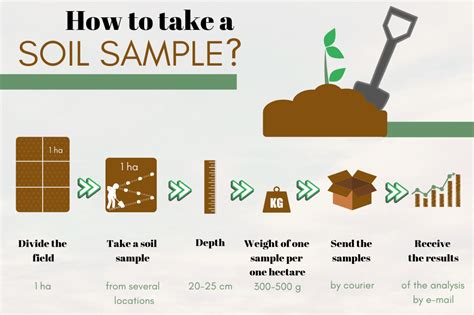
How to collect a soil sample: Since only a small portion of the soil is used for testing, it is very important that the sample be representative of an area. For a standard soil test, take several samples from each area of your yard (front yard, shrub bed, garden, etc.). For large areas, 5-8 cores are needed, but for narrow shrub or flower borders, 2-4 cores will do the job. Mix all samples in a clean pail or bucket to create your representative sample or "average" soil for your yard.
If you are targeting a problem area, you can restrict your sampling to the problem area only. Remove surface debris, such as plant residues, mulch, or turf thatch, from the soil before inserting the soil probe, spade, or trowel. Sample garden, shrub, and flower beds to a depth of 6-8 inches. Sample turf areas to a 3-inch depth. Sample tree root zones to 8-12 inches or deeper. Sample row crops (in gardens) between the rows to avoid fertilizer bands. Sample front and back yard separately if they have been managed differently or contain different types of fill soil. Dry samples at room temperature. Break up any lumps and remove all stones, debris, grass, etc. When dry, mix well and eliminate clumps. Bring 2 cups of soil to the SWCD in a clean container for testing.
Purdue Extension - Allen County offers several services to assist the community with plant, insect, and soil problems. Master Gardener Hotline is a FREE service where questions or photos can be submitted to Master Gardeners. Details of services are provided by the office, including submission guidelines and a Sample Submission Form. A nominal fee ($5) is collected at submission. The Allen County office provides diagnostic support, but may refer samples to the Purdue Plant and Pest Diagnostic Lab (PPDL) for full verification through disease or viral testing. For general decline or disease issues, submit whole plants with roots and soil, plant branches, and disease-affected portions as described in guidelines to ensure accurate diagnosis.
The Plant and Pest Diagnostic Laboratory (PPDL) works to diagnose plant diseases and identify insects, plants, weeds, and other plant and pest problems. Understanding nutrient levels and soil pH is beneficial to maintaining healthy crops, lawns, and gardens. Our soil samples are processed by A & L Great Lakes Labs, and both you and our office receive a copy of the report. Soil testing services require 2 cups of soil per sample and payment in cash or check. Result processing typically takes 7-10 business days. Plant tissue, compost, or heavy metals testing is not offered; a certified lab is recommended for these services. Proper soil sampling techniques are essential to obtain accurate soil test results and Purdue Extension - Allen County offers soil testing services to analyze soil nutrient levels and help interpret results and recommendations.
Soil testing fees often run around $20 per sample. Keep samples from different areas separate because areas treated differently or with different fill soils will have different soil profiles. It is best to take samples in spring or fall before applying fertilizer, allowing time for samples to be processed before fertilizer needs to be applied. A common takeaway is that soil testing should ideally be conducted on a yearly basis to inform fertilizer decisions for the next season; tests also help identify issues such as pH imbalances or salinity that can be addressed before planting.
Laboratories such as A&L Great Lakes offer several test packages. The S1 basic package covers organic matter, pH, CEC, and macronutrients (P, K, Mg, Ca). It is often recommended to upgrade for detailed recommendations on lime and fertilizer applications for the next crop. Nitrogen is typically not included in standard soil tests because it is highly leachable and fluctuates during the season, and thus does not reflect conditions at plant uptake time. Micronutrients are sometimes included in higher-tier packages (e.g., S3) to address zinc, manganese, iron, copper, boron, and sulfur needs, while S2 adds soluble salts and sodium to monitor potential salt buildup, particularly for high tunnels where rainfall is excluded and fertilizer accumulation can be a concern.
The information above summarizes practical steps for homeowners and gardeners in Indiana who want reliable soil analysis through Purdue Extension and external laboratories, including sampling guidelines, test options, and how results inform fertilizer decisions.
Intro. to Soil Sampling
Table: Example test components and what they indicate
| Test element | What it tells you |
|---|---|
| pH | Acidity or alkalinity affecting nutrient availability |
| Phosphorus | Root development and flowering; often requires adjustment via lime or phosphate fertilizers |
| Potassium | Overall plant vigor and disease resistance |
| Organic matter | Soil structure, water holding capacity, nutrient reservoir |
| Cation Exchange Capacity (CEC) | Soil’s ability to hold essential nutrients |