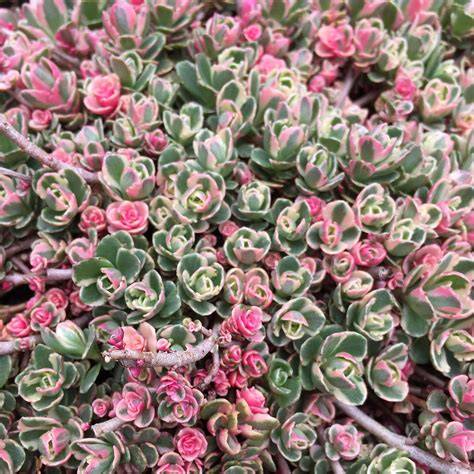
Many people grow succulents strictly indoors or just in small containers on the patio. But these are wonderful plants that have evolved over many thousands of years, growing in a wide range of habitats. Succulents make handsome additions to the landscape in many roles, including focal points, borders, and living fences. Succulent ground cover provides a number of solutions in the garden. These are drought-tolerant ground covers that keep weeds down in open spaces. There are great varieties that provide color and texture year-round. Some have beautiful blooms, others do well in shade, and some attract and feed pollinators. Some are exceptionally cold hardy and thrive in climates with frigid winters.
When classifying plants as ground covers, some people include plants that grow thigh-high or individual specimen plants, which seems confusing to me. For this post, we’ll just be looking at low-growing succulents that spread to form dense mats of foliage. Weed out the area thoroughly. Break up compacted soil and work plenty of pumice or coarse sand (never fine sand!) into the soil to improve its drainage. Add 1/3 - 1/2 cup of dry worm castings per square foot of planting bed. Work the worm castings into the top 3 inches of the soil. This will both feed your plants and prevent mealybugs and other insects from damaging your plants. Select the ground cover succulents that suit your climate and planting site. Check for varieties that are hardy in your area. Be sure to select those that will thrive in the lighting conditions in your specific planting bed. Then, follow the basic procedure for planting succulents. Slip the plants from their containers and gently break up the root ball. Dig a hole and insert the roots so they spread out and down. Plant the succulent at the same depth as the soil line in its container. Backfill with the soil that has pumice and worm castings mixed in. Cover the roots and tamp down the soil to collapse any air pockets.
As you plant your ground cover, include stepping stones as needed. It’s a challenge to choose 10 great succulent ground covers to give you a good overview. There are more than 10 great choices among just Sedum or Sempervivum alone, while some genera have just a few good choices. I decided to give you as broad an overview as possible, so each entry on this list is from a different genus. There are so many low-growing Sedum and stonecrops that make stellar choices for succulent ground cover I may have to do a separate post just for them!
Pink blooms add a charming touch to many succulent ground covers. Here are some excellent pink-flowering options:
- Pink creeping phlox (Phlox subulata) grows as a vigorous mat, with vivid rose-pink blooms from spring to summer. It’s evergreen foliage provides year-round color, and it’s a sun-loving, low-maintenance choice for borders, rock gardens, and pathways. Pro tips: Plant in moist, well-drained, humus-rich soil in full sun. Prune spent flowers and divide every 3-4 years.
- Creeping thyme (Thymus serpyllum) features bluish-green foliage and pinkish-purple flowers throughout summer. It’s ideal for pathways and between stepping stones and tolerates foot traffic. Pro tips: requires at least 4-5 hours of direct sun; needs excellent drainage.
- Stonecrop (Sedum spp.) offers pink-flowered varieties such as Sedum ‘Brilliant’ with bright baby-pink blooms and flat flower clusters. It prefers well-drained soil and full sun, with partial shade acceptable. Pro tips: plant once; it hates being relocated; deadhead after flowering.
- Spotted deadnettle ‘Pink Pewter’ (Lamium maculatum ‘Pink Pewter’) adds texture with pale pink blossoms in shade-friendly form. Pro tips: moist, well-drained soil; space adequately to prevent overcrowding; can be invasive in some regions.
- Hardy ice plant (Delosperma cooperi) provides hot pink blooms through summer, thriving in dry, hot conditions with low water needs. It is deer-resistant and suitable for rock or coastal gardens. Space 15-18 inches apart.
- Lamb’s ear (Stachys byzantina) offers silvery, soft foliage with lavender-pink flowers in spring. It does well in sun, with good air circulation and well-drained soil; space 18 inches apart and divide every 2-3 years.
- Pink bugleweed (Ajuga reptans) with pink spikes adds color in shady to partly sunny areas. Pro tips: thrives in moist, well-drained soil; space to avoid overcrowding; prune to control spread.
- Coral bells (Heuchera spp.) with rose-pink to lavender blooms and colorful foliage creates a year-round focal point in borders and shade gardens. For example, Heuchera ‘Bella Notte’ features silver-purple leaves and pink blooms; divide every 3-4 years and mulch in winter.
- Fairy crassula (Crassula multicava) offers shade-loving ground cover with pinkish-white winter blooms, spreading slowly and becoming a charming understory plant in milder climates.
The list above showcases pink-flowering ground covers that combine ornamental value with practical garden benefits. Across these options, benefits include weed suppression, soil erosion control, drought tolerance, and habitat for pollinators. When choosing pink-flowering succulent ground covers, consider climate, light, soil drainage, space, and maintenance preferences. For each plant, spacing and depth follow nursery guidance, and regular monitoring for pests supports long-term performance.
In addition to the pink-flowering options, the article discusses broader themes of succulent ground covers: drought tolerance, low maintenance, pest resistance, heat tolerance, and their role in erosion control and biodiversity. Succulents store water in thick leaves and stems, tolerate poor soils, and provide a wide palette of colors and textures. They are excellent for open spaces, living borders, and low-water landscapes.
- Assess climate, sunlight, and soil drainage; select suitable low-growing, spreading succulents.
- Amend soil with pumice or coarse sand and incorporate worm castings for nutrition and pest resistance.
- Plant at nursery depth; tease roots and backfill, ensuring good soil contact and no air pockets.
- Plan for dense coverage to minimize weeds and reduce maintenance.
- Monitor for pests, diseases, and animal pressure; install barriers if needed.
Care and maintenance basics
Watering: Succulents require deep but infrequent watering, allowing soil to dry completely between waterings. In very dry climates, adjust watering to plant needs and rainfall. Fertilization: Use balanced, half-strength fertilizer once a month during spring and summer; avoid feeding in winter dormancy. Pruning and deadheading: Remove dead leaves and spent blooms to tidy plants and encourage new growth. Protection: In colder climates, many succulents need winter protection or indoor shelter, as they are not frost-tolerant.
Planting and establishment tips
Prepare a well-draining bed with ample light. Space plants according to species-sedums may tolerate closer spacing, while rosettes and larger ground covers need more room to spread. During establishment, keep soils slightly moist but never soggy, and avoid heavy re-watering that can lead to rot. Use stepping stones or other delimiters to guide growth and accessibility as the mats form.