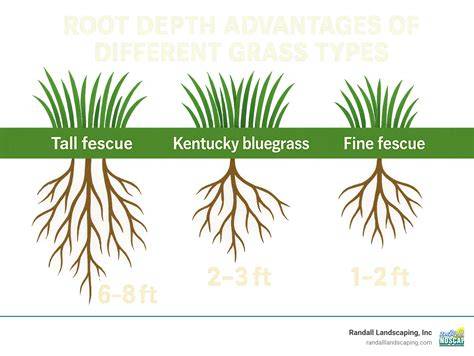
Tall Fescue is a resilient, cool-season turfgrass known for its deep root system, heat tolerance, and adaptability in the transition zone, where summers are hot, water may be limited, or lawns receive partial shade. Tall Fescue (Festuca arundinacea) is a cool-season, bunch-type turfgrass prized for its durability, adaptability, and deep root system. Unlike Kentucky Bluegrass, Tall Fescue is not spread by rhizomes or stolons. Its biggest advantage is root depth. Tall Fescue roots commonly reach 12-24 inches, and sometimes deeper in ideal soils - significantly deeper than most cool-season grasses.
The trade-off: Tall Fescue does not self-repair. Bare spots must be overseeded, and the texture is slightly coarser than Bluegrass. Tall Fescue performs best in full sun to partial shade, ideally receiving 4-8 hours of direct sunlight per day. It has better shade tolerance than Kentucky Bluegrass, making it a strong choice for lawns with morning sun and afternoon shade or areas with light tree cover. Dense, continuous shade will eventually lead to thinning and reduced vigor; limited sunlight slows photosynthesis and weakens root systems, increasing susceptibility to disease and traffic damage.
Tall Fescue thrives in cool-season growing conditions, with peak growth in spring and fall, much like other cool-season grasses. Summer heat is less of a challenge for Tall Fescue than it is for Kentucky Bluegrass, thanks to its deep root system, which tolerates high temperatures and short-term drought more effectively and reduces the likelihood of full summer dormancy.
Types and Cultivars: Why Choice Matters
Understanding the different types of Tall Fescue is important because not all cultivars perform the same. Differences in texture, color, disease resistance, heat tolerance, and growth density affect lawn appearance and performance. Modern lawns often use blends of turf-type Tall Fescue cultivars, each selected to contribute strengths such as drought tolerance, finer texture, or stronger disease resistance. Turf-Type Tall Fescue (TTTF) is the standard for residential and commercial lawns. Tall Fescue is adaptable but performs best in well-drained, fertile soils that allow deep root penetration. Ideal pH: 5.8-7.0. Texture: Loam or sandy loam soils are ideal for proper drainage, moisture retention, and oxygen availability.
Soil drainage is critical: Tall Fescue does not tolerate compacted or poorly drained soils. A nutrient-rich base, with compost or organic soil conditioners, supports microbial activity, nutrient availability, and faster establishment.
Soil Preparation and Planting
Before seeding or overseeding, prepare by ensuring well-drained soil, a fertile base, and good soil structure. If soil test results indicate imbalances, correct them with lime to raise pH or sulfur to lower pH, noting that amendments take months to affect soil chemistry. For general guidance, Tall Fescue prefers a slightly acidic to neutral soil, with pH in the 5.5-7.5 range.
Seeding is a core component of Tall Fescue lawn care. Early fall is the best time to seed or overseed Tall Fescue. Most lawns benefit from overseeding every 1-2 years, especially in high-traffic areas or regions with hot summers. Without overseeding, Tall Fescue lawns thin naturally over time. When weather cools in autumn, overseed to maintain density and vigor.
When establishing a new lawn from seed, use a blend of “turf-type” tall fescue cultivars at about 6 pounds of seed per 1,000 square feet. In some regions, a starter-type fertilizer with high phosphorus supports seedling establishment. Keep the seedbed moist with light, frequent watering until germination and early establishment.
Maintenance: Mowing, Watering, and Fertilizing
Mowing is a critical component of Tall Fescue care. Tall Fescue does not spread by rhizomes or stolons, so mowing height directly influences turf density, root depth, heat tolerance, and weed pressure. Do not mow too short, especially during heat or drought. A mowing height of 2.0-4.0 inches is recommended for healthy root depth and resilience. During peak growing seasons (spring and fall), mowing every 5-7 days helps maintain stand density; in other periods, adjust to growth rate. Leave clippings on the lawn to return nutrients, potentially reducing fertilizer needs by up to 25%. Bag clippings if disease is present or if clippings would interfere with disease management.
Proper watering is essential in summer heat. Tall Fescue’s deep root system is a major advantage, but stress will show before permanent damage. Water deeply and infrequently to encourage deep roots: typically about 1 inch of water per week, adjusting for rainfall and soil type. In sandy soils, more frequent, smaller irrigation events may be needed; in clay soils, irrigate to the point of runoff, then recheck soil moisture before rewatering. Avoid irrigation that keeps the leaves wet for extended periods, as this can promote disease.
Fertilization should follow a seasonally timed program with emphasis on nitrogen for color and density, supported by soil-health products. A premium granular fertilizer might contain around 16% nitrogen (with slow-release), 8% potassium, and 8.9% humic acid. A fast-acting liquid fertilizer can be used to support spring and fall growth flushes. In spring, avoid heavy nitrogen applications early; fall fertilization is typically the most important for Tall Fescue, helping the lawn recover from summer stress and prepare for winter. A soil test is essential to tailor nutrition.
Soil Amendments and Aeration
Soil pH impacts nutrient availability. If pH is outside the ideal range, apply lime to raise pH or sulfur to lower pH in appropriate seasons. Amendments work best when not under ice, drought, or pest stress. For most soils, pH 6.0-7.0 is ideal, but Tall Fescue tolerates a broader range. Core aeration relieves compaction, improves nutrient, water, and air penetration, and enhances root growth and drainage. Fall is the best season to aerate Tall Fescue; spring aeration is acceptable if compaction is severe. Aeration also boosts the effectiveness of fertilizer and soil amendments and helps with overseeding success.
Dethatching, Overseeding, and Renovation
Tall Fescue is a bunch-type grass and overseeding is important to fill gaps and improve density. Dethatching is rarely necessary for Tall Fescue, but if the thatch layer exceeds half an inch, dethatching in fall can help. Overseed in fall (no later than early October in many regions) and, in some regions, again during late summer to early fall. After aeration, overseed to maximize seed-to-soil contact and germination. For quick results, sod can be installed in spring or fall as an alternative to seed.
Weed, Insect, and Disease Management
Weed control in Tall Fescue often combines preventive and post-emergent strategies. Pre-emergent herbicides help prevent crabgrass, goosegrass, and foxtail, typically applied in early spring. Post-emergent herbicides can control broadleaf weeds like chickweed and henbit, and certain grassy weeds. Some herbicides may affect newly seeded turf, so follow label directions carefully. Broadleaf weed pressures can be reduced through mowing height management and timely applications. For post-emergent control in established lawns, apply when weeds are actively growing, typically in moderate to warm temperatures. Avoid summer applications when possible to protect the cool-season grass.
Tall Fescue is susceptible to brown patch and gray leaf spot under conditions of high humidity and warm temperatures. Brown patch is common in wet, warm weather and can be mitigated by proper irrigation timing (water in the morning, avoid nighttime irrigation), improved drainage, aeration, and reducing nitrogen during peak growth. Fungicides may be needed during severe outbreaks. Gray leaf spot can be challenging to control and may require a combination of cultural practices and fungicides; keeping mowing heights at 3 inches or taller and avoiding excessive thatch helps reduce disease pressure. Consult local extension resources for diagnosis and management recommendations.
Pests, especially grubs, can threaten Tall Fescue by feeding on roots. Grub prevention may be part of a broader seasonal program, with curative treatments applied after grubs are detected or at peak activity. If grubs are present, apply insecticides as directed by product labels and local guidance to minimize damage while protecting beneficials.
Winter Dormancy and Frost Considerations
Tall Fescue is a cool-season grass with good winter tolerance, but it is not immune to winter stress. As temperatures drop below 50°F (10°C), growth slows and the lawn may go pale or straw-like during dormancy. Dormancy is not death; the grass stores energy in its roots and crowns and will green up again as temperatures rise. Frost and sub-freezing conditions can damage leaf blades and crowns; avoid walking on frost-covered lawns and perform minimal mowing. In winter, Tall Fescue requires little supplemental water-irrigate only during extended dry periods when the ground is not frozen.
Winter care also includes maintaining a higher mowing height in fall after overseeding to preserve crowns and root depth. In spring, as conditions warm, Tall Fescue resumes growth later than Kentucky Bluegrass but earlier than warm-season grasses, benefitting from consistent winter conditioning and energy storage.
Practical Year-Round Maintenance Calendar (Overview)
- Mow Tall Fescue at 2.0-4.0 inches; avoid mowing too short, especially in heat.
- Water deeply, about 1 inch per week; adjust for rainfall and soil type.
- Fertilize according to soil test results; emphasize fall nitrogen for recovery and winter readiness.
- Aerate in fall (or spring if needed) to relieve compaction and improve root growth.
- Overseed in fall to maintain density, especially in high-traffic areas.
- Control weeds with pre- and post-emergent herbicides as needed, following label directions.
Key Takeaways: When Tall Fescue Shines
Tall Fescue shines in lawns where summer stress, water efficiency, and durability matter more than ultra-fine texture or self-repair. It tolerates heat and drought better than many cool-season grasses, has a deep root system, and performs well in the transition zone. Choose Tall Fescue for lawns needing resilience, moderate shade tolerance, and lower water use compared to other cool-season grasses.
Tall Fescue Winter Fertility Trial
For more localized guidance, consult your local extension service and follow seasonal recommendations tailored to your climate and soil.