Pomegranate trees are popular for their vibrant fruit and ornamental blooms, and in suitable climates they can thrive with minimal effort. This article draws on observations and information from experienced growers, focusing on whether pomegranates are self-pollinating and how to maximize fruit set.
Overview of pollination in pomegranates
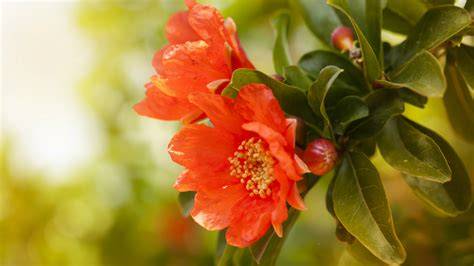
Pomegranates (Punica granatum) are monoecious plants, meaning they have both male (pollen-forming) and female (ovary- and fruit-forming) reproductive organs on the same plant. The flowers can be perfect, containing both male and female parts, or imperfect, consisting of single-sex structures. Most pomegranate flowers are capable of self-pollination, but cross-pollination with other flowers from the same plant or from a different plant can also occur and may enhance fruit yield. Bees and other pollinators are naturally drawn to the bright red blossoms, which supports both self- and cross-pollination processes.
In practice, many pomegranate trees set fruit without a second tree nearby, which is why they are often described as self-pertinent or self-fruiting. However, cross-pollination can improve fruit size and quantity, providing a practical boost to harvests in gardens and commercial settings.
What affects fruit set and yield
Several factors influence whether pomegranate flowers develop into fruit. Key considerations include pollinator presence, sunlight exposure, and adequate irrigation. When pollinators are scarce, hand-pollination can substitute for natural pollination and help increase fruit set. In addition, pomegranates flower on new growth, so pruning and growth management should be timed to support the development of new shoots in spring.
Growing conditions such as climate, soil, and heat tolerance also play a role. Zones 7-10 are suitable with long hot summers, and some frost protection can be beneficial in cooler areas. Pomegranates tolerate a range of soils, including slightly alkaline substrates, as long as drainage is good. Regular watering supports fruit development, though the plants have some drought tolerance once established.
Practical guidance for achieving good fruiting
For best results, ensure the plant receives full sun and adequate chill hours (roughly 150-200 hours for many varieties). The harvest window typically spans from late summer to fall, with ripe fruit stored in a cool dry place for several weeks if kept at peak maturity. Pruning is generally modest; pomegranates are naturally multi-stemmed and bushy, and pruning should remove dead wood and twiggy interior growth while leaving larger, woodier stems intact. Pruning is usually done in late winter or early spring before new growth emerges, and flowering occurs primarily in spring and early summer.
When fruit set is slow or fruit drops early, several steps can help: ensure adequate sunlight, improve pollinator presence, consider hand-pollination, and maintain steady irrigation. If pollinator activity is low, using a soft brush to hand-pollinate flowers can effectively transfer pollen from stamens to stigmas across the tree or between trees if more than one is available. Encouraging pollinators with bee habitats, water features, and flowering companion plants can also boost fruit production.
Case example: Eversweet pomegranate in Owens Valley
In the Owens Valley, the Eversweet cultivar has been noted for its relatively short fruiting season and reliable cropping once established. It may take several years to begin fruiting, but once productive, plants can yield substantial harvests. This variety demonstrates that pomegranates can adapt to challenging environments when given sufficient heat, sun, and water. While Eversweet is an example, many varieties offer different sweetness, seed texture, and juicing suitability, making selection important for personal preferences and growing conditions.
Varieties and features to consider
There are numerous pomegranate varieties, each with distinct attributes-some sweeter, some more acidic, some with soft edible seeds and others with harder ones, and some better for juicing while others are preferred for fresh eating. Some varieties are upright, while others have arching stems; there are even dwarf forms. In addition to fruit characteristics, flower size and color can enhance landscape appeal, with large reddish-orange flowers contrasting against evergreen foliage or autumn leaf color. When selecting a cultivar for a specific climate or garden design, consider fruiting season, heat tolerance, and growth habit.
Special notes on self-pollination and garden planning
Although pomegranates are largely self-fertile, planting a second tree nearby can enhance cross-pollination and potentially improve yield. This is especially true in gardens with limited pollinator activity or in microclimates where bee activity varies. If you have multiple trees, hand-pollination between them or from the same tree can also help boost fruit set. Avoid spraying pesticides during flowering to protect pollinators and maintain a healthy local pollinator population.
In summary, pomegranate trees are generally self-pollinating, meaning a single tree can set fruit without a partner tree. However, cross-pollination and enhanced pollinator presence can increase fruit size and total yield. Proper pruning, soil, irrigation, sunlight, and seasonal care all contribute to robust fruit production and an attractive, long-lived plant.
Growing Pomegranates? Secrets of Hand Pollination for MAX Harvests! How to pollinate pomegranates.
To ensure profuse blossoms and heavy fruit production, some gardeners may opt for two trees to maximize pollination opportunities, while others successfully harvest from a single cultivar. For those new to pomegranates, starting with a locally adapted cultivar and ensuring consistent care will lay a strong foundation for fruitful years ahead.
Notes on care and maintenance snapshots
- Pollination: usually self-fertile so only one plant can suffice, but cross-pollination can help.
- Soil: well-drained soil, tolerating alkaline conditions; pH 5.5-7.0 is ideal.
- Irrigation: regular watering, with attention to avoiding drought stress that increases fruit drop.
- Light: full sun exposure is essential for optimal flowering and fruit set.
- Pruning: prune dead or damaged branches in late winter/early spring, and trim interior twiggy growth while preserving older stems.
tags: #are #pomegranate #trees #self #pollinating