Wax begonias are versatile, thriving in a variety of light conditions from deep shade to full sun, though in hotter climates some afternoon shade is preferable to protect against leaf scorch. They require well-draining, fertile soil and should be kept consistently moist but not waterlogged. These plants favor warm temperatures and moderate humidity and are typically grown as annuals in cooler regions but can be perennials in USDA zones 9-11. Regular feeding, proper repotting, and appropriate overwintering help maintain their vigorous bloom and compact growth.
Light, soil, and general growing conditions
Wax begonias will do well in full sun to partial shade, depending on climate. In cooler climates, they can tolerate and even thrive in full sun, while in hotter regions they benefit from some protection in the hottest part of the day. A location with partial shade is ideal, but plants will also tolerate full sun with adequate moisture and protection from intense heat. They prefer well-draining, fertile soil; for containers, a high-quality potting mix is recommended. The plants are fibrous-rooted and do not go through a true dormancy, which allows year-round interest if overwintered indoors under the right conditions.
Water management and humidity
Keep the soil consistently moist but not waterlogged. For containers, water when the top inch or two of soil feels dry to the touch, and ensure adequate drainage. A general rule is about an inch of water per week, with adjustments for heat, wind, and container size. Misting is not generally advised, as high humidity with wet foliage can promote fungal diseases. Wax begonias prefer a well-ventilated environment with steady soil moisture to prevent stress and promote continuous blooming.
Temperature, humidity, and overwintering
Wax begonias prefer warm temperatures and moderate humidity. They are frost-sensitive and are typically treated as annuals in colder climates; however, they can be overwintered indoors in cooler regions. In milder climates (zones 9-11), they can act as perennials. For overwintering, bring plants indoors before the first frost and place them in a bright window, avoiding direct sun if they were grown in shade. Keep soil slightly moist and fertilize lightly through winter, then move them back outdoors when temperatures rise.
Fertilization, soil, and potting
Feed wax begonias every 4-6 weeks during the growing season with a balanced, water-soluble fertilizer. For containerized plants, use a high-quality potting mix and maintain regular feeding. A balanced slow-release fertilizer can be applied at planting time, or a liquid fertilizer can be used monthly during the growing season. Begonias appreciate a well-drained soil; even clay soils can work if amended and kept evenly moist, but soggy conditions should be avoided to prevent root rot.
Propagation, pruning, and maintenance
Wax begonias are easy to propagate via stem cuttings or seed. For cuttings, select a healthy non-flowering stem about 3-4 inches long, insert into moist, well-draining potting mix or perlite, and place in a warm area with bright light but not direct sun. Water to keep the medium moist. Seed starting requires surface sowing on a moist, well-draining mix in a warm, brightly lit area, avoiding direct sun; germination typically occurs in 2-3 weeks. Pruning is minimal; if plants become leggy, pinch back lightly to maintain a neat, mounded shape. Deadheading is not strictly required for continuous blooming, but can help maintain appearance and vigor.
As houseplants, wax begonias can bloom year-round if provided with bright light. For outdoor landscapes, the long blooming period is a hallmark, with flowers appearing in shades of red, pink, or white. While pruning is rarely necessary, maintaining good air circulation and consistent moisture helps prevent common pests and diseases.
Pests, diseases, and problems to watch for
- Spider mites: Thrive in dry conditions; increase humidity and wash the plant with water.
- Mealybugs: Recognizable by cotton-like masses; they suck sap and weaken the plant.
- Aphids: Suck sap from new growth, causing distortion.
- Thrips: Cause stippling, silvering, or distortion of leaves.
- Root rot: From overwatering or poor drainage; signs include yellowing leaves and wilting.
- Gray mold (Botrytis): Fuzzy gray growth in humid conditions; improve air circulation and remove affected parts.
- Powdery mildew: White powder on leaves; increase air movement and reduce humidity.
- Leggy growth: Often due to insufficient light.
- Leaf burn: Direct sun in hot climates can scorch leaves.
- Fading flowers: High heat or drought stress can reduce blooming.
Varieties and landscape use
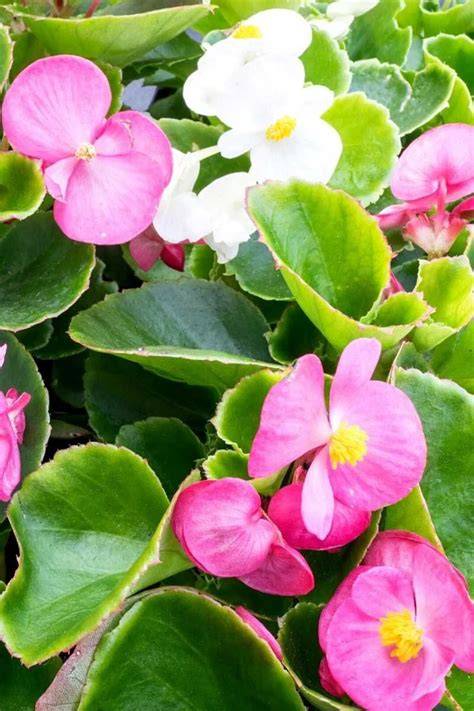
Wax begonias are available in numerous cultivars, including Surefire Red, Surefire Rose, and Surefire White, which offer a range of colors and foliage patterns. The Super Olympia series provides larger flowers above glossy dark-green foliage with bronze hints. These plants are versatile for beds, borders, mass plantings, and containers, and they pair well with both sun and shade in mixed landscapes. Varieties with bronze foliage tend to tolerate more sun than those with green leaves, making plant selection climate-dependent.
Planting and care guidelines at a glance
- Light: Partial shade is often best; can tolerate full sun in milder climates.
- Soil: Rich, well-draining soil; container plants require high-quality potting mix.
- Water: Keep evenly moist; allow top 1-2 inches to dry slightly between waterings.
- Fertilization: Balanced fertilizer every 4-6 weeks during the growing season; or slow-release at planting.
- Pruning: Light pinching if leggy; otherwise minimal maintenance.
- Winter care: Bring indoors in frost-prone areas; bright light and reduced watering help overwinter.
Frequently asked questions
- Are wax begonias perennials or annuals? They are perennial in frost-free regions (zones 9-11) and annual in colder climates unless overwintered indoors.
- Do wax begonias come back every year? They can, in frost-free regions or when overwintered indoors.
- Can begonias tolerate full sun? Yes, many tolerate sun, but protection from hot afternoon sun is recommended in hotter climates.
- Can wax begonias be grown as houseplants? Yes, with bright light and careful moisture management, they can bloom year-round indoors.
- Are wax begonias poisonous? Begonias are mildly toxic to pets if ingested.
Representative varieties in brief
A stunning combination of double white flowers and bronze-tinted foliage can be found in certain selections, while disease-resistant and sun-tolerant varieties like the Surefire and Super Olympia lines offer robust performance in mixed light. For containers, compact mounded forms work well, while some trailing varieties suit hanging baskets. A well-balanced mix of foliage textures and colors can elevate any garden bed or container display.
BEGONIA PLANT CARE BASICS: WAX LEAF BEGONIAS / EdenMakers
tags: #wax #begonia #water #requirements