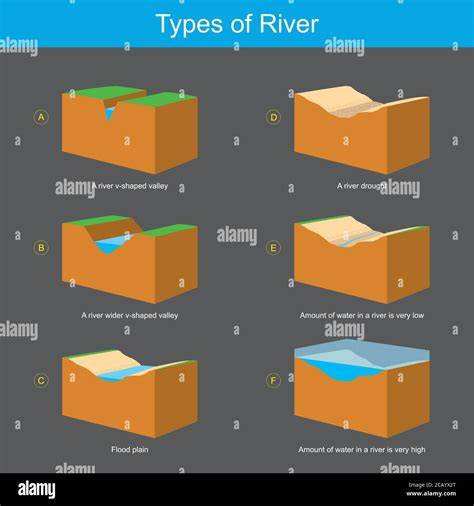
Stand by a riverbed and ask: Is this water source eternal, or is it merely resting? The flow-or lack thereof-tells a deep story. It reveals a hydrological signature that dictates landscape ecology, water resource management, and regional history. Whether you are observing a powerful, ever-present channel or a mysterious dry wash, the system is at work.
Understanding the three fundamental types of streams
We will differentiate the three fundamental types of streams using the memorable P.I.E. Love this cover artwork? To quickly differentiate the three types of streams and make the distinction memorable, think of the acronym P.I.E. and the predictability of when you get to eat a slice.
Perennial Stream is the hydrological ideal-the stream that flows continuously year-round. Its defining feature is a reliable, sustained connection to the subsurface water supply. Primary Water Source: Groundwater (Baseflow). The streambed lies below the water table, causing water to constantly seep into the channel and sustain the flow. Flow Frequency: Continuous. Flow is steady, only reducing significantly during severe drought conditions. Geographical Examples: Perennial rivers are often located in high rainfall or mountainous areas.
Intermittent Stream flow for only part of the year, typically during the wet season. They represent a temporary hydrological connection, linking the surface and subsurface seasonally. Primary Water Source: Seasonal Groundwater & Runoff. They flow when the water table is high (usually winter/spring) but dry up when the water table drops below the stream bed. Flow Frequency: Seasonal. Great Plains and Mediterranean climates. Noteworthy examples include the Brazos River (Texas, known for low summer flow), the Darling River (Australia, often segmented), and the Río Vinalopó (Spain). Ecological Adaptation: Intermittent streams require specialized regional water management strategies and often dictate ecological rhythms.
Ephemeral Stream is the most fleeting of the three, flowing only in direct response to precipitation (rainfall or snowmelt). This is surface hydrology in its purest form, an immediate answer to a storm event. Primary Water Source: Exclusively Surface Runoff. The streambed is always above the water table and receives no sustained groundwater contribution. Flow Frequency: Episodic. Flow lasts for only hours or days after a major rain event, followed by long periods of complete dryness. Geographical Examples: In arid and desert regions, these flows define the landscape. The Finke River (Australia), considered one of the oldest river systems, and the Kuiseb River (Namibia), which cuts through the Namib Desert, are dramatic examples. Many channels feeding the Great Salt Lake basin are ephemeral. Geological Note: The channels are striking geological features, often termed “arroyos” or “wadis” (e.g., Wadi Hadramawt River in Yemen).
When classifying a waterway in the field, observing the physical and biological characteristics is essential: Bank and Channel Features: Perennial streams develop deep, stable banks with established, continuous root systems. Ephemeral channels, due to sporadic flow, often have shallower, less stable beds. Streambed Life: The presence of fish, amphibians, or water-dependent macroinvertebrates strongly indicates a perennial or reliably intermittent flow. A dry streambed with only terrestrial insects points toward an ephemeral flow. The Soil Test: If the soil in the streambed is always saturated or muddy, it suggests a strong connection to the water table (perennial).
Context and ecological framework
The River Continuum Concept (RCC) is a fundamental ecological framework used in hydrology and ecology that provides an overarching context for these stream types. It establishes that Perennial, Intermittent, and Ephemeral streams are not isolated features, but are linked positions along a river’s entire length-a single, comprehensive watershed system. The RCC contextualizes why these stream types exist sequentially: Small, high-altitude headwaters are frequently ephemeral or intermittent flows, which feed into and sustain the larger, lower-elevation perennial channels downstream. It emphasizes dynamic change: a river system is not static; its morphology, environment, and ecosystem are constantly transitioning from source to mouth as it accumulates flow and sediment. It supports management messages: understanding these transitions is key to managing entire watershed systems.
Human interactions, uses, and risks
Perennial rivers are obvious hubs for swimming, fishing, and boating, while intermittent and ephemeral streams offer unique, solitary recreational opportunities tied directly to their hydrological states. Perennial streams provide reliable water for agriculture, hydropower, and urban needs; however, they can also pose risks when floods occur, causing losses and waterborne disease. The implications of changing rainfall patterns, evaporation, and climate variability can alter perennial flows, sometimes transforming perennial rivers into seasonal ones. Our excessive interference with freshwater ecosystems has impacted every river’s natural landscape, flow patterns, and ecosystem functions over the past decades. The trend toward fragmentation and intermittent flows is especially evident in plain-fed rivers and regions where groundwater pumping lowers baseflows. Rivers must sustain downstream allocations for societal needs and aquatic life, while floodplains and river corridors face competing pressures from urban development and infrastructure growth.
Pollution, damming, and over-extraction can reduce baseflows and disrupt the connectivity between surface water and groundwater. The result is a cascade of ecological and socio-economic effects: reduced habitat quality, altered sediment transport, and changes in nutrient cycling; downstream water users may experience reduced availability and quality of water for drinking, irrigation, and industry. In many regions, restoration efforts emphasize re-establishing flows, reconnecting floodplains, and protecting catchments to support healthier river ecosystems and more resilient river basins.
From a global perspective, perennial rivers exist on every continent except Antarctica. Notable examples include the Amazon, Nile, Indus, Congo, and Rhine, among many others. These rivers sustain large populations, support agriculture and industry, and shape regional histories. Yet, across the world, urbanization, climate change, and water management decisions continually reshape how, when, and where these rivers flow.
Practical observations and examples
Perennial rivers are often fed by a combination of rainwater and snowmelt, with some leveraging glacial contributions in mountainous regions. The continuous flow enables predictable seasonal patterns in agriculture, hydropower, and urban water supply. Intermittent and ephemeral streams, by contrast, respond more dramatically to seasonal and weather variability, offering different ecological niches and human uses-from mineral collection and wildlife photography to mountain biking along dry channels.
In many regions, the legacy of human water management has shifted river dynamics. Dams, diversions, groundwater pumping, and land-use changes can reduce baseflow and alter flood regimes. The result is a pressing need for integrated watershed governance that prioritizes ecological health alongside human needs. The goal is resilient river systems that maintain ecological functions, support communities, and preserve cultural and historical connections to water.