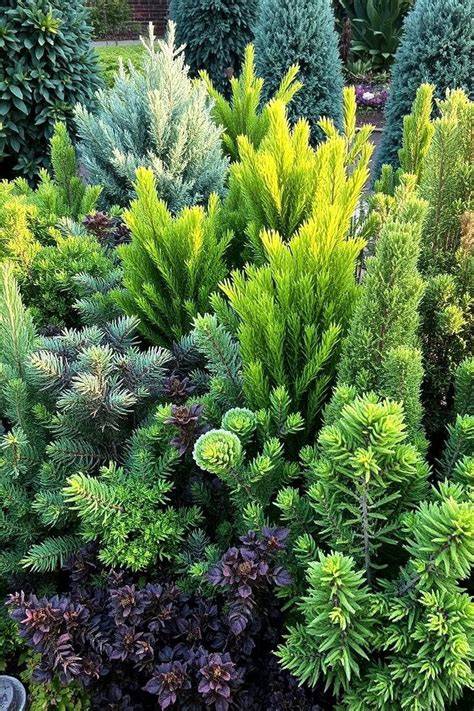
Evergreen trees are woody plants typically reaching a mature height of 15 feet or more and are single stemmed for several feet above the base. Typically, these plants experience moderate growth rates, with adaptability to sites dependent on species, but typically do not well on wet sites. Evergreen and deciduous species vary in a range of morphological and physiological characters. Generally, broad-leaved evergreen species have thicker leaves than deciduous species, with a larger volume of parenchyma and air spaces per unit leaf area. They have larger leaf biomass per unit leaf area, and hence a lower specific leaf area.
In cool temperate climates, there is a predominance of conifers because few evergreen broadleaf plants can tolerate severe cold below about −26 °C (−15 °F). In addition, evergreen foliage experiences significant leaf damage in these cold, dry climates. Root systems are the most vulnerable aspect of many plants. Even though roots are insulated by soil, which tends to be warmer than average air temperatures, soil temperatures that drop too low can kill the plant. In areas where there is a reason for being deciduous, e.g. a cold season or dry season, evergreen plants are usually an adaptation of low nutrient levels. Additionally, they usually have hard leaves and have an excellent water economy due to scarce resources in the area in which they reside.
The excellent water economy within the evergreen species is due to high abundance when compared to deciduous species, whereas deciduous trees lose nutrients whenever they lose their leaves. In temperate climates, evergreens can reinforce their own survival; evergreen leaf and needle litter has a higher carbon-nitrogen ratio than deciduous leaf litter, contributing to a higher soil acidity and lower soil nitrogen content. This is the case with Mediterranean evergreen seedlings, which have unique C and N storages that allow stored resources to determine fast growth within the species, limiting competition and bolstering survival. These conditions favor the growth of more evergreens and make it more difficult for deciduous plants to persist.
Most warm temperate climate plants are also evergreen. In such climates, fewer plants are evergreen, and evergreen species often dominate in regions with mild winters. In tropical regions, most warm and humid forests are considered to be evergreen, with foliage replaced gradually throughout the year as leaves age and fall.
Habit and Structure
Evergreen trees can serve decorative as well as functional uses. In months when most other plants are dormant, evergreens with their sturdy structure and vibrant foliage are popular choices to beautify a landscape. Additionally, evergreens can serve as a windbreak, stopping heat loss from buildings during cold months when placed on the side of a structure appropriate to latitude. Conifer needle teas and needles have been widely used as a source of vitamins and remedies in various cultures.
Evergreen trees vary in form by species. For example, conifers such as pines and spruces provide year-round structure and color, while broadleaf evergreens like magnolia offer different leaf textures. The precise habitat and soil requirements depend on species, but all evergreens benefit from well-drained soils and appropriate moisture levels. Some evergreens prefer drier sites, while others tolerate wetter conditions; however, many do not thrive on consistently waterlogged soils.
Geographic Distribution and Climate Suitability
In cool temperate climates, evergreens are common among conifers, which tolerate cold better than many broadleaf evergreens. Fewer plants remain evergreen in harsh winters, while more evergreen species dominate in milder regions with adequate rainfall. In tropical rainforests, most plants remain evergreen, with leaves shed gradually over time rather than seasonally all at once. In contrast, deciduous species shed leaves during cold or dry seasons, while evergreens retain foliage year-round, albeit with leaf turnover and occasional leaf loss.
Colorado and other high-altitude or cold regions illustrate how soil drainage and seasonal moisture influence evergreen establishment. All evergreens benefit from mulches, careful soil preparation, and appropriate planting depth to prevent trunk girdling and promote root growth. For smaller sites, choosing compact evergreen species helps maintain landscape balance and reduces conflicts with nearby structures and utilities.
Planting and Establishment Tips
Growing a healthy evergreen tree begins with proper planting techniques. Mistakes such as planting a tree too deep can lead to trunk-girdling roots and shorten the tree’s life. Before planting, assess sun exposure, soil drainage, and space for mature size. Dig a hole two to three times the diameter of the pot and as deep as the spade will go, and amend the soil with organic matter and fertilizer to encourage root establishment. Remove weeds and stones from the planting area, and ensure that the top of the root-ball remains level with the surrounding soil after planting.
Watering after planting is crucial. Fill the hole with water, allow it to drain, and then replace the soil, firming gently. Do not cover the top of the root ball with excessive soil; leave a shallow layer to avoid smothering the roots. In windy locations, staking may be used briefly, but avoid rigid restriction and allow some natural movement to promote strong trunk development. Regular watering during establishment is essential, taking into account weather conditions; a slow soaking once a week is typically beneficial, increasing frequency in hot weather.
For those planting evergreen trees in landscapes, consider how the tree’s growth will interact with nearby structures and lines. Ensure clear access to driveways and entryways, and plant well inside property boundaries to maintain control over growth and pruning. Mulches and soil preparation contribute to successful establishment, especially in soils that are heavy or poorly drained. The following table provides representative mature sizes for common evergreen genera and cultivars to guide planning and spacing.
| Scientific Name | Common Name | Mature Size (H x W) |
|---|---|---|
| Abies concolor | White fir | 60’ x 20’ |
| Abies concolor ‘Candicans’ | White fir cultivar | 40’ x 15’ |
| Hesperocyparis arizonica | Arizona cypress | 30’ x 20’ |
| Juniperus chinensis ‘Blue Point’ | Chinese juniper | 12’ x 8’ |
| Juniperus scopulorum | Rocky Mountain juniper | Variable |
| Juniperus virginiana | Eastern Redcedar | 40’ x 15’ |
| Picea pungens | Colorado spruce | 60’ x 25’ |
| Picea glauca | White spruce | 50’ x 20’ |
| Larix decidua | European Larch | 45’ x 18’ |
These guidelines help ensure evergreen trees establish well and provide year-round value in landscapes, windbreaks, or ornamental settings. Depending on species, evergreen trees may be purchased as bare-root or containerized stock, with containerized stock maintaining its complete root system and often presenting a more intact fibrous root system for transplanting.
Evergreen trees are used in various climates for visual interest, shelter, and ecological benefits. They contribute to soil acidity and nutrient dynamics through litter, and they help stabilize microclimates around properties. Careful species selection, site assessment, and planting technique maximize long-term success and health of evergreen landscapes.