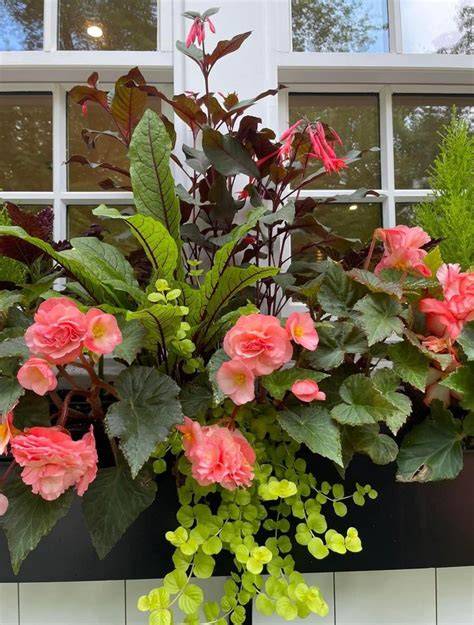
Begonias are the perfect plants for shady spots in the garden. Some are prized for their gorgeous flowers, while others stand out for their striking foliage. Begonias also thrive beautifully in containers, and many gardeners overlook just how versatile container gardening can be. The container you choose for your begonia makes all the difference.
Choosing the right begonia for window boxes
Not all begonias belong in window boxes. Tuberous begonias (Begonia x tuberhybrida) are best for cool-to-moderate climates and deeper boxes, with large pendulous flowers for dramatic cascades. Fibrous-rooted begonias, including wax begonias (B. semperflorens) and cane-types like Angel Wing and Dragon Wing, tolerate heat, humidity, and partial sun, making them versatile for containers. Rex begonias are grown for decorative foliage and are generally better suited to low-light conditions, while rhizomatous begonias spread wide and are less ideal for narrow, shallow window boxes. True tubers must be pre-sprouted indoors before planting, whereas fibrous types can be planted directly after danger of frost passes.
Container design and sizing
A window box isn’t just a container-it’s an engineered ecosystem. Depth, width, and material dictate root health, thermal stability, and moisture retention. Optimal dimensions: a minimum of 6 inches deep (8 inches preferred for tuberous types), 8-12 inches wide, and at least 24 inches long. Longer boxes allow proper spacing: 4-5 tuberous begonias per 24-inch box; 6-7 wax begonias. Drainage is non-negotiable: drill ½-inch holes every 4 inches along the bottom, line with coarse gravel, then landscape fabric to prevent soil washout. Never use saucers underneath unless you empty them promptly after watering to avoid root rot.
Soil and planting medium
Standard potting soil is not suitable for begonias in window boxes. It can compact, lack aeration, and cause root rot. Use a high-quality, moisture-retentive potting mix designed for containers. Fill the box to within 1½ inches of the rim and let it settle overnight before planting. A custom blend is essential, and avoid garden soil or peat alone, which can compact or dry out too rapidly in containers. Moisten the blend until it holds together when squeezed but releases water.
Soil moisture and watering strategy
Begonias in window boxes prefer light, fluffy, well-draining soil and need regular but careful watering. Test moisture by feeling the soil at a 2-inch depth. Water deeply at the base, not overhead, and avoid letting the soil stay soggy. In hot weather, check moisture daily; in cooler periods, every few days may suffice. Drip irrigation or a watering can with a long spout helps control moisture delivery. Bottom-watering-placing the pot in a shallow tray of water and letting it soak up from below-works well for smaller pots.
Fertilizing for continuous blooms
Container begonias are heavy phosphorus and potassium users, and regular feeding makes a big difference. At planting, blend 1 tablespoon of a balanced slow-release fertilizer (10-10-10 or 14-14-14) per gallon of soil mix, keeping granules away from tubers. Mid-season (June-August) apply a liquid fertilizer with higher phosphorus and potassium (such as 5-10-10 or 0-10-10) at half-strength every 14 days. Always water thoroughly before applying fertilizer and avoid foliar contact.
Pruning, deadheading, and maintenance
Container begonias require a little attention to stay neat and vigorous. Remove yellow or crispy leaves as they appear, and deadhead spent flowers weekly to redirect energy to new blooms. Trim leggy stems to maintain a neat shape. For pests, prevention is key: healthy plants with proper moisture and airflow resist problems like spider mites, mealybugs, and aphids. If infestations occur, use horticultural oil or an appropriate insecticidal soap, applied at dawn or dusk. Avoid neem oil on hot days and never use systemic insecticides on begonias.
Common diseases and preventative care
Powdery mildew is the most common disease in container begonias. Prevention relies on good airflow, careful watering (water at the base and avoid wetting foliage), and regular pruning to prevent crowded interiors. If disease appears, discard affected soil and start fresh the next season. Botrytis blight can appear in cool, humid, stagnant conditions; improve airflow and prune crowded interior stems. For persistent issues, beginning with high-quality potting soil and consistent moisture management helps reduce problems.
Overwintering and year-round care
Overwintering strategies depend on type and climate. Tubers can be dug up, cured, and stored in dry peat or vermiculite at 45-50°F for replanting next season. Fibrous begonias grown as annuals in colder zones can be composted, or kept as houseplants in bright, indirect light to extend color indoors. Angel wing begonias, often grown indoors, benefit from bright indirect light and reduced watering in winter. For larger containers, repot into a smaller pot with fresh soil before storing indoors.
Design ideas and pairings for window boxes
A well-planned window box uses the three-part design approach: thriller, filler, and spiller. The thriller is the focal plant, the filler adds volume and texture, and the spiller trails over the box edges.: Examples include using a bold rex begonia with a mix of wax begonias and cascading tuberous or fibrous varieties. Pair begonias with other shade-tolerant accents like calibrachoa, bacopa, lobelia, sweet alyssum, or dwarf ageratum. For contrast, combine with contrasting leaf textures and colors-think silver foliage with deep burgundy leaves or bright green with variegated patterns. Hangers and baskets also work well, with tuberous and wax begonias providing dramatic drape in hanging containers.
Common questions and quick guidelines
- Can I grow begonias in window boxes in full sun? Only specific fibrous types such as Dragon Wing wax begonias and certain heat-tolerant wax varieties; tuberous begonias will scorch and fail in full sun.
- How often should I water begonia window boxes in summer? No fixed schedule; depends on exposure and climate. Check moisture at 2-inch depth and water when the top is dry but before the soil becomes waterlogged.
- Can I overwinter tuberous begonias from window boxes? Yes-lift tubers before the first frost, cure, and store in a cool, dry place; replant next season after danger of frost passes.
- What companion plants work well with begonias in window boxes? Calibrachoa, bacopa, lobelia, sweet alyssum, or dwarf ageratum-plants with similar water and light needs.
Putting it all together: a practical window box setup
Start by thinking about design elements around your home, then choose the thriller plant for height, such as a rex begonia with dramatic foliage. Consider the color and texture of your filler plants, and select spillers to soften the edges of the box. Use a quality potting mix, real drainage, and a robust watering and fertilizing plan tuned to your climate. With careful selection and calibrated care, begonia window boxes deliver long-lasting color from late spring through the first frost, while staying resilient in partial shade and sheltered locations.
Representative begonia varieties for window boxes
- Tuberous begonia: Non-Stop Mixed, Illumination, Picotee - dramatic large blooms; cool to moderate climates.
- Wax begonia (B. semperflorens): Ambassador White, Surefire Red, Surefire Rose - compact to mid-size, sun to partial shade tolerant.
- Dragon Wing wax begonia: vigorous, trailing, good for back-of-box structure.
- Rex begonia: striking foliage, best in shade or low light conditions.
- Hanging varieties and cultivars such as Million Kisses, Illumination Orange, and Double Delight series for abundant color.
Begonias aren’t merely “pretty flowers for small spaces.” They’re uniquely adapted to confined, elevated environments-when matched correctly to their growth habit and environmental thresholds. Their shallow root systems and waxy cuticles help them conserve water in limited soil, and many begonias are day-neutral bloomers, delivering color for 18-22 weeks with proper care. With attention to variety selection, soil, moisture, and airflow, begonia window boxes can be a spectacular, low-effort feature in any shade garden.