Kousa dogwood is native to Asia and is an excellent small specimen tree with four-petaled white flowers that appear above the foliage in June and reddish-purple fall color. In the Midwest, this is a hardier substitute for the acid-loving flowering dogwood. The shallow root system will benefit with a layer of mulch to maintain a cool root environment.
Key characteristics and varieties
The Kousa dogwood grows best in part shade conditions in a protected site and has a slow growth rate. Depending on age, it can be vase-shaped when young and develop a more horizontal, rounded form as it matures. The tree blooms 2 to 3 weeks after native dogwoods, with white, 1 to 2 inch pointed bracts that persist for several weeks; the true flowers are inconspicuous. Raspberry-like fruit appears in August, adding year-round interest.
Among the notable cultivars, several have distinct habits and bract colors:
- “Beni Fuji” bears the deepest red-pink bracts of any C. kousa cultivar, with downward-facing blooms and somewhat reddish stems, forming a small-medium rounded tree that may not exceed about 15 feet tall.
- “Satomi” features rose-pink flowers and red fall color; it typically grows 15 to 20 feet tall and wide with a vase to rounded habit.
- “Losely” (Champion’s Gold kousa dogwood) forms a vase-shaped tree reaching 20-25 feet tall and wide, with white flowers followed by 3/4 inch red fruits.
- “Schmred” (Heart Throb) develops a rounded habit, about 20 feet high and wide, with deep pink flowers and deep red fall color.
- “Milky Way Select” is rounded to wide vase shape, about 15 feet high and wide, with 3/4 inch red fruits and bright red fall color.
- “Summer Gold” is rounded to a wide vase shape with variegated creamy white and green foliage, white flowers, pink to red fall colors, and 3/4 inch red fruits.
In addition to bloom color, some cultivars show foliage variegation or growth reversions to green, and a level of pink to red coloration may appear on bracts depending on sun exposure and season. Variegated forms often display bright margins or light variegation in summer foliage, while green growth reversions may occur in some years.
Habitat and growing conditions
Kousa dogwood is adaptable to a range of soils but prefers acidic soils and a protected location from harsh sun. It tolerates neutral pH soils but may develop chlorotic (pale green) leaves in high pH soils. It handles drought better than flowering dogwood and is more disease-resistant, including less susceptibility to dogwood anthracnose.
It thrives in well-drained soils, ideally with protection from hot afternoon sun. Pruning is best done after flowering since the tree flowers on old wood, and transplanting is easiest in early spring or while dormant. The shallow root system benefits from mulch, which moderates soil temperature and retains moisture.
The tree can be grown as a small specimen or in shrub borders and has a long season of interest: spring blooms followed by summer foliage, then vibrant fall color, and winter interest from peeling bark in some forms. In general, Kousa dogwood is hardy in zones where late frosts are not common, and it has greater cold hardiness than some native dogwoods, though cultivar performance can vary with microclimates.
Care and maintenance
Watering is critical during the first two growing seasons. Newly planted dogwoods should be watered thoroughly once or twice a week during dry periods; winter watering is rarely necessary. In established trees, water deeply during extended dry spells and avoid overwatering, which can lead to root rot in heavy soils. A 3- to 4-inch mulch layer helps conserve soil moisture, moderate soil temperature, reduce weed competition, and protect shallow roots. Mulch should be kept away from the trunk to prevent trunk rot.
Fertilization should be balanced and not excessive in the first years. For young trees, a light application of a balanced fertilizer in March and July is sufficient. Established trees can be fertilized based on soil test recommendations, typically applying fertilizer around the dripline area and not directly at the trunk. Avoid heavy nitrogen early on, as it can promote excessive foliage growth at the expense of root development.
Pruning is generally minimal. Since dogwoods bloom on old wood, prune after flowering and remove large branches during the dormant season if necessary. For larger branches, use a three-cut method to prevent tearing the bark. Insects such as dogwood borer, twig borer, and scale may occur; diseases include leaf spots and cankers. Regular monitoring and correct identification guide treatment choices, and avoid indiscriminate pesticide use.
Propagation and transplanting
Dogwoods can be grown from seed, though cultivars are often propagated vegetatively. Seed collection is possible from native forms, sowing in a well-prepared seedbed or flats and maintaining moisture until germination. Seedlings are generally weak when they first emerge and require careful watering and nutrition to develop sturdy stems. Container-grown plants can be planted year-round with careful watering. Bare-root plants should be planted while dormant.
Transplanting from the wild should be done with permission and as a cautious process. Root prune before moving and transplant during dormancy, ensuring the root ball remains moist and protected. If moving larger trees, staking may be necessary to protect from wind until roots establish. When replanting, ensure the top of the root ball is level with or slightly above the soil surface to encourage proper root growth.
Landscape uses and ecological value
Kousa dogwood provides multi-season landscape value: showy spring bracts, lush summer foliage, bright fall color, and interesting winter bark in some forms. It is a hardy choice for urban landscapes and gardens, offering drought tolerance, disease resistance, and adaptability to partial shade. In wetlands and riparian restoration projects, dogwoods (including silky and red osier types) contribute to erosion control and wildlife habitat, though Kousa dogwood is typically more suited to upland or protected sites rather than saturated wetlands. The tree’s fruits attract wildlife, while its structure supports year-round visual interest.
All dogwoods benefit from proper selection, site preparation, and ongoing maintenance to maximize health and flowering potential. When selecting cultivars, consider mature size, form, foliage color, and bract color to suit your site and aesthetic preferences.
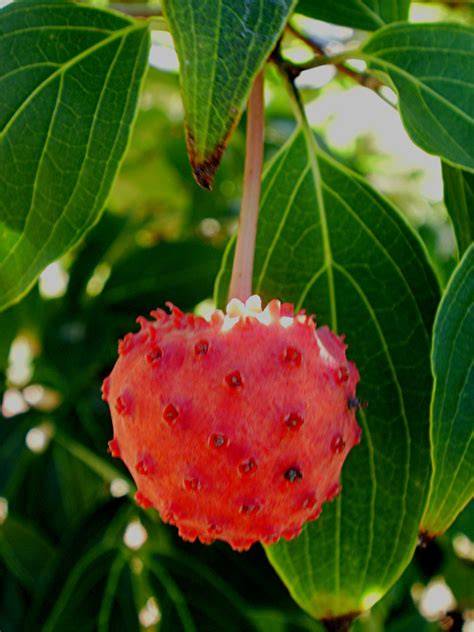
2 Stunning Kousa Dogwood Tree Varieties to Bring Interest to Your Yard All Year Long
Species overview table
| Aspect | Details |
|---|---|
| Native range | Asia |
| Bloom time relative to native dogwoods | 2-3 weeks later |
| Bracts | White, 1-2 inches, four-petaled appearance |
| Fruit | Raspberry-like, ~1 inch, August |
| Root system | Shallow |
| Soil preference | Acidic preferred, tolerates neutral |
| Light preference | Part shade to sun, best with protection from hot afternoon sun |
| Pruning timing | After flowering (old wood) |
| Common pests/diseases | Dogwood borer, leaf spots, cankers; generally disease-resistant |
With proper selection, planting, and care, Asian dogwood varieties offer reliable ornamental value and ecological benefits across a wide range of landscapes.