Air plants are members of the diverse Tillandisa genus which is in the bromeliad family. In their native habitat of tropical and subtropical North and South America, these epiphytic plants will be found clinging to trunks and branches of other plants or anything else they can sit on including rocks and buildings. While they use other plants to sit on, they do not harm or take from their host. They collect all the water they need through specialized cells on their leaves called trichomes that allow the efficient absorption of any water from the air or rain.
They vary widely in size and range from the familiar Spanish moss (Tillandsia usneoides) which can be found draping from trees in the southeastern United States to ball moss (T. recurvata) which can be seen clinging to telephone wires, fences, or just about anything else in Central America, to the larger, more colorful species of T. ionantha, T. xerographica, T. capitata or T.
Air plants are plants that grow without soil. This distinctive growth habit means these fun houseplants have some special considerations. The watering method and frequency for air plants looks much different than the typical houseplant. Plants perform best with consistent and abundant moisture which they receive from the humid air and rains in their native habitat. With no soil and much drier conditions in the average home, providing that consistent moisture can be challenging (unless you have a greenhouse).
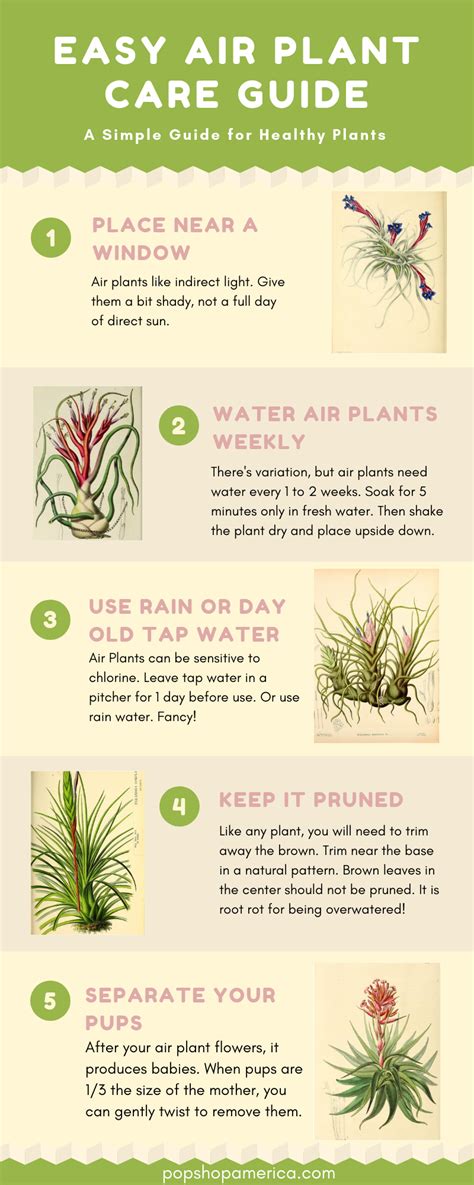
Spraying or misting on a regular basis does not provide enough moisture on a consistent basis to keep these plants healthy. Water air plants by submerging them in room temperature water for about 30 to 60 minutes. Then gently shake them out well to prevent water from pooling in the leaves, which will lead to rot. Place them upside down for about 30 minutes and as long as 3 hours to allow plants to thoroughly dry. Then they can be returned to their growing location. Allow water to sit overnight to reach room temperature and to allow the chlorine to dissipate, which can cause brown leaf tips if not done. Once the excess water has drained, return them to its location. The frequency of watering can vary by season and conditions, but in warm, bright conditions, water once a week and in the cooler, darker conditions watering can be reduced to every two weeks.
Fertilizing Air Plants. Air plants can benefit from some fertilizer. Simply add a balanced, all-purpose fertilizer at half or quarter strength to the water every third or fourth time they are watered.
Growing Air Plant Outside. Air plants can be moved outdoors when the danger of frost has passed. Air plants will flower when provided good moisture and bright, indirect light. Flowers vary in color and shape but tend to be bright pinks, purples, and reds and rise out of the center of the plant. Like all bromeliads, plants die after flowering but new offsets will form to replace the original plant.
Propagating Air Plants. In their native habitat, air plants often propagate by seed. The small airborne seeds only form when plants have sufficient cross-pollination, which is difficult indoors. Air plants propagate easily by division. As plants grow, they form offsets, often called “pups.” Gently separate the offsets to propagate new plants that can be shared with friends.
More Information. Air Plants from Clemson University. Air Plants-A Trendy Plant with a Long Story!
Care essentials: watering, light, and placement
Air plants require bright, indirect light and moderate humidity. Place near a window where they receive filtered sun, avoiding prolonged, harsh direct sunlight which can scorch leaves. In bathrooms or kitchens, the higher humidity can support less frequent watering, while drier rooms may require more regular soaking or dunking.
Watering methods include soaking, dunking, or periodic misting. Soaking involves immersing the entire plant in water for about 20-30 minutes, while dunking is a quick submersion followed by thorough drainage. Misting spritzes water onto the leaves; however, misting alone often does not provide the necessary moisture consistency for optimal health. After any watering, gently shake or tap the plant to remove excess water and prevent rot. Allow the plant to dry completely before returning it to its display location.
Temperature and humidity ranges matter. Air plants thrive in temperatures between 10-32°C with moderate humidity levels around 40-60 percent, making them suitable for terrariums and bathrooms. In cooler months or low-humidity environments, adjust watering frequency accordingly and ensure good air circulation to prevent mold or rot.
Fertilization should be applied sparingly. Use a diluted liquid fertilizer formulated for bromeliads or air plants, applied to the water used for soaking or misting, at about monthly frequency during spring and summer. Always follow the product’s dilution instructions to avoid fertilizer burn on leaves.
Display ideas and mounting
Air plants are versatile for indoor display. They can be mounted on driftwood, bark, bricks, or stones, and arranged in glass terrariums or hanging planters. Because they do not require soil, you can create creative, space-saving focal points that highlight their unusual growth habit and color variations.
Outdoor opportunities are possible in mild climates after frost danger has passed. In the UK and other temperate regions, bring plants indoors before temperatures drop too low, since they struggle with temperatures below 12ºC.
Propagation and pests
Offsets or pups form as plants mature. To propagate, gently twist or wiggle the pup until it detaches from the parent plant. Replant or place on a new surface, ensuring good indirect light and a steady moisture routine as with mature plants. Pests are relatively rare but can occur-mealybugs and scale insects are the most common culprits, especially for outdoor specimens. Isolate affected plants to prevent spread, and rely on natural predators or appropriate horticultural remedies as needed.
In the indoor setting, pest incidents are less common but should still be monitored, especially if plants are moved outdoors for any period. Regular inspection of leaves, trichomes, and offsets will help catch issues early and maintain healthy growth.
Common air plant varieties
Popular species include Spanish moss (Tillandsia usneoides), Tillandsia ionantha, Tillandsia xerographica, Tillandsia bulbosa, Tillandsia capitata, Tillandsia aeranthos, Tillandsia brachycaulos, and Tillandsia usneoides. These varieties differ in size, leaf texture, color, and the conditions they tolerate, offering a range of possibilities for indoor displays.
Everything You Need To Know About Air Plants | Complete Tillandsia Care Guide | Houseplant Care
- Bright, indirect light is ideal
- Watering: soak 20-60 minutes, dry completely
- Fertilize sparingly with diluted bromeliad fertilizer
- Humidity: aim 40-60%; adjust by season
- Display: mount on wood, stone, or in terrariums
- Propagation: divide offsets (pups)
Air plants are a unique, soil-free option for stylish indoor gardening with flexible care that adapts to home environments when attention is paid to moisture, light, and air circulation. With a little routine, they can thrive in households and even occasional outdoor spaces in temperate zones.