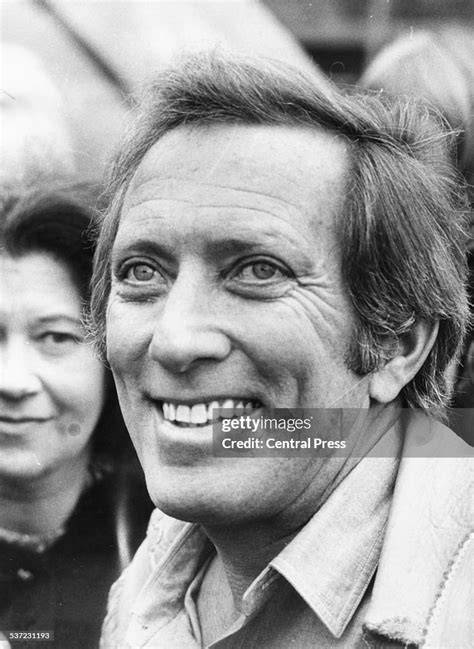
I knew nothing about Andy Williams until my late 20s - around the year 2000 - by which time I was married with two small boys. As I began to survey the new-to-me world of Easy Livin’ Classics (Sinatra & Friends, lounge and easy listening, etc.), I became aware of the long and stellar career of Howard Andrew Williams. I explored his music and it was clear to me that his career mirrored that of his Columbia labelmate’s, Johnny Mathis. While Andy may not have moved as many units as Johnny - few did - he did release scores of LPs through the Sixties and Seventies that attempted to draw listeners with milk & honey treatments of Top 40 hits.
Andy was born in Wall Lake, Iowa on December 3, 1927 to Florence and Jay. He was the fourth of six children; after Andy came the only girl, Janey and the baby was Buddy, who died at two due to complications from spinal meningitis. The family was poor and Jay soon bartered his sons’ singing ability for essentials like shoes and milk. Having to sing before the salesman at the department store in order to keep shoes on their feet mortified Andy. Worse was the four Williams brothers having to sing at the funeral of little Buddy in order to pay for the services. Bob, Dick, Andy and Don.
When it was determined that the four boys could perhaps gain some recognition with their singing, Jay began taking them around to various radio stations including WLS in Chicago. The family moved there and Andy dated Red Foley’s daughter, Shirley who was soon to become Mrs. Pat Boone. Eventually, Jay moved the family to Los Angeles and Andy was enrolled in school there; he was for a time in the same class as Shirley Temple. School was no problem for Howard Andrew - Jay didn’t want his sons wasting time with school when there was rehearsing to be done. Someone did Andy’s homework for him.
The Williams Brothers were singing everywhere that would have them including recording shows for servicemen overseas. It was here that they were heard by John Scott Trotter, musical director for Bing Crosby. When young voices were needed to back Bing on a recording session, Trotter remembered the lads and had them come in. The boys sang back-up on Bing’s Oscar-winning “Swingin’ on a Star” and the Williams Brothers had the big break that Jay Williams had been working for. Here’s a rarity; a video of the Williams boys singing a non-Christmas song. Andy alone was also contacted by Warner Brothers to provide the vocals for a movie then in production. Long have I heard that Andy Williams provided the singing voice of Lauren Bacall in To Have and Have Not and he did - but he didn’t. Andy was asked to record the vocals for Bacall’s singing and the intention was to use it. Bacall was against it, though, and scored a reprieve.
The Williams Brothers went on hiatus when Andy’s three older brothers served in World War 2 - Andy was 4F due to a stomach ulcer. Once the boys were reunited, they joined forces again. At this point, Kay Thompson came into the picture. The multi-talented Thompson was working as a vocal coach at MGM when she decided to create a night club act. She went to work with choreographer Robert Alton who suggested the Williams Brothers. Though the boys had never even been in a night club before, they accepted the offer. They were drilled ruthlessly and Alton made them into something resembling dancers. When the act was ready, it was Alton again who suggested performing in Las Vegas. The act auditioned for then-owner of The Hotel El Rancho Vegas and the Flamingo, Barron Polan and his partner Meyer Lansky. “It knocked them all out”, Don Williams remembered, “because it was something nobody’d ever seen before”. A deal had to be struck with Jay Williams on behalf of his sons. Considering the lifeblood that Jay had put into his family’s act, it’s no surprise that he wanted the billing to read “The Williams Brothers featuring Kay Thompson”, an idea at which Kay quickly scoffed. Interesting to note that calling the act “Kay Thompson and the Williams Brothers” sat fine with easy-going Andy and his brothers. The act was unique and pioneered many staging techniques that became commonplace in clubs. And it was an immediate hit. Kay humbly declared they were “the greatest group that ever hit humanity”.
When Kay and the boys opened at Ciro’s in West Hollywood, the elite of Hollywood was in attendance and the performance was a smash. Thompson and Alton had crafted a singular act joining urbane wit with manic athletics. “It wasn’t an act”, said one patron, “it was a scrimmage”. The inspired and cutting-edge material was devoured by standing-room-only crowds and the act was uniformly hailed as brilliant. Kay Thompson - who taught her four co-stars everything she knew about performing and about the arts - began to show decided favouritism towards Andy. The two began an affair in an era when a relationship of this kind between an older woman - Kay was 18 years older than Andy - and a young man was considered scandalous. The two kept things under wraps, not even admitting their affair to Andy’s brothers. Andy and Kay lived together during the summer of 1948 on Nantucket and that fall Kay was offered a cool $1 million by the Kirkeby hotel chain to stage performances for 26 weeks annually. Savvy Kay set up her agreement so that she could appear with or without the Williams Brothers, thereby capitalizing on her newfound superstardom without necessarily having to share the wealth with Andy and the boys.
Kay Thompson had been an in-demand contributor to the entertainment business before hooking up with the Williams’. Maybe the only video in the world of its kind. Kay and the brothers on The Kate Smith Show. December 12, 1951. By the summer of 1949, Kay Thompson and the Williams Brothers had flamed out. Kay began making solo deals and the boys themselves decided that they needed to acquire real social skills; since they had been children, they had been joined at the hip and had only really related to each other. As Kay moved through the Fifties, her star continued to rise - she created the Eloise children’s books - and she took Andy Williams with her, their relationship intact. Their open secret eventually even inspired the 1951 RKO film Two Tickets to Broadway, a bomb that starred Tony Martin and Janet Leigh. By this point, Andy was intent on a career as a solo singer and Kay helped by fashioning an act for him. Problem was Thompson’s style was too erudite for the night clubs Andy was playing. In the summer of 1954, Andy was asked to audition to be the resident singer for a new late-night talk show called The Tonight Show to be hosted by Steve Allen. Singing a Kay Thompson arrangement, Andy got the job and gained much visibility appearing on television every night. Then Andy told Kay he wanted a record deal, specifically with Cadence Records. When he told Kay this, she said she could help as she knew the label’s head, Archie Bleyer, well. Andy may have been too effusive when he then told Kay that, if she could secure the deal, he would “give her half”. Kay took Andy to Bleyer who signed him instantly. Archie Bleyer attempted to direct Andy towards a rock & roll sound - understandable as that was what was selling in 1956. His early singles for Cadence have a charm stemming from their straddling of the styles of Presley and Mathis.
“Canadian Sunset”, his third single, got things rolling reaching #7 on the US Pop charts. It started a run of 6 Top Ten songs among his next eleven singles, including the delightful “Butterfly” - a Number One song - “I Like Your Kind of Love”, the gentle “Are You Sincere?” and the superb “Lonely Street”. His album releases while with the label include two stand-outs. Lonely Street is an excellent program of “wee small hours” ballads including, actually, “In the Wee Small Hours of the Morning” and the stunning opener “You Don’t Know What Love Is”. The record is perhaps the most-revered in all of Andy’s vast catalogue and provides a worthy companion to Sinatra’s more “doom-laden” releases of that time. Lonely Street was crafted with the help of Andy’s pianist, Dave Grusin, a man with whom Andy worked closely throughout the early performances on record, in clubs and on TV and a man who would forge his own formidable career. The other notable record was his last for the label, one that he talked Archie Bleyer into letting him make on his own in Paris. At this point in Andy’s career, his visibility was on the rise due to his appearances on TV, in night clubs and on the charts. But he was still very much under the thumb of Kay Thompson and paying her 50 cents on every dollar he made. Finally the cord was cut when two major events occurred in Andy’s life. In October of 1961, he signed with Columbia Records. Andy had decided to relocate to Los Angeles and Archie Bleyer’s Cadence Records was a New York outfit. Graciously, Bleyer let Andy out of his contract. Then later that same year, Andy met Claudine Longet, a French dancer and singer, when her car broke down in Las Vegas and Andy stopped to help. Claudine had been dancing in Folies Bergere and Andy was performing at the Flamingo. The two fell madly in love and were married on December 15, 1961.
“I can see that in some ways she was overly possessive of me as well as to some extent took advantage of me, but I can’t be too critical of her. Aside from the personal relationship we shared, she helped shape my career and my life. Early in 1962, Andy was asked by the Motion Picture Academy to sing one of the five songs nominated for the Oscar for Best Song. To his good fortune, he was offered the song “Moon River”, the eventual winner. Hoping to capitalize, Andy convinced Columbia that an album of movie songs titled Moon River might be a brisk seller. They recorded the album in three days and hustled it onto the racks where it sold well, eventually reaching #3 on the Pop Albums chart. Probably the earliest existing performance of Andy singing his signature. From his television show, 1962. Then on May 4, 1962, The Andy Williams Show debuted on NBC with guest stars Dick Van Dyke, Andy Griffith, Henry Mancini and Ann-Margret who had just turned 21.
Andy’s popular television variety program is actually a pretty good representation of Andy himself and of his whole career. It was long-running, featured many different stars and all types of music and it was extremely popular. Much like Andy, it was content to be charming and sedate entertainment for the whole family. It certainly lacked any of the daring programming choices that made The Ed Sullivan Show the iconic program it is, though it did provide early platforms for many who would go on to be stars. Andy’s Emmy-winning program kept him in the public eye during its run between 1962 and 1971, serving much the same purpose as Elvis Presley’s Hollywood films did for the King.
There are two pertinent legacies of The Andy Williams Show. The first relates to the program’s annual Christmas edition. For this yearly episode, Andy brought in not high-profile guest stars but his brothers and indeed all of the Williams clan. And here is where the charm and warmth and Andy Williams finds it truest representation. The Christmas shows presented not only family values but also allowed Andy to share with the world perhaps his finest contribution, his Christmas music. The second reason The Andy Williams Show is notable has to do with one particularly large family from Utah. It was Andy’s father Jay who saw the young Osmond Brothers singing on television and told Andy he should have them on his show. Andy’s TV show was the first showcase for the formidable talents of the Osmonds and springboarded them - in all their iterations - to stardom.
I searched eBay hoping to find - somewhere in the world - and Andy-related garment. In 1964, Andy starred in his lone motion picture and it was a unique one. I’d Rather Be Rich co-starred Sandra Dee, Robert Goulet and Maurice Chevalier - three singers and one actress. The romantic comedy showcased Andy’s easy-going charm, Bob’s well-polished wolf persona and 22-year-old Sandra’s fresh beauty. The music for the film was handled by Toronto-born Columbia recording artist Percy Faith and the soundtrack features Andy singing the gorgeous “Almost There”, one of the few songs that he claims as his very own. I’d Rather Be Rich was unsuccessful and is something of a rarity. I caught it one night on the great, old channel Drive-In Classics and it is one of the few movies I have bought from sites that offer films that have been recorded from television; the one I bought features the Drive-In Classics stamp on the corner of the screen.
Meanwhile, Andy Williams became one of Columbia Records’ most prolific album artists. He released on average two records a year until 1975 and most all were filled with Andy’s takes on the top songs of the time. A highlight among his early releases sits on my list of my favourite albums of all-time. His third LP for Columbia - and third of 1962 - is Warm and Willing, an absolutely sumptuous record with perfect singing from Andy and gorgeous charts from Robert Mersey. Between 1962 and 1969, Andy scored eleven Top 10 albums including 1963’s Days of Wine and Roses and Other TV Requests that reached the Number One spot. In 1971, he would place one last record in the Top Ten, Love Story, that peaked at Number 3 and was buoyed by Andy’s single of the title track that reached #9 on the Pop charts. As a singles artist, Andy was somewhat less successful but I don’t believe that was the aim of his recording career. For the record, Andy racked up 16 Top 40 hits while with Columbia.
After early Columbia albums dedicated to movie tunes and songs from Broadway shows, Andy soon devoted records to his own interpretations of the mellower Top 40 hits of the 1960s. I use the word “interpretation” but - and here’s the rub where Andy Williams is concerned - he didn’t actually “interpret” the songs in his own distinct style that was divergent from the original. He simply surrounded himself with competent players and gifted arrangers and sang the songs in his own way. And his own way was decidedly gorgeous and vocally perfect but the result was that very few of his albums or his single releases contain songs he can really claim as his own. One album really can’t be discerned from another. On albums like 1965’s Dear Heart and the next year’s The Shadow of Your Smile, Williams mixed classic standards like “It Had to Be You” and “That Old Feeling” with more contemporary standards like “Red Roses for a Blue Lady” and Jobim’s “How Insensitive”. Later in the 1960s, Andy’s records featured songs made popular by the likes of Bobby Hebb, the Monkees, the Beach Boys, Glen Campbell, the Classics IV, the Association and many, many others. Thing is these songs are wonderful. They are staples of a certain type of music. They are the pillars of the modern wave of standards that emerged at this time. And A...
- Moon River and the Oscar-nominated songs that shaped his film and TV career.
- The Andy Williams Show and its enduring Christmas tradition.
- Cadence and Columbia eras, with a focus on artistry rather than commercial dominance.
In sum, Andy Williams built a career around warmth, precision, and a generous interpretive approach to popular song. His work across Cadence and Columbia showcases a spectrum from nightclub finesse to television-era accessibility, crowned by a lasting Christmas torch that endures in public memories.