My single best tip for home composters - make sure you have the right charcoal filter for your compost container. Let’s dive into a few tips to make sure you find the right one and manage it properly to keep odors in the bucket and pests out of the bin.
In all the years I’ve composted, there are a few tools that stand out as the most important to make composting clean, easy, and effective. When it comes to storing food scraps before I take them out to the compost bin or bucket, the charcoal filter for your compost container is key. It’s a simple yet effective element of a countertop bin to prevent stinky scraps or pesky fruit flies from infesting my kitchen.
It’s not necessary to store your food scraps in a countertop bin. There are lots of ways to store food scraps for composting, including in the freezer or a bowl for a few hours before dumping them into the larger compost pile. But many people (including our family) rely on a countertop compost bin to collect scraps and make the process of composting fit more seamlessly into our everyday routines.
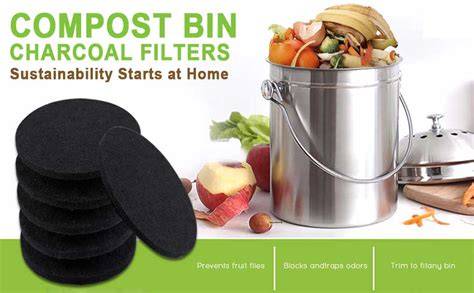
Charcoal filters in compost bins or pails help absorb and control odors. I always recommend people choose a bin with a filter if they’re thinking about composting at home. Having the right filter also matters. Charcoal filters are designed to adsorb odorous compounds, helping to reduce unpleasant smells that may arise from decomposing kitchen scraps. The charcoal acts as a natural filter, capturing and neutralizing the odors. This prevents the odors from seeping into your kitchen which can attract pests and just be annoying.
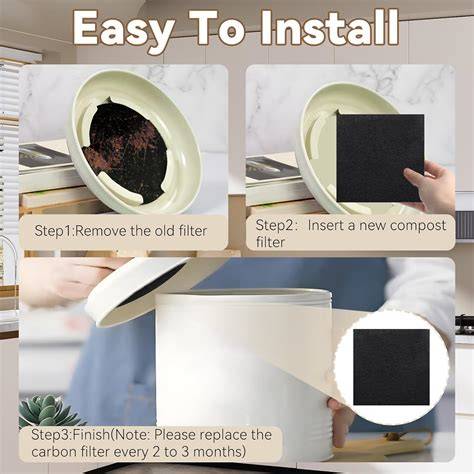
Ensure that you select the appropriate size and shape of charcoal filter for your compost bin or pail. Check the manufacturer’s instructions or guidelines to find compatible filters for your specific container. If you can’t find a charcoal filter that fits inside the lid of your countertop compost bin, you can cut down one that’s a little too large. They are very easy to trim with everyday scissors.
Charcoal filters have a lifespan and effectiveness, so it’s important to follow the manufacturer’s recommendations for replacing them. The frequency of replacement may vary depending on usage and the type of filter used. I replace my filter every 3-6 months depending on how much we use the bin. I tend to flip it once before tossing it to make it last a bit longer. The charcoal filter can also get gross more quickly if food scraps touch the filter. Thus, emptying the bin before it overflows helps elongate the life of the charcoal filter.
If you purchase replacement charcoal filters in advance, store them in a cool, dry place away from moisture and strong odors. We store our extra filters in a drawer under our counter with other kitchen accessories. I keep them in the plastic bag in which we receive them, and they last for years when I buy them in bulk.
Most compost bins or pails have a housing or compartment where you insert the charcoal filter. I highly recommend using a countertop compost bin with this feature. It’s a good practice to clean this space periodically to remove any residue or buildup that may affect the filter’s performance. While charcoal filters are effective at reducing odors, you can enhance their performance by combining them with other odor control methods. For example, lining the bin with compostable bags or paper can help absorb moisture and capture odors.
Before using charcoal filters, confirm that they are compatible with the composting system you have in place. Certain composting methods, such as worm composting (vermicomposting), may not require or benefit from the use of charcoal filters. Charcoal filters are not a foolproof solution but they make a world of difference in terms of managing your food scraps in your kitchen before they make their way to a compost pile.
Jen Panaro, founder and editor-in-chief of Honestly Modern, is a self-proclaimed composting nerd and advocate for sustainable living for modern families.
Choosing and Maintaining the Right Charcoal Filter
Start by verifying compatibility with your container’s lid or build. If a fit isn’t exact, you can trim a slightly oversized filter without compromising performance. Regular maintenance includes periodic cleaning of the filter housing to prevent buildup that could impede airflow or odor absorption. Consider pairing filters with compostable liners to further reduce moisture and odor transfer.
Best Practices for Odor Control
In addition to the charcoal filter, you can use compostable bags or paper lining to absorb moisture and capture odors. Empty the bin before it reaches overflowing capacity to prolong filter life. Store extra filters in a cool, dry place away from moisture and strong odors for quick replacements when needed.