A well-maintained lawn is a source of pride for many homeowners. While regular mowing, watering, and fertilizing are essential, one crucial practice often overlooked is lawn service. Aerating your lawn involves creating small holes in the soil to alleviate compaction and improve the movement of air, water, and nutrients to the grassroots. Aerating lawns are crucial for maintaining the health and vigor of both cool-season and warm-season grasses.
For cool-season grasses, the best time to aerate is in early spring or early fall, while warm-season grasses benefit most from aeration in late spring or early summer. The process involves using various tools, such as a manual aerator, spike aerator, or plug aerator, to create small holes in the soil’s surface. Using a spading fork or manual aerator is suitable for smaller areas, while larger lawns may require a power rake or core aerator with hollow tines to effectively aerate the soil and remove plugs of soil. It’s essential to mark any sprinkler heads and avoid high-traffic areas to prevent damage.
For optimal results, aerate the entire lawn and follow up with a rain shower or irrigation to help the soil settle. This practice enhances grass growth by improving the root zone, allowing roots to access vital nutrients and reach grass roots more effectively. Compacted soil is a common issue in lawns, especially those with heavy clay soil or sandy soil. This can lead to poor drainage, shallow grass roots, and diminished grass growth. To improve the lawn’s soil, consider using core aerators to poke holes throughout the entire lawn, which is particularly effective in late spring. This process helps alleviate soil compaction and promotes healthier grass growth. Regular aeration with core aerators not only improves soil structure but also encourages deeper root growth. Additionally, aeration can help reduce thatch buildup and improve the effectiveness of fertilizers and other soil amendments.
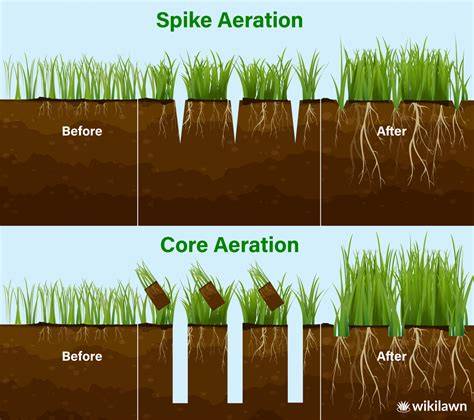
Core vs. Spike Aeration: Core Aeration as the Generally Preferred Method
1. Aerating lawns alleviates soil compaction, creating channels for air, water, and essential elements to reach the grassroots more efficiently. Using core aerators to poke holes throughout the entire lawn in late spring is particularly effective for cool-season grass.
2. Aeration improves water infiltration into the soil surface, reducing runoff and allowing water to reach the root zone. By increasing the soil’s capacity to absorb and retain water, aeration helps maintain consistent moisture levels. Aeration opens up the soil and helps nutrients penetrate deeper into it, providing the grass with the vital nutrients it needs for robust growth. Using a slow-release fertilizer after aeration can further boost nutrient availability. This combination ensures that the grass receives a steady supply of nutrients over time, promoting healthier and more vigorous growth.
4. Thatch is a layer of organic debris, such as dead grass and roots, that accumulates between the soil line and the grass blades. A moderate thatch layer is normal, but excessive thatch can block water and nutrients. Aerating helps break down the thatch layer, promoting a healthier lawn.
5. Aeration enhances the exchange of oxygen and carbon dioxide between the soil and atmosphere, which is essential for root respiration and overall lawn health. Improved air exchange helps grass roots grow stronger and deeper, leading to a more resilient and healthy lawn.
6. Aeration allows grass roots to grow deeper and more extensively, resulting in a more resilient lawn that is better able to withstand drought, heat, and high-traffic areas. Stronger roots improve the overall stability and health of the lawn, making it more resistant to stress and damage.
Types of Core (Plug) Aerators
Core aeration involves removing small plugs of soil from the lawn. This method is highly effective in relieving soil compaction and is suitable for most grass types. Manual core aerators are budget-friendly and suitable for small lawns with mild soil compaction. Tow-behind core aerators save time on large lawns and are ideal for moderate or severe compaction, while push-behind core aerators are a popular homeowner option for medium to large lawns. The three main types are:
- Manual Core Aerator: Budget-friendly, good for small lawns or spot aeration.
- Tow-Behind Core Aerator: Attach to a lawn tractor; efficient for large areas with moderate to severe compaction.
- Push-Behind Core Aerator: Looks like a lawn mower and is a common choice for medium to large lawns.
For each pass, target about 20 to 40 holes per square foot, with holes 2 to 3 inches apart. Leave soil plugs on the lawn to break down naturally and return nutrients to the soil. Patience is essential as plugs decompose in 2-4 weeks, and deeper roots form as the lawn absorbs more air, water, and nutrients.
What Are Spike Aerators?
With spike aeration, there are no soil plugs to deal with. Solid tines push into the ground, creating holes without removing material. It is a simpler process of piercing holes to let the roots breathe and allow more nutrients into the soil. However, many lawn care pros agree it is only a short-term solution because holes can reseal, and soil compaction may worsen over time. Spike aeration may benefit small areas with light compaction, sandy soils, or lawns with no stones or debris.
Types of Spike Aerators
- Rolling (Push) Aerator: For small lawns with mild compaction; handle with care on rocky soils.
- Tow-Behind Spike Aerator: Attaches to a lawn tractor; uses star-shaped blades to push soil and thatch downward.
- Pitchfork: Budget-friendly for small patches; insert tines about 3 inches deep and loosen soil by tilting forward and backward.
Pros of spike aeration include quick fixes for small areas, lower cost, and less disruption to the surface. Cons include short-term results, limited effectiveness for larger lawns, and potential long-term compaction since no soil is removed.
Core Aeration vs. Spike Aeration: Which Is Better?
| Feature | Core Aeration | Spike Aeration |
|---|---|---|
| Soil removal | Yes, plugs removed | No, holes pierced |
| Best for | Moderate to severe compaction, all lawn sizes | Mild compaction, small lawns |
| Results | Long-term relief | Short-term fix |
| Thath reduction | Effective (with plugs removal) | Minimal |
| Cost | Higher | Lower |
Core aeration generally yields longer-lasting relief and deeper root growth, making it the preferred option for most yards. Spike aeration can be a suitable DIY fix for small, lightly compacted areas, but it does not provide the same long-term benefits. For larger lawns or more severe compaction, core aeration is the better choice.
What to Do After Aerating
After aeration, your lawn is primed for treatments like topdressing and fertilization. Follow these steps in order for the best results: let the soil plugs decompose, overseed your lawn, topdress and water, apply fertilizer, limit foot traffic, and wait until the new grass reaches the same height as established grass before mowing.
When to Aerate and How Often
The best time to aerate is when your grass is actively growing and can recover quickly. Colorado State Extension recommends spring or fall aeration for the best results. Warm-season grasses such as Bermuda and St. Augustine should be aerated in late spring or early summer. Cool-season grasses like Kentucky bluegrass, fescue, and ryegrass are best aerated in early fall or early spring. Soils with heavy clay or high traffic often benefit from annual aeration, while sandy soils may require less frequent aeration. Avoid aerating during extreme heat or drought, and aim for moist but not muddy soil the day before aeration.
How to Use Aerators: Quick “How-To” Guide
1. Water the lawn a day or two before aerating to soften the soil. For small lawns or problem areas, use manual aerators or spot aeration. For large lawns, rent a core or plug aerator.
2. Core aeration: Use a core aerator to remove plugs roughly 2-3 inches deep and spaced about 2-4 inches apart. If using spike aeration, aim for similar depth where possible.
3. After aeration, leave soil plugs to dry and break down naturally. Fertilize and overseed for best results, as seeds and nutrients have direct contact with the soil through the openings created by the aerator.
4. Avoid heavy foot traffic immediately after aeration. Monitor lawn recovery and resume mowing only when the grass reaches the same height as un-aerated areas.
Common Issues and Troubleshooting
Compacted soil can starve your lawn of water, nutrients, and oxygen. Core aeration removes soil plugs to relieve compaction long-term, while spike aeration simply pokes holes that reseal. Both methods create openings in the ground, but the results are very different. Choosing the wrong method can waste time or worsen compaction. If you want lasting results, professional aeration services can help ensure optimal results with high-quality core aerators and tailored lawn care plans.
Signs Your Lawn Needs Aeration
- Water pooling on the surface
- Thin or patchy grass
- Hard soil and slow drainage
- Heavy foot traffic areas
- Excessive thatch buildup
- Recent construction or sod installation
Frequently Asked Questions
- How long does it take to aerate a lawn? A medium-sized lawn can be aerated in about 30-90 minutes with professional equipment; manual methods take longer.
- Will aerating damage irrigation systems? When done carefully, no, but mark sprinkler heads and tread with care to avoid damage.
- Can I aerate my lawn myself? Yes, especially for small areas; however, for large or heavily compacted lawns, hiring a lawn service or renting a core aerator can save time and ensure proper results.
Additional Tips and Resources
Aeration is part of a broader lawn care regime. After aeration, consider overseeding with quality seed and applying a slow-release fertilizer to promote sustained growth. Thatch reduction can also complement aeration; dethatching and aeration can be paired for optimal soil health. If you’re unsure about the best approach for your lawn type, consult a local lawn care professional for a tailored plan that fits your yard’s needs.
Core vs. Spike Aeration // When to Aerate Lawn // Types of Lawn Aerators
Core aeration is the method of choice for most homeowners and professionals due to its longer-term relief from compaction and deeper root growth. Spike aeration can be a quick fix for small areas with mild compaction, but its benefits are temporary and may require more frequent treatment. Understanding your lawn type, compaction level, and budget will help determine which method is best for you.
Whether you choose to aerate your lawn yourself or hire a professional service, understanding the benefits and proper techniques of aeration will help you achieve the lush, green lawn you desire. Core aerators and spike aerators are common tools used to poke holes in the soil, each with its advantages. Contact a local lawn care professional to learn more about aeration options and implement a plan that suits your lawn’s needs.