The cashew tree (Anacardium occidentale), a native of Brazil, is the source of cashew nuts and the cashew apple. Wild cashew trees occur in the savannas and some coastal forests in northern South America, Brazil, and adjacent Bolivia and Paraguay. The cashew tree is a tropical evergreen sensitive to cold and does not do well in temperate regions, yet today cashew is cultivated throughout the lowland tropics of the world.
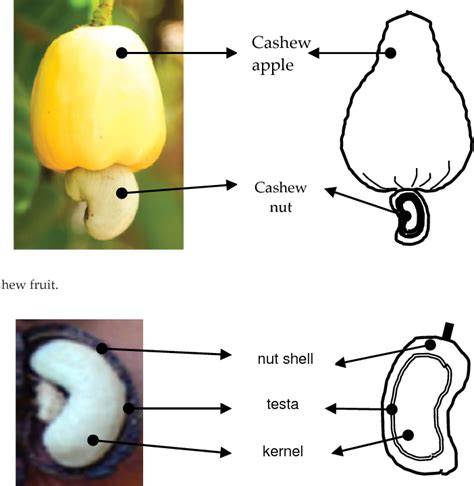
Portuguese colonists introduced the cashew from Brazil to their colonies in India and Africa in the late 1500s, and Vietnam today is the leading world producer. Cashews grow on a tree that produces a “false fruit” known as the cashew apple, which is a pear-shaped juicy structure subtending the fruit and actually the swollen flower/fruit stalk (hypocarp). The seed is enclosed in a brown to gray fruit, often called the cashew nutshell, which contains a dermatitis-causing poisonous resin.
Cashews are the seed of the cashew tree and are enclosed in a hard shell that contains urushiol, an oil capable of causing blisters or burns, so professional handling and careful precautions are required. For consumption, cashews are roasted or eaten raw after careful separation from the poisonous shell; the nutshell liquid chemicals are also extracted to produce adhesives, lubricants, solvents, plastics, and antimicrobials. Brake linings of cars and particleboard are two products partially derived from cashew nutshell chemicals.
The cashew apple can be candied or its juice fermented to make wine or spirits, or it can be used as an ice cream flavoring. The cashew apple is edible despite its bitter, acidic content and is the swollen stalk of the fruit, not the seed itself. Cashews are also used to make cashew butter or as an ingredient in cakes, cookies, and candies.
Cashews are especially popular with those who live a vegan lifestyle due to their creamy texture, making them a great dairy substitute in vegan cooking. They are one of several staple ingredients in vegan food products and are used in a variety of culinary applications, including trail mix, stir-fries, granola, nut butter, and plant-based dairy products. An ounce of cashews contains 9 grams of carbohydrates and 1 gram of fat, giving a net carb count of 8 grams, though dietary opinions vary on keto compatibility.
Cashew farming and production have environmental and socio-economic dimensions. In Vietnam, organic cashew farming is practiced with relatively low inputs, and organic, fair-trade cashews are produced in a context where farming can provide employment for working mothers who may bring their children to the orchard. The cashew plant tolerates drought fairly well, and in wetter regions such as Vietnam, irrigation is not always required; the trees can thrive with adequate rainfall.
There is an active debate about whether cashews should be classified as a fruit or a nut, but it is widely agreed that cashews are the seeds of the cashew tree. The cashew apple, despite its bitterness, is edible and can be used in various processed forms. The tree's native status in Brazil is supported by historical introductions to other regions and its current global cultivation in warm climates around the world.
Cashews also offer nutritional benefits: they are rich in antioxidants, fiber, healthy unsaturated fats, and plant protein. They are generally considered a healthy snack option, provided they are consumed in appropriate portions and with attention to added oils and salt in roasted varieties. For those interested in dairy alternatives, cashews provide a creamy base suitable for cashew cheese and cashew yogurt, distinguishing them from other plant-based milks like almond milk, oat milk, and coconut milk in terms of texture and environmental considerations.
In practical terms, one tasty way to eat cashews is to roast them with salt and desired spices, or to blend roasted or unroasted cashews into a creamy cashew butter by processing with coconut oil. For at-home dairy alternatives, making cashew milk involves soaking, blending with water, and straining, with variations in water content and flavorings such as maple syrup, coconut sugar, lucuma fruit powder, nutmeg, cinnamon, and cardamom. The process can be scaled for personal recipes or commercial production, as demonstrated by Forager Project Cashewmilk, which emphasizes sustainably sourced Vietnam cashews and a simple production method in California.
Overall, the cashew tree and fruit present a multifaceted topic: botany and origin, cultivation across tropical regions, nutritional and culinary applications, environmental considerations, and industrial uses of cashew nutshell derivatives. The plant’s ability to yield edible fruit and a valuable seed while contributing to economic development in producing regions underscores its global significance.
Botanical and Geographic Context
- The cashew tree is a tropical evergreen native to South America, with wild populations in the savannas of northern South America and adjacent areas.
- Its true fruit is the cashew apple, a pear-shaped juicy structure that supports the cashew seed externally in a hard shell.
- The cashew nutshell contains a dermatitis-causing resin (urushiol), necessitating careful processing before consumption.
Historical and Global Cultivation Trends
- Portuguese colonists introduced cashews from Brazil to their colonies in India and Africa in the late 16th century, expanding cultivation worldwide.
- Today, cashews are grown in lowland tropical regions, with Vietnam as a leading global producer, and organic farming gaining prominence in some regions.
Uses and By-Products
- Cashews are consumed roasted or raw after shell removal and are used to make cashew butter, vegan dairy substitutes, and as ingredients in sweets and savory dishes.
- The cashew apple can be candied, its juice fermented into wine or spirits, or used as an ice cream flavoring; it is edible despite its bitterness.
- Urushiol-containing cashew nutshell liquid is processed into industrial products such as adhesives, lubricants, solvents, plastics, and antimicrobials.
- Some products like brake linings and particleboard rely on chemicals derived from cashew nutshells.
Nutritional and Dietary Considerations
- Cashews are vegan-friendly and offer healthy fats, fiber, antioxidants, and plant protein, making them a common dairy substitute in vegan cooking.
- Cashews contribute to a balanced diet but roasted or salted varieties may include added oils or salt; portion control is advisable.
- Dietary debates exist regarding keto, paleo, and vegan classifications, with varying viewpoints on carb content and suitability for certain diets.
Environmental and Social Dimensions
- Cashew farming can support economic recovery in producing regions, as seen in Vietnam, where organic and fair-trade practices are emphasized.
- The drought resistance of cashew trees and their relatively low water requirements in some regions influence environmental sustainability comparisons with other nuts.
- Social aspects include potential employment opportunities for working mothers in organic cashew farming contexts, highlighting the farm-to-table nature of the supply chain.
Culinary Practice and Home Preparation
- Roasting and seasoning cashews is a straightforward preparation method for snacking or recipe enhancement.
- Cashew milk can be produced at home by blending soaked cashews with water and optional flavorings, or purchased as a dairy substitute with regional variations.
- For culinary experimentation, cashews can be used to create creamy bases for cheeses, yogurts, and other dairy-free products while exploring flavor profiles with spices and sweeteners.
The Process of Growing Cashew Trees Industrially, From Nursery to Harvest
Cashew trees grow on a tropical plant and produce a unique fruiting structure that includes the cashew apple and a protective shell housing the nut. This combination of botany, history, nutrition, and industry makes the cashew a notable resource in global agriculture and cuisine.