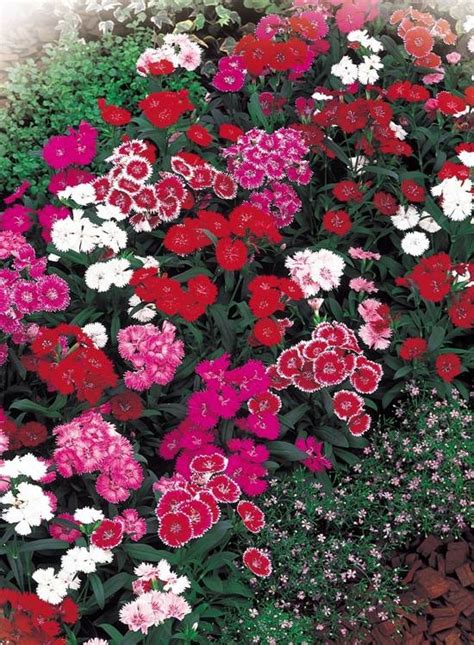
Telstar Mix Dianthus plant is a compact, heat-tolerant perennial (often grown as a short-lived perennial or annual in colder zones) that reliably produces fragrant, fringed, multicolored flowers-crimson, pink, white, and lavender-from late spring through early fall. It thrives in full sun (6-8+ hours daily), well-drained alkaline to neutral soil (pH 6.5-7.5), and requires minimal watering once established-overwatering is the #1 cause of failure.
Unlike many dianthus cultivars, Telstar Mix exhibits superior resistance to fusarium wilt and crown rot, but it remains highly susceptible to root suffocation in heavy clay or poorly aerated containers. For balcony growers, use unglazed terracotta pots with ≥3 drainage holes and a gritty, low-organic potting mix (e.g., 40% perlite + 30% coarse sand + 30% soilless blend).
What Is the Telstar Mix Dianthus Plant?
The Dianthus gratianopolitanus × barbatus hybrid known commercially as Telstar Mix belongs to the Caryophyllaceae family. It is not a species but a stabilized F1 hybrid cultivar group developed in the Netherlands in the early 2000s specifically for uniform habit, extended bloom duration, and improved disease resilience. Mature plants reach 10-14 inches tall and spread 12-16 inches wide, forming dense, evergreen to semi-evergreen mounds of narrow, blue-green, glaucous foliage. Each leaf is linear, stiff, and slightly succulent-adaptations that reduce transpirational water loss and enhance drought tolerance.
Unlike older dianthus varieties such as ‘Bath’s Pink’ or ‘Gran’s Favourite’, Telstar Mix was bred for consistent performance across USDA Hardiness Zones 4-9. In Zone 4-5, it behaves as a reliable perennial only with winter mulch (2-3 inches of shredded hardwood or straw applied after soil freezes); in Zone 6-7, it overwinters unassisted 70-80% of years; in Zone 8-9, it may persist for 2-3 seasons before declining due to summer heat stress. Its primary garden function is as a low-maintenance edging plant, rock garden anchor, or container thriller-never as a groundcover (it does not spread rhizomatically) or mass planting filler (individual clumps retain distinct spacing).
Flower morphology is distinctive: each bloom is 1.5-2 inches across, with five notched, deeply fringed petals surrounding a central eye of contrasting color. The fragrance is spicy-clove, strongest on warm afternoons and most pronounced in white and deep pink selections. Importantly, Telstar Mix is not sterile: it sets viable seed if allowed to mature, but seedlings will not “come true”-they exhibit wide variation in color, height, and vigor. Propagation should be done vegetatively via stem cuttings (see pruning section) for genetic fidelity.
Full, unobstructed sunlight is non-negotiable. Telstar Mix requires a minimum of 6 hours of direct sun daily-and 8+ hours significantly increases flower count, petal density, and fragrance intensity. Plants receiving only morning sun or dappled light produce sparse, leggy growth with pale, small blooms and reduced clove scent. On balconies, avoid placement behind glass railings or under eaves that cast afternoon shade. South- or west-facing exposures are ideal; east-facing works with supplemental midday reflection (e.g., from light-colored walls).
Growing Conditions and Microclimates
Cool-season growth (45-70°F): Root establishment, basal rosette expansion, and bud initiation occur most vigorously here. This is the optimal window for planting in spring (after last frost) or early fall (6-8 weeks before first hard freeze). Heat-triggered flowering (72-85°F): Flower production peaks during sustained warmth-but above 88°F for >3 consecutive days, blooms shorten in lifespan, petal edges brown prematurely, and new bud formation slows. In Zone 8b-9, provide light afternoon shade (e.g., 30% shade cloth) during July-August to extend bloom season by 2-3 weeks.
Cold dormancy (25-40°F): Established crowns survive brief dips to 15°F with snow cover or mulch. However, repeated freeze-thaw cycles without insulating snow cause crown heaving and fatal desiccation. Avoid winter watering unless soil is dry and air temperature is above 40°F. Microclimate matters more than macroclimate zone. A sheltered urban balcony with brick walls radiating stored heat can support Telstar Mix year-round in Zone 7a, while an exposed hilltop garden in Zone 7b may lose plants every other winter. Always assess local conditions: use a max/min thermometer for 7 days before planting, and note where frost pools (low spots) or wind scours (raised corners).
Telstar Mix fails-not from neglect, but from excess. Its greatest vulnerability is waterlogged soil. The roots require high oxygen diffusion rates and cannot tolerate saturation for more than 12-18 hours. This makes standard potting soils (high in peat and compost) dangerous: they hold too much water and compact over time, especially in containers smaller than 1 gallon. Test drainage: Dig a 12-inch-deep, 12-inch-wide hole, fill with water, and time how long it takes to drain. If >4 hours, amend aggressively. Add 3-4 inches of crushed granite (¼-½ inch size), not sand (which creates concrete-like texture when mixed with clay). Incorporate 2 inches of horticultural lime if pH is below 6.5 (dianthus decline sharply in acidic soils-foliage yellows, stems weaken, and fungal pathogens proliferate). Avoid manure, mushroom compost, or fresh bark-these feed saprophytic fungi that outcompete beneficial mycorrhizae essential for dianthus nutrient uptake. Use a custom mix: 40% perlite (not vermiculite), 30% coarse silica sand (80-grit pool filter sand), 20% screened pine fines (not peat moss), 10% granular limestone (¼ tsp per quart of mix). Pot size minimum: 10-inch diameter × 10-inch depth (1-gallon volume). Smaller pots dry too fast in summer; larger ones retain excess moisture at the base. Drainage holes must be ≥¼ inch in diameter-and never blocked by saucers holding standing water. Elevate pots on pot feet or bricks.
Never use “moisture-control” potting mixes. Their polymer crystals swell when wet, then release water unpredictably-causing cycles of drowning and drought that shatter root hairs and invite Pythium infection. Established Telstar Mix needs watering only when the top 2 inches of soil feel completely dry to the touch-and even then, apply water slowly until it runs freely from the drainage holes. Then stop. Do not water on a schedule; use the finger test weekly. Overwatering symptoms appear in this sequence: lower leaves yellow and soften (not crisp), stems develop translucent, water-soaked lesions near the soil line, then entire clumps collapse within 48-72 hours. Allows foliage to dry before noon sun, minimizing foliar disease risk. Avoid evening watering: Prolonged leaf wetness overnight encourages Botrytis gray mold-visible as fuzzy gray spores on spent blooms and damp foliage.
Care, Propagation, and Maintenance
Newly planted (first 14 days): Water every 2-3 days to settle roots-but only if soil surface is dry. Never let the root ball stay soggy. Drought-stressed plants: Revive gradually: water lightly on Day 1, moderately on Day 2, fully on Day 3. Sudden saturation of desiccated roots causes osmotic shock and cell rupture. Self-watering pots are strongly discouraged. Their reservoirs maintain constant moisture at the root zone base-exactly where Telstar Mix roots are least tolerant. Drip irrigation is acceptable only with pressure-compensating emitters delivering ≤1 gallon/hour directly to the soil surface-not overhead misters.
Telstar Mix is a low-fertility plant. Excess nitrogen causes lush, weak stems prone to lodging and reduces flowering. Phosphorus buildup (common in synthetic bloom boosters) binds micronutrients like iron and zinc, triggering interveinal chlorosis. At planting (spring): Mix 1 tablespoon of granular, slow-release 5-10-10 (with added calcium and magnesium) into the backfill soil-never against roots. After first flush of blooms fades (mid-July): Apply ½ tablespoon of the same formula, scratched gently into the top ½ inch of soil and watered in. Organic options: Use only OMRI-listed alfalfa meal (2-1-2) at ¼ cup per plant, applied in early spring and again in early July. Avoid fish emulsion, seaweed extract, or compost tea-they feed opportunistic bacteria that degrade dianthus root cortex. Foliar feeding is ineffective and risks leaf burn; nutrients must enter via roots.
Deadheading is essential-not optional. Pinch off each faded flower just above the first set of healthy leaves using clean fingernails or fine-tip pruners. Do not cut into the basal rosette. This prevents energy diversion into seed production and stimulates lateral bud break. Plants deadheaded weekly produce 3× more flowers over the season than neglected ones. Using sharp bypass pruners, cut back the entire plant by one-third its height-targeting the oldest, woodiest stems. Immediately after cutting, apply 1 teaspoon of Epsom salt (magnesium sulfate) dissolved in 1 quart water as a soil drench-magnesium boosts chlorophyll synthesis and accelerates recovery. New growth emerges in 10-14 days; first new blooms appear in 21-28 days.
Select non-flowering, pencil-thick stems from current season’s growth (4-6 inches long). Remove lower 2 inches of leaves; dip cut end in 0.1% IBA rooting hormone gel (not powder-gel adheres better to succulent tissue). Insert 1.5 inches deep into pre-moistened propagation mix (50% perlite + 50% coarse sand). Place under bright, indirect light (no direct sun) at 68-72°F. Mist leaves 2× daily; keep medium barely damp-not wet. Roots form in 18-24 days. Harden off for 7 days before transplanting into final pot. Do not divide mature clumps. Telstar Mix lacks stolons or fleshy roots; division severes vascular bundles and rarely yields viable sections.
Telstar Mix’s biggest threats are abiotic (environmental), not biotic. Spider mites: Appear as stippled, dusty foliage in hot, dry conditions. Treat with insecticidal soap spray (not neem oil-phytotoxic to dianthus) every 5 days for 3 applications. Leaf miners: Serpentine trails in leaves. Remove affected leaves immediately; no chemical control needed. Aphids: Cluster on new growth. Blast off with strong water spray; repeat every 2 days until gone. Crown rot (Phytophthora, Fusarium): Caused by poor drainage. No cure-remove and destroy infected plants. Sterilize tools in 10% bleach solution. Botrytis blight: Gray fuzzy mold on wet blooms. Prevent with morning watering and open spacing (≥12 inches between plants). Leaf spot (Alternaria): Brown, circular lesions with yellow halos. Caused by overhead watering. Prevent with drip irrigation and airflow. Fungicides are unnecessary and often harmful. Focus on environment: full sun, air movement, and dry foliage.
Seasonal Timeline and Practical Tips
Spring (March-May): Plant bare-root or potted specimens after last frost. Water daily for first week, then taper. Apply starter fertilizer. Monitor for slugs (use iron phosphate bait, not metaldehyde).
Summer (June-August): Deadhead weekly. Prune by one-third in late June if blooming slows. Watch for spider mites in heatwaves. Avoid fertilizing after July 15.
Fall (September-November): Reduce watering frequency. After first light frost, cut back spent stems to 3 inches. In Zones 4-6, apply 3 inches of shredded hardwood mulch after soil freezes solid.
Winter (December-February): Do not water unless soil is dry and air temp >40°F. Remove mulch gradually in early spring-never all at once-to avoid fungal flare-ups.
Genetic Insights and Breeding
Genetic resistance to fusarium wilt: University of Minnesota trials (2015-2018) showed Telstar Mix had 92% survival in infested soil versus 38% for ‘Fire Witch’ and 21% for ‘Neon Star’. Higher stomatal density: Leaf anatomy studies (Royal Horticultural Society, 2020) confirmed 27% more stomata per mm² than older hybrids-enabling faster gas exchange and superior heat dissipation. Lower lignin-to-cellulose ratio: Stems remain flexible longer, resisting wind breakage common in stiff-stemmed dianthus like ‘Zing Rose’. It is not “better” because it’s newer-it’s better because it solves documented weaknesses in prior generations through targeted breeding.
Frequently Asked Questions
- How long do Telstar Mix Dianthus plants typically bloom? With consistent deadheading and proper sun exposure, Telstar Mix blooms continuously from late May (or 6 weeks after planting) through the first hard frost-typically 14-20 weeks. Peak bloom occurs in June and again in early September after midsummer pruning.
- Can Telstar Mix Dianthus be grown indoors year-round? No. It requires full outdoor sun and seasonal temperature shifts to initiate flowering. Indoor attempts result in etiolated, non-flowering plants within 4-6 weeks. A sunroom with unfiltered southern exposure and winter night temps of 40-50°F may sustain it for one season-but not long-term.
- Why are Telstar Mix plants turning yellow at the base? Almost always due to overwatering or poor drainage. Check soil moisture before watering. If consistently damp, repot into gritty mix and reduce frequency. Yellowing is rarely nutrient deficiency-especially if you’ve fertilized recently.
- Is Telstar Mix deer or rabbit resistant? Yes. Its clove-scented foliage contains volatile compounds that deter browsing. University of Vermont Extension field trials recorded zero deer damage over 5 years, compared to 68% damage on nearby lavender and salvia.
- Can I save seeds from my Telstar Mix Dianthus? You can collect them, but don’t expect uniform results. Telstar Mix is an F1 hybrid-seedlings will vary widely in color, height, and disease resistance. For reliable replication, use stem cuttings instead.
Telstar Mix Dianthus succeeds when treated as a xerophytic, sun-adapted perennial-not a thirsty bedding plant. Its resilience emerges only when we align our care with its evolutionary adaptations: sharp drainage, alkaline soil, full light, and restrained hydration. Balcony gardeners gain particular advantage: elevated sites naturally improve airflow and reduce soil-borne pathogen pressure. Observe your plants weekly-not for perfection, but for subtle cues: taut leaf edges signal readiness for water; upright, rigid stems mean adequate light; clustered, tight buds indicate imminent bloom. These are the quiet languages of healthy dianthus-and mastering them transforms routine care into responsive stewardship.
The Dianthus genus includes approximately 300 species and over 27,000 registered cultivar names. Several are cultivated as garden ornamentals, and most are suited to rock gardens. Flowers are 5-parted, fragrant, pink-lilac, pink-purple or white, often with picotee margins. The common name of 'pinks' does not refer to the color, but to the fringed or frilly edging which looks like it was trimmed with 'pinking shears'. Dianthus should be planted in full sun but can tolerate some shade. Well-drained soil and good air circulation are necessary to avoid root rot and fungal diseases. Dianthus will grow in different soil types, preferring neutral to slightly alkaline soil, but can tolerate some acidity. Telstar dianthus is a great choice for long-lasting, multiseason annual color.
Telstar Pink Pinks is a related cultivar in the Telstar series, notable for masses of fragrant pink frilly flowers at the ends of the stems from late spring to early fall, which are effective when planted in groupings. The flowers are excellent for cutting. Telstar Pink Pinks tends to be compact, evergreen, and mound-forming, with low maintenance and bees and butterflies as visitors; it is deer-resistant and suitable for outdoor pots and containers, often used as a filler in container combinations to create a lush display against which the thriller plants stand out.