Most tropical plants need a frost free environment to successfully overwinter and be used as permanent plants in the garden. Geographically this leaves most areas of North America, except USDA cold hardines zones 10 and 11, unsuitable for reliably growing tropical plants as year-around permanent landscape addtions. However, that does not mean you can't enjoy tropical plants during the warm growing season as annuals (re-planted each year) or as container plants that are overwintered indoors. Adding tropical plants to traditional annual or perennial plantings, outside their natural cold hardy range, is an exciting new trend in garden design. A mixture or mass planting of exotic tropicals with huge shiny leaves, bold outrageous colors, ferny textures, and spectacular flowers can transform the ho hum summertime landscape. A big plus is that topicals love the heat when other plants fizzle.
Overview: Where and how to grow
Tropicals can be easily grown directly in the ground or in containers. Containerized plants can be placed on patios, decks and around pools. Planting in containers makes it much easier to move inside for the winter if you desire or simply replant next season. Feature plants are the focal point in the landscape placed in a prominent area so that their special form or unique characteristic can be admired.
Preparing for planting
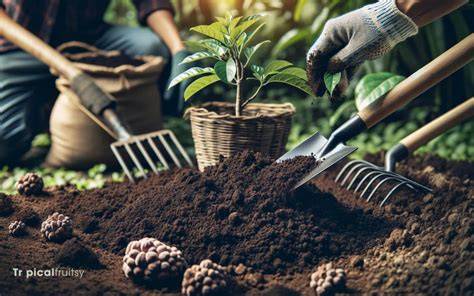
Prepare the area for planting by conditioning the soil. Dig a hole 2 times the width of the root ball and a depth slightly less than the height of the root ball. For container grown plants, carefully remove plant by squeezing container and slowly removing the root ball. Never pull on the plant trunk. Instead let the root ball slide out by tipping the container. If the plant is heavily rooted, loosen roots by gently pulling a few away from the root ball. This encourages stronger root growth. Set root ball in hole making sure the top of the root ball is slightly higher (1/2 inch) than ground level. Place soil mix under root ball if too low. For bare root plants, trim any broken, twisted or discolored tips. Determine the original soil line by the change in color on the plant trunk. Set the plant in the hole so the soil line is above the surrounding soil. Space the roots evenly. Water thoroughly to settle the soil around the plant. Add more soil mix around plant if necessary after watering.
Watering and soil care
New plants require more frequent watering than established plants. For large plants; build a soil ring around the plant to use as a water reservoir. Don't water at night if possible. Plants in containers may require more frequent watering than plants in the ground. Add a 2-3 inch layer of organic mulch around plant to maintain and conserve soil moisture.
Fertilization and feeding
Fertilize just before and during the plants active growing cycle. Choose a fertilizer recommended for palms. Frequency will depend on the type of fertilizer. When using granular fertilizer be sure to sprinkle fertilizer pellets away from the plant stems or trunk to prevent possible burning and always water thoroughly after application.
Pruning and maintenance
Plants with branches originating from the roots of the plant need to be selectively pruned. Prune by removing the oldest branches completely. Remove damaged or dead limbs back to live wood. Use proper tools such as shears, hand pruners, pole pruners and pruning saws.
Planting media and products
Selected materials support strong healthy growth and more flowers: Planting MixPromotes strong healthy growth and more flowers; Potting SoilReady to use mix for indoor and outdoor containers and hanging baskets; Plant StarterHelps plants quickly establish to their new home; Slow Release FertilizerFeeds for months with one application.