Nothing is more spectacular than the weeping Norway spruce for something unique to grow as a tree upright or as a ground cover. It is a lovely conifer you can plant in your large-scale plantings for its dramatic structure. It can also be trained and pruned to thrive in a container. Today we will help you care for your young trees to become established trees in the garden.
Around the Weeping Norway Spruce: Key Characteristics
A fascinating thing about the weeping Norway spruce is that it is not grown using seeds. Hence, you find no restrictions in the USDA zone. It can develop as a flowing non-flowering specimen when trained as a young tree to be left alone. You see the trees in Asian gardens with their weeping branches staked to grow up to 15 feet tall. They fit in well in naturalistic landscaping in different regions covered in snow. But if you prefer, it can grow in difficult spaces as a ground cover to spread through the garden.
Do not want a weeping spruce mat, then grow it in a larger container. One thing you will love is the cascading branches covered with dark green, fragrant needles. As the tree matures, you see a display of nine-inch long brown cones. The tree is slow growing and helps remove air pollutants, making it an excellent tree in the home or the landscape. For those wanting to know its fancy botanical name, it goes by Picea abies pendula.
The best time to plant your weeping evergreen is early spring to early fall. Yet, this weeping Norway spruce does come with a note of warning. The tree is not native to the USA and can become invasive and harm the native flora and fauna.
Picea Abies Pendula Care
Once your Norway spruce is established in containers or a garden, it is a low-maintenance tree. The best part is that they are resistant to air pollutants and deer. So, all you need to decide is whether you want it to cover the ground or stand upright.
Planting Weeping Norway Spruce
If you decide to plant your weeping Norway spruce upright, the first thing is to provide it with enough space to expand. Then remove your sapling from the container and tease the roots around the root ball. Dig a hole deep enough for the root ball and twice the width. Please place it in the hole with the top root ball level with the soil and fill it with topsoil and organic compost. Tamp down on the soil to remove air pockets.
If you want your tree to rise vertically, it helps to place several wood stakes about eight inches away from the spruce trunk after planting. Then attach some fabric ties to keep it upright and water well, and add some mulch around the trunk using bark chips.
Ideal Lighting
Whether you have your weeping Norway spruce in a pot or natural water gardens, the evergreen, while a slow grower, thrives in full sun in the morning to part shade for new growth. With some partial shade, it helps keep the needles protected from the full sun in the afternoon.
Soil and Watering
For soil conditions, your new trees need acidic soil with moisture to flourish. But it also needs well-drained soils as it does not tolerate standing water. Thus, if you have your new plants in pots, ensure it has enough drainage holes.
Water is crucial while the tree is young. When the weeping Norway spruce is still young, it needs regular watering when the soil is dry. Hence, monitoring the soil moisture during the first three years as the extensive root system develops is essential. When the tree matures, the roots provide enough water, and moderate watering is needed depending on the natural rainfall.
Fertilizer and Nutrients
Once planted, the Norway spruce needs not much fertilizer, and mature trees only need feeding every few years. We recommend a balanced fertilizer for shrubs and trees applied in spring for healthy growth.
Temperature, Humidity, and Winter Care
The essential thing for growing the tree in containers is to provide it with at least six hours of sun. Still, it is a cold, hardy tree that will survive a winter outside, even in the snow. Still, it will struggle during summer in hot, humid temperatures.
One effective winter care practice for spruce trees is the application of a layer of mulch around the base of the tree. In regions where harsh winters are common, paying close attention to their winter needs is essential. Proper drainage is a key consideration, even during the winter months.
Pruning, Propagation, and Maintenance
Pruning helps set up the basic framework for your tree by cutting back on unwanted growth. It also aids in keeping the plant compact, removing damaged branches, and shaping the tree. However, never chop the leader off as it is the spruce’s tip and needs one leader. The best time to prune is in winter with sharp, clean tools. As the tree spreads taller, consider pole pruners for larger specimens.
To propagate your weeping Norway spruce, the best is to use cuttings from this evergreen. We recommend hardwood cuttings in fall or winter when the trees are dormant. Take a six-inch cutting below a leaf bud at a 45° angle, strip needles from the bottom, and place in sandy, well-drained soil. Keep warm with bright indirect sunlight and a plastic bag over the pot to maintain moisture. Water when the top inch is dry. After roots form, transplant as usual.
Planting from seed is possible but slow. Collect mature cones, refrigerate seeds in a plastic bag for about three weeks, then soak and sow in rich soil. Maintain moisture and protect from full sun and heavy rain during germination, which typically takes about three weeks.
Related Spruce Varieties and Uses
In the Picea genus, there are many cultivars worth exploring. The Globe Blue Spruce offers a compact, globe-shaped form with blue needles, while the Bird’s Nest Spruce presents a compact, rounded habit ideal for containers. The Dwarf Alberta Spruce is a petite cultivar excellent for small gardens or as a specimen in containers. Some cultivars are blue or golden, adding a splash of color to landscapes. The Columnar Norway Spruce provides narrow, upright growth suited to tight spaces, and the Fat Albert Blue Spruce stands out with its conical form and blue needles.
As with all spruces, watch for common pests and diseases. Cytospora canker and rhizosphaera needlecast can cause yellow-orange spots on the trunk or brown needles. Spider mites and bagworms are other concerns-inspect foliage regularly and treat promptly with appropriate measures to maintain plant health.
Practical Notes: Uses, Care, and Cultural Context
Spruce trees offer aesthetic appeal and practical uses. They enhance landscapes with year-round greenery, and their wood is valued for construction, furniture, and instruments. They provide habitat for wildlife and hold cultural significance in many societies, including festive associations with Christmas traditions. These evergreens help purify the air and stabilize soil with their extensive root systems.
In addition to the weeping Norway spruce, there are many other spruce varieties to consider for different climates and garden designs, from the Colorado Blue Spruce to the White Spruce, and from the Serbia spruce to the Sitka spruce, each with distinct growth habits and ornamental value.
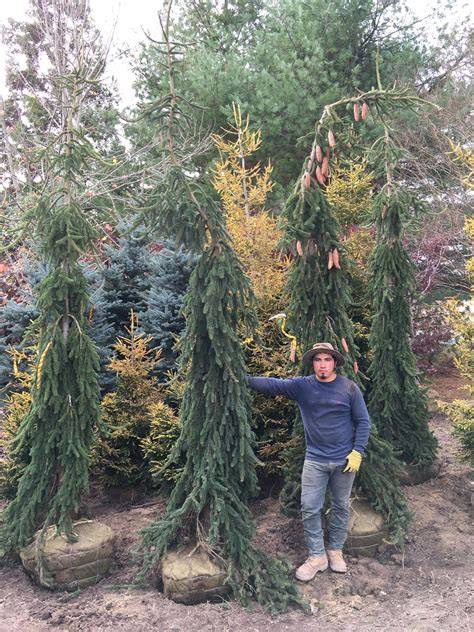
Weeping Norway Spruce
Before placing a dwarf Alberta spruce outdoors after indoor use, harden off gradually. Move it to a sheltered area with filtered sunlight, then to morning light and afternoon shade. It tolerates full sun to partial shade and prefers well-drained, consistently moist soil. If grown in a container, water when the top 3 inches of soil are dry. Spider mites can be a problem once outdoors, and treatments include insecticidal soap, with caution regarding harsher pesticides as needed.