Chaenomeles japonica, commonly known as Japanese quince, is invaluable for early spring colour when its bright orange-red flowers stud its bare thorny stems for weeks. The flowers often mature into rounded green or yellow quinces, which can be made into a delicious jelly. Chaenomeles japonica is an incredibly easy shrub to grow. It's tolerant of virtually any soil and can also be trained to grow up a shady wall.
When to prune
Prune Japanese quince annually, after flowering. It produces flowers on growth made the previous year, so pruning straight after flowering gives the plant a chance to make new growth in time for the next flowering season.
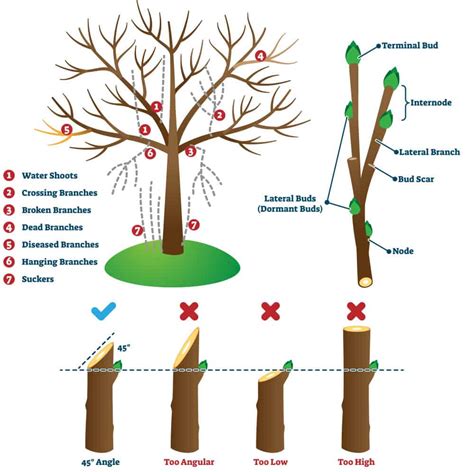
First, cut out any branches that are dead, diseased, weak or damaged, as well as any that are crossing. Cut back to the base of the plant or to the point where they emerge from the main stem. Once you've done that, shorten new stems to two or three buds from the base and prune around 20 per cent of older stems, cutting down to the base. If your shrub is trained against a wall, tie in any new shoots.
Pruning methods for shape and health
There are two principal pruning goals: maintain plant health by removing dead or damaged wood, and regulate shape by encouraging productive, flowering growth. Begin with removing any dead, diseased, weak or damaged branches, and eliminate crossing branches to improve air circulation. For older wood, prune to the base to stimulate fresh growth. Shorten new stems to two or three buds from the base to promote compact, well-formed shoots for the next season's blossoms. For wall-trained specimens, ensure new shoots are neatly tied in and directed along the support.
Growing conditions and site
The Japanese quince is tolerant of virtually any soil and can be grown in dappled shade, full shade, full sun, or partial shade. It prefers well-drained soil and can adapt to acidic, chalky, alkaline, clay, heavy, moist, well-drained, light, or sandy conditions. East-facing, north-facing, south-facing, and west-facing positions are all suitable, with a preference for a position in the middle of a border.
Propagation options
There are two ways to propagate Japanese quince - by semi-ripe cuttings in summer or by layering in autumn. Semi-ripe cuttings are hard at the base but soft at the tip. Cut off a shoot 10-15 cm long that has at least two sets of leaves below the top set. Store them in a plastic bag if you are not potting up straight away. Trim the shoot just below a node, remove the lowest sets of leaves, leaving one set at the top of the cutting, and plant in peat-free cutting compost. Keep in a propagator or cold frame until rooted. Alternatively, layering involves bending a shoot down to root in the soil, while still attached to the parent plant, which is easy and can be done in autumn.
Additional care and considerations
Rabbits can do a great deal of damage to this plant in the winter. The plants can be protected with a fence formed with hardware cloth (looks like chicken wire but with small square holes). To do this, tie the branches toward the center, and place a circle of hardware cloth around the outside. The base of the hardware cloth should be buried in the soil or mulch.
Fertilization and soil management (optional)
Liquid fertilizers (such as Miracle-Gro) are mixed with water and applied the same as you would water the plant. This should be done three or four times per year starting in late April and ending in mid July. Stake-type fertilizers can be used following the directions on the package. With any of the above techniques, use a balanced mix such as 20-20-20 or 20-30-20 or 18-24-16. Organic fertilizers, like manure, can also be used with good results. The material should be worked into open soil at a rate of one bushel per one 6′ shrub or 100 sq. ft.
Productive and decorative outcomes
The Japanese quince is known for attracting bees, which helps with pollination and overall garden health. The flowers provide early spring colour, and the fruit, when formed, can be used to make jelly, adding a culinary dimension to ornamental value.
- Assess plant health and identify dead, diseased, weak, or damaged branches.
- Remove crossing branches to improve air flow.
- Shorten new shoots to two or three buds from the base.
- Consider tying in new shoots if trained on a wall.
- Propagate via semi-ripe cuttings or layering as desired.