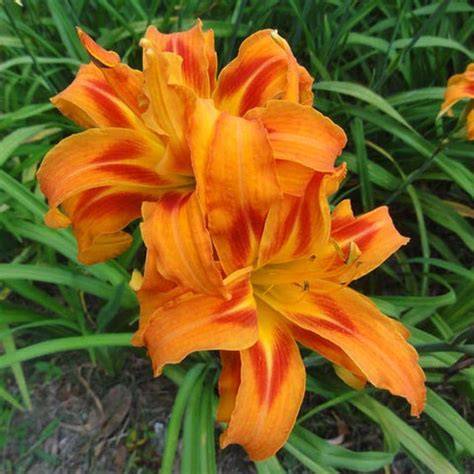
The Hemerocallis fulva ‘Kwanso’, the Double Orange Daylily, features lush, double-layered blooms in rich orange with ruffled petals. The Hemerocallis fulva 'Kwanso' is a stunning variety of the classic Orange Daylily, showcasing large, double-layered blooms in a vivid orange hue with intricate, ruffled petals. This tough, adaptable perennial thrives in a wide range of soils and requires little maintenance.
Origins and characteristics
There are 2 variations of the orange ditch daylily with double flowers that exist in the wild, Kwanso (old double orange) and ‘Flore Pleno’ (orange-yellow-gold), both the oldest and most often seen in ditches, spread rapidly and are beautiful. The primary difference between the two is that Kwanso has 12 to 15 petals resembling a pom-pom, fragrant, produces typically sterile seeds while Flore Pleno has 15-18 petals more elegant, no fragrance, uncommon to see a seed pod. But they look so similar that it can be difficult to know which one you are growing in your garden, even for experts. Both spread primarily by underground runners and rhizomes. These ditch lilies are easy to maintain in full sun. Beyond their aesthetic appeal, ditch lilies also play a role in our ecosystems. So, don’t judge me, you decide if they are friend or foe. Their flowers are colorful and attract pollinators such as bees, butterflies, and an occasional hummingbird.
Physical description
The mature size is 30-48 inches tall and 18-24 inches wide. With three sets of petals tucked neatly inside one another, this opulent daylily is quirky enough to appeal to Victorian gardeners yet “handsome” enough to earn a leading role in the sumptuous Red Borders at England’s famous Hidcote Gardens.
Growing and care
Plant these bare-root perennials as soon as possible in the spring. They’re eager to grow, can take light frost, and need water and sunlight to stay healthy. Daylilies like lots of sun but most bloom well in light shade, too, and often prefer it in the South. Plant 18-24 inches apart (to leave growing room for future years) with the crown no more than one inch below the soil surface. Dig a hole big enough to fit the roots comfortably, mound soil in the center, set the plant on top, and spread the roots out down the sides of the mound. Fill in and firm soil around roots, making sure the crown ends up no more than one inch deep. Water regularly, especially the first year and from spring till flowering in future years. First-year plants usually bloom sparsely-if at all-concentrating instead on developing a strong root system.
Maintenance and seasonal cues
After bloom, normal senescence may cause foliage to subside, yellow, or turn brown at the tips. If this bothers you, feel free to trim it a bit or even cut the foliage to the ground completely-though not the first year! Daylilies are hardy perennials and winter protection is rarely needed.
Garden experiences and companion plants
I’m up early each day to enjoy the summer magic of dawn in my garden. It’s the only chance I get to immerse myself in the tranquility of the morning. I walk a little through the garden but mostly just to get to the far back corner to sit near our pond and waterfall. It’s a peaceful and beautiful place to watch the sunrise, see and hear nature come alive, and drink my Diet Pepsi before the day's garden work begins. Birds flitter here and there catching insects while butterflies wake up to nectar on flowers, hummingbirds give me a quick buzz around my face, and a mother raccoon meanders in with 4 kits to steal my cat's breakfast. I love my Kwanso Lilies with Telstar Dwarf Dutch Irises growing among them, a beautiful combination for a long blooming time. The irises add spring colors of deep purple with yellow throats followed by summer blooming Kwanso Lilies with double orangie-tan-yellow flowers planted on the downside of our sloping backyard.
Historical and taxonomic notes
The orange lily is the common daylily seen along roadsides and in old home gardens and is referred to as the ‘ditch lily’. It is the ancestor of numerous modern daylily cultivars. The single-flowered ditch lily is the original and most common type. While the double-flowered varieties have existed for a considerable amount of time, they most likely evolved due to genetic mutations like the ‘Kwanso’. Many people think the old wild orange ditch lily ‘Hemerocallis fulva’ is native to North America but most hail from China, Korea and Japan where they have been cultivated for at least 4,000 years. Eventually, the plant arrived on our shores during the colonial period by early European settlers and was so popular as a pass-a-long plant to family and neighbors, that it now grows from coast to coast. When the wagon trains went west, the ditch lily rode along. The orange ditch daylily ‘Hemerocallis fulva’ is known by several common names, tawny daylily, corn lily, tiger daylily, ditch lily, Fourth of July lily. Additional names like railroad and roadside daylily, including outhouse and washhouse lily were common in the south.
Availability and shipping
Pixies Garden takes pride in delivering healthy, nursery-grown plants with careful packaging. They also note that shipping cost is based on weight. The company hopes you will love the plant, and offers a return option if needed. The Hemerocallis fulva 'Kwanso' is a reliable addition to sunny gardens and fits well into mixed borders and perennial beds.