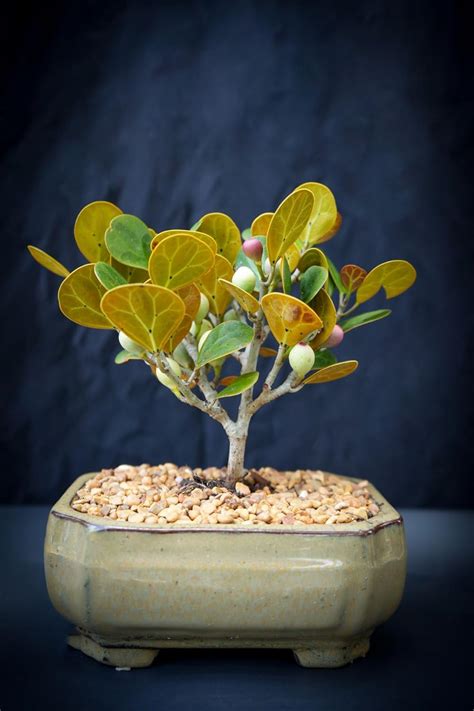
The Mistletoe Fig Bonsai Tree, scientific name Ficus deltoidea, is a slow growing tree native to the tropical climates of India, Asia and Africa. It produces small orange and red fruits that look just like mistletoe, hence the name Mistletoe Fig. It has a slender gray trunk topped with oval shaped leathery, bright green foliage. The Leaves have tiny brown spots and look just like mistletoe. It also develops interesting aerial roots. Ficus deltoidea is the only Ficus species that will produce fruits when cultivated indoors. It produces inedible pea sized fruits “figs” all year round. The figs turn from dull yellow to orange and red.
Bonsai is the reproduction of natural tree forms in miniature, with origins in Japan and China where it has been practiced for centuries for many years to come. The Mistletoe Fig will thrive indoors in high light and appreciates being kept outdoors during the spring and summer. When night time temperatures drop below 45 degrees we suggest that you place the tree on a windowsill or on a table in front of one. Once nightly lows begin approaching the 40 degree mark, it is time to bring your indoor bonsai inside. The ideal indoor location is on a window sill facing south. An east or west exposure is second best. A northern exposure will work, but will necessitate the use of grow lights to provide sufficient light to keep your bonsai healthy. Four to six hours of sunlight per day should suffice; more is better if possible.
Light and positioning
Sunlight exposure is crucial for the well-being of your Ficus bonsai. The Ficus deltoidea, native to tropical climates, thrives on the energy provided by the intense summer sun. If possible, during the warmer months from spring to fall, consider moving your bonsai outdoors. To promote uniform growth and prevent your bonsai from leaning towards a singular light source, rotate your tree periodically. Ensure a smooth transition in lighting conditions to avoid stress and leaf shedding. Ficus bonsai trees require bright, indirect sunlight and can be kept indoors near a sunny window. The warmer the placement, the more water the tree will need.
Watering and humidity
Watering must never be neglected. Apply water before the soil appears dry-never allow the soil to become completely dry. It is a good idea to use a moisture meter until you get to know the requirements of your bonsai tree. Water should be applied until it begins running out of the holes in the bottom of your pot. It doesn’t really matter how you water, but the goal is to ensure the tree is well watered. If you use a humidity tray, fill it but avoid leaving the pot sitting in standing water. Regular daily observation helps tailor watering to your tree’s needs. The soil should be kept consistently moist but not waterlogged, and the plant can tolerate some drying between waterings, especially given its thick leaves.
Fertilizing is also necessary. Liquid fertilizer will do fine and is available at most garden centers, used at half the recommended strength and applied at least once a month except during winter. Solid fertilizers like Uncle Bill’s or BioGold offer slow-release nutrients and require less frequent applications. For tropical and subtropical trees that grow year-round, a more frequent feeding schedule is often beneficial. Weekly fertilization during active growth is commonly recommended for ficus bonsai, with adjustments by season and growth rate.
Soil, repotting, and irrigation care
Premium bonsai soil is vital for the health of your bonsai tree. Bonsai soil should drain well, aerate the roots, and be tailored to the tree’s needs. Repotting is typically performed every four to five years in mid-summer, with all soil and old root mass removed. When repotting, prune back more than one fourth of the tree’s root mass and place the tree back into its original pot or another pot with fresh soil. A layer of soil should be reinforced under the root mass to avoid air pockets. When repotting, thoroughly water the tree afterward. Good drainage is important and sometimes a screen over drainage holes or other drainage aids help prevent soil loss and water pooling.
Fertilization should align with growth seasons: tropical trees like ficus benefit from a more frequent feeding schedule during active growth, often weekly, with a balance of nitrogen, phosphorus, and potassium (commonly 3-3-3 or 10-10-10). Liquid fertilizers offer ease of use for frequent applications, while solid fertilizers provide slow-release nutrients. Feeding should consider daily watering and leaching effects; monitor nutrient levels to avoid excess or deficiency. Surface applications, fertilizer cakes, and baskets are among common methods, following package instructions for coverage and duration.
Pruning, wiring, and training
Pruning and pinching keep the tree miniature and tidy. Start by removing dead or damaged branches to promote new growth and trim back long shoots to maintain the overall shape. Sterilize pruning tools to prevent disease. Wiring, using aluminum or copper wire, allows bending of branches to create movement and age-like character. Regularly check wires to prevent bark damage. For stronger branches, use guy-wires that can remain longer. Pruning and shaping is an ongoing process requiring patience and observation. If a significant trunk thickening is desired, allow the tree to grow freely for one or two years before applying strong cuts, which should be followed by healing measures like cut paste on larger wounds.
Root care and repotting timing
Repotting should occur every few years to refresh soil and encourage healthy root growth. When the tree is repotted, remove the tree from the pot, clean the roots, and trim back root mass as needed. Ensure the new soil is packed to eliminate air pockets. Ficus can tolerate root pruning well, and aerial roots are a notable feature of many ficus bonsai, especially when grown with high humidity. In natural habitats, many ficus species develop aerial roots that can become pillars in bonsai designs, sometimes connected through grafting or layering techniques to create dramatic structures.
Common issues, pests, and resilience
Ficus bonsai can face challenges such as leaf drop due to insufficient light, low temperatures, under-watering, over-watering, or fertilization problems. Pests like mealybugs, spider mites, and scale insects may appear; signs and treatments vary, including rubbing alcohol swabs for mealybugs, insecticidal soap or neem oil for mites and scale management, and strong water jets to dislodge pests. Regular inspection and appropriate cultural adjustments-more light, proper humidity, and steady temperatures-aid recovery. Ficus species are generally resilient and forgiving, but they benefit from attentive care and stable conditions. Avoid abrupt changes in lighting or temperature to prevent leaf drop and stress.
Grafting, asexual propagation, and variety
Comparative notes: Ficus varieties include Ficus retusa, microcarpa Tigerbark, Willow leaf, and more. The Ficus deltoidea is notable for white berries and aerial roots, and its leaves can range in size and shape across cultivars. The Ginseng Ficus is popular for its thick trunk and can be grafted with leaves from other ficus varieties. Fig trees can be propagated through cuttings, air layering, or grafting, including approach-grafting to fuse trunks or roots. In ideal conditions, aerial roots can be guided and integrated into designs to form striking features in bonsai landscapes.
Practical care checklist
- Provide bright indirect light; rotate regularly to encourage balanced growth.
- Water when the topsoil feels slightly dry; ensure thorough watering to the root zone.
- Fertilize during the growing season with a balanced fertilizer at appropriate strength and frequency.
- Repot every 4-5 years in mid-summer; trim roots and refresh soil.
- Prune and wire to shape; sterilize tools and monitor for pests.
- Maintain stable temperatures and humidity; avoid prolonged exposure to cold.
Despite occasional leaf drop or pest pressure, with consistent care-proper light, water, soil, and timely pruning-the Mistletoe Fig bonsai can become a beautiful, enduring centerpiece in your home or garden.