Parsley seeds are notoriously slow to germinate, but with the right conditions and techniques you can speed up the process and enjoy fresh herbs sooner. This article compiles practical guidance on germination timing, optimal temperatures, sowing methods, and how to care for parsley from seed to harvest.
What to expect: days to germination and factors that affect it
DAYS TO GERMINATION: 14-30 days at 65-70°F (18-21°C).
For a head start, sow seeds indoors or soak seeds before planting to improve germination chances. The germination rate of parsley seeds tends to be low, so be prepared for slower emergence and consider successional sowing to maintain a steady supply of leaves. Parsley seeds can germinate at chilly temperatures, but the process proceeds best at normal room temperature, just above 70°F/21°C.
Preparing seeds and optimizing germination
To speed germination, soaking parsley seeds overnight before sowing is recommended. Place the dry seeds in a small dish, and cover them with very warm (110°F/43°C) water, and let sit overnight. Pour off any seeds that float, and strain the others onto a paper towel. Plant immediately, and keep moist until the seeds sprout.
Alternatively, priming methods such as soaking and then planting in a warm, well-lit place can yield higher germination rates than direct sowing in mix. Spring or summer, you can start parsley seeds indoors under lights and expect about half of the primed seeds to germinate, as low germination rates are normal for parsley.
When and where to plant for best results
Parsley seeds can be started indoors or sown directly in the garden. For best results, soil should be around 70ºF (21°C). Sow outdoors 3 to 4 weeks before the last spring frost, and indoors 6 to 8 weeks before the last spring frost for an earlier harvest. Sow seeds 1/4 inch deep and about 6 to 8 inches apart; for larger plants, sow about 8 to 10 inches apart. Keep the soil moist during germination, and monitor for steady emergence over 2 to 4 weeks.
Indoor vs outdoor sowing and care during germination
Indoors, you can use a grow light to help seedlings grow. Direct sowing outdoors is effective, but transplanting should be done with care because parsley has a delicate taproot. If transplanting, take extra care to minimize root disturbance.
Be sure to keep the soil consistently moist while the seeds germinate. It can take 2 to 4 weeks for seedlings to appear, and dry spells can slow or halt germination. If you want to bridge the gap, sow parsley in succession every few weeks to ensure a continuous supply of leaves through the growing season.
Site selection and soil preparation
Where to plant parsley: choose a spot that gets full sun (6+ hours of sunlight) and has well-draining soil rich in organic matter. Parsley needs more fertile soil than most herbs and prefers a soil pH around 6.0-slightly acidic. Weed-free areas help seedlings emerge clearly and reduce competition during germination and early growth.
Soil preparation: parsley grows well in moist, fertile soil. If planted in a well-drained location, it can normally be wintered over to produce a crop early the following spring. Mulch where temperatures go below 0°F (-18°C) to protect crowns and roots during winter.
Post-germination care and harvest readiness
Keep soil evenly moist during germination and throughout the early growth. When the leaf stems have at least three segments, parsley is ready to be harvested. For ongoing harvests, cut leaves from the outer stems, leaving the inner growth to mature. Parsley is a biennial plant but is usually grown as an annual in home gardens; it will continue to produce leaves with regular harvests when conditions are favorable.
Practical tips to speed up germination
- Soak seeds overnight in warm water before sowing.
- Prime seeds by placing them on damp paper towels, then plant once roots appear.
- Use indoor starting: provide warmth (around 70°F/21°C) and bright light to stimulate germination.
- Direct sow in open ground only after last frost; in the meantime, start indoors for earlier harvests.
Germination challenges and troubleshooting
Low germination rates are common for parsley, especially in cooler springs. If germination is slow or sparse, consider repeating sowings every few weeks and maintaining consistent moisture. If you notice rot at the base later in the season, it may be caused by soil fungi; rotate crops and ensure good drainage in subsequent plantings.
Related cultivation notes you can use
Parsley seeds are slow to germinate, but one technique does seem to help speed up sprouting. Like other members of the carrot family, parsley plants make new growth from the centers, or crowns, and naturally shed their outermost leaves as they age. When grown as a culinary herb, parsley is usually treated as an annual and discarded after its first year, but with protection and proper care it can persist longer in favorable climates.
Seedling management and later care: If you’re starting plants from seed, this is a cost-effective approach for garden season. You can sow in 1" cell containers, transplant later, and direct seed in spring after danger of frost has passed. Thin seedlings to allow proper spacing, and water regularly to maintain soil moisture during germination and early growth.
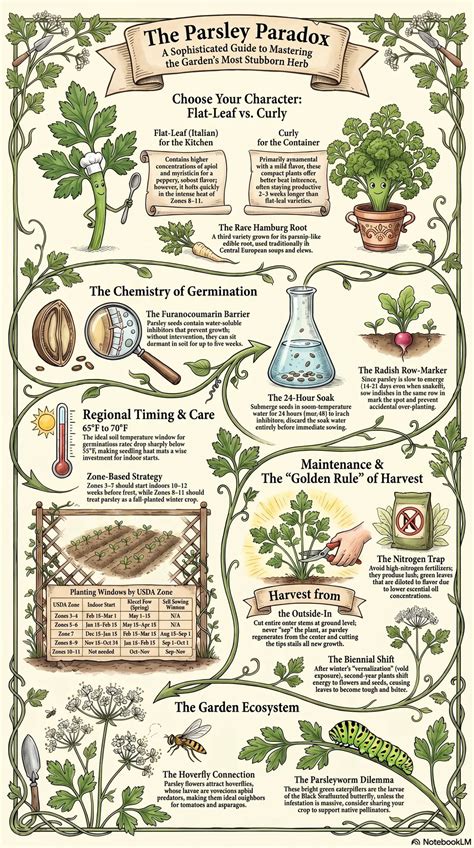
How to Grow Parsley Plants from Seed and How to Speed up Germination.
Parsley’s versatility extends beyond fresh leaves: it pairs well with basil, dill, or mint in herb pestos, and it can be dried or frozen for winter use. If you want a continuous supply, plan to set out new seedlings twice a year-spring and late summer-and treat parsley as a cold-hardy annual in many climates.
What to do after germination: a quick guide
- Transplant indoors 6-8 weeks before last frost or sow directly outdoors 3-4 weeks before last frost.
- Maintain soil moisture and provide full sun or partial shade as needed.
- Harvest outer stems as needed; let inner growth continue to mature for ongoing production.
- For winter harvests in milder climates, consider overwintering indoors or in a protected bed.
Practical harvest and storage tips
To store fresh parsley, place leaf stalks in water in the refrigerator. For drying, cut parsley and hang in a warm, ventilated place, or use a dehydrator to preserve color and flavor. Dried parsley retains less flavor than fresh leaves, so use dried parsley as a last resort for flavor enhancement in winter dishes.
tags: #parsley #seeds #germination #time