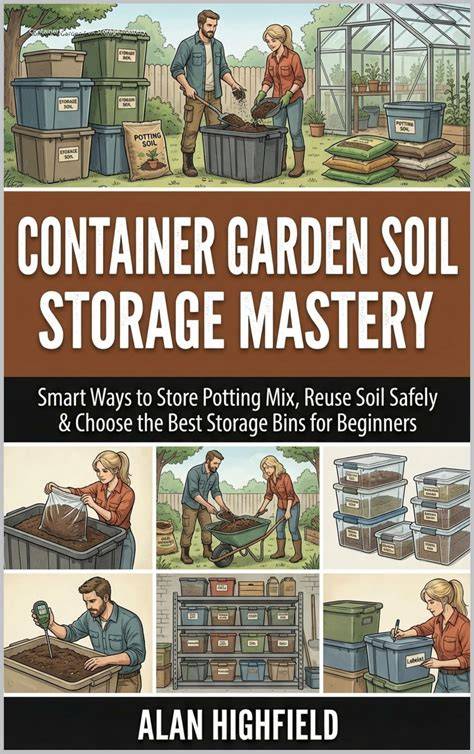
We wouldn't call container plants fancy, but they do like to hang out in soil that makes every day seem like a spa day. With its lightweight texture and flair for regulating moisture, potting mix just nurtures potted plants in all the right ways. The good stuff doesn't come cheap, though, so at the end of the season you may be left wondering: Can you reuse potting soil?
Understanding the risks of storing wet potting soil on a deck
Is there a downside to keeping soil [container media] in such a container on my deck? There is if the medium is wet or moist. With the containers covered and the medium wet, waste gasses will soon displace the oxygen in the container. Hydrogen sulfide, CO2 (in the root zone), and methane are examples of waste gasses. The organic acids generated under anaerobic conditions can/will seriously lower the pH of the medium, which in itself is a problem that requires a good deal of leaching to rectify. Another moist/ wet media issue that arises when the medium includes controlled release fertilizer (CRF) products, like Osmocote. Release of nutrients from CRF prills is largely temperature driven. The process of composting/ decay of organic materials is exothermic, meaning the process gives off heat. Supplying the moisture essential to soil organisms hastens the composting process which releases heat which increases the release rate of the fertilizer which increases the population numbers of soil life, ad infinitum, until the fertilizer prills are empty of nutrients.
How to store used soil safely and effectively
Clean, airtight storage bins are the best friend to any potting mix you plan to keep in reserve. A sparkling interior is key-you don't want to put sterilized soil in a potentially contaminated container. If your storage solution isn't new, grab a scrub brush and follow these steps to wash it. While you're at it, do the pot your plant was in and any tools you used, too.
Fill the storage bin with a cleaning solution that's 1 part bleach to 9 parts water. Let it soak for 30 minutes. Dump most of the water-keep a little bit to help scrub the bin clean from top to bottom. (Always safely dispose of bleach by pouring it down a drain, not onto the ground.) Remove any remaining water and spray the bin with a hose. Make sure the bin is completely dry before adding any potting mix to it. Once your bin is clean, dry, and filled with potting soil, make sure the lid is on tight and then store it away from the elements, like in the garage, until you're ready to get growing again.
How to reuse and revitalize old potting soil
If there's a downside to soil sterilization it's that it kills off everything living in the soil-the bad and the good-so you'll need to give your potting mix a nutritional boost before putting it back into action. One option is to add (fully-decomposed) compost to your sterilized soil. Add one part compost to three parts potting mix. You don't want to overdo it with the earthy goodness, so that ratio is important-although compost is chock full of nutrients, it has a tendency to become compacted and can block the flow of air and water to plant roots if you have too much in a pot.
Step-by-step process: sterilization, storage, and renewal
- Sterilize used soil via solarization: gather used potting mix into heavy-duty plastic bags, tie, and place in the sunniest part of the yard. If starting at season end, store bags in a sunny spot until spring; add an extra plastic layer to boost soil temperature.
- Store used soil in clean, airtight bins with dry interiors to prevent contamination.
- Before reuse, revitalize sterilized soil by mixing in fully-decomposed compost at a ratio of 1 part compost to 3 parts soil to restore nutrients while avoiding compaction.
Practical considerations for container media on decks
Container media stored on a deck should be monitored for moisture. Wet conditions can lead to gas build-up and pH changes, especially when CRF prills are present. Temperature, moisture, and biological activity all influence nutrient release and microbial populations, so choosing storage habitats away from direct sun and condensation is prudent to minimize unintended changes.
Practical tips and best practices
- Use dry, well-ventilated storage space to reduce anaerobic conditions and gas buildup.
- Keep CRF-containing media in controlled, dry environments to limit rapid nutrient release.
- Prefer sterilization methods that preserve soil structure and allow for easy revival with compost additions.