Ivy - also known as Hedera - is a fast grower and surprisingly easy to propagate. In the wild, it can reach up to 30 metres. Indoors it stays smaller, but it still loves to climb. Ready to get started?
1. Clean your tools
Rinse your scissors or knife with hot water and soap. Then disinfect with alcohol to remove bacteria and fungi. This helps keep your cutting healthy.
2. Take the cuttings
Cut just below a leaf node. Make sure there’s at least one or two leaves left above the cut. It’s a good idea to take several cuttings at once - not every cutting roots successfully.
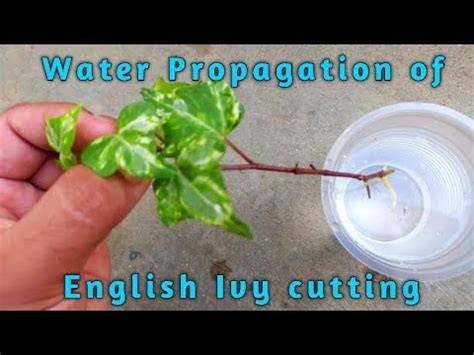
3. Place the cuttings in water
Put your cutting in a glass of water. Make sure no leaves are touching the water - trim them off if needed. Change the water weekly and rinse the glass to prevent algae.
4. Care for the cutting
After 4 to 6 weeks, roots will start to appear. Can I plant ivy cuttings directly into soil? Yes, but rooting in water is quicker and lets you see what’s happening. Once roots are strong, you can move the cutting into soil.
Looking for a new hanging plant? Browse our full range of plants in different colours and sizes. These tips are based on our own experience with propagating. Want to explore more propagation tips? Check out our other step-by-step plant guides.
Additional propagation methods and tips
Propagating ivies is quick and easy, and doesn’t require any special materials at all. Some people swear by rooting hormone for this style of propagation, but it truly isn’t necessary in this case. To propagate an existing ivy plant, you’ll need to take a stem cutting from an ivy house plant or an ivy growing in your garden. In my experience, ivy plants do take some time to adapt to indoor environments if you start with a garden plant, so you’ll have quicker success with creating new, happy, healthy plants if you start with cuttings from a houseplant that is already in your home. If you start with cutting from outside, you will still be successful in growing beautiful houseplants, but you may find that you have a few leaves drop off in the first few months, or you may experience a delay in seeing a large number of new leaves.
Once you’ve got your ivy cuttings, fill a small vase or jar with cool water, and remove the leaves from the bottom part of the cutting stems. Leave your cuttings in the jar in a spot with bright, indirect light, topping up the water weekly, for about 4 weeks, or until you see roots emerging from the bottom of the stem cuttings. Once those roots are about an inch long, you can plant your cuttings in potting mix to create a new plant! As you can see, these stem cuttings are significantly longer than one inch. If you leave your cutting in the water for longer than a month, it won’t be a problem at all.
If you’d like to give your new plants a little extra advantage, houseplant fertilizers like Plant Vitamins can easily provide all the nutrients you need to keep your plants producing fresh new foliage and strong root systems. Ivies root very readily in water. Use larger cuttings than in media and strip all of the leaves that will be below the waterline. Water should be no more than three inches deep. Place the cuttings in indirect light or a north-facing window. After roots form, care is needed in establishing the new plants in a potting media. Roots formed in water lack root hairs that are necessary for the cuttings to absorb water from soil or other media. Use a mixture of one part soiless media and two parts horticultural grade perlite. Water well and place in a plastic storage bag for a few days and then gradually open the bag to acclimate them to the outside air.
Practical options: layering vs cuttings
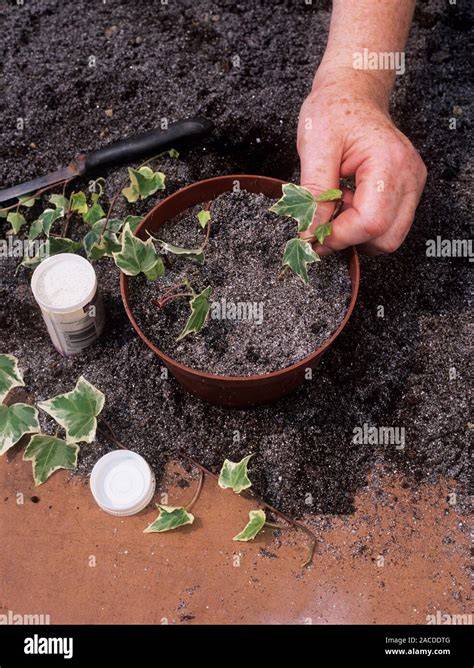
Layering is the easiest and surest way of propagating your ivy. When an ivy runner comes in contact with moist soil, roots push out through the stem from cells in areas just below the nodes. This happens regularly and naturally when ivy is planted in the ground outdoors. When a potted ivy is sunk in the soil any time during the summer months and the runners are pinned down with a wire staple so that the runners are in contact with the soil and the soil is kept moist, roots will emerge all along the stem in the area just below the nodes. These runners can then be carefully lifted and cut apart and the new plants potted individually or groups of three or more. Use one of the soiless potting mixes like Pro mix or Ready Earth. Then give the plants the care required by any new tender plant. Layering is surer but sometimes propagating by stem cuttings is more convenient. For one thing it can be done at any time of year although periods of rest following active growth spurts are best. Make your cuttings about three inches long, make the cut about one quarter inch below a node and strip off all of the leaves on the lower inch of the stem. Insert the cuttings in pots or flats about one inch deep filled with one of the soiless mixes. Water the cuttings thoroughly. A good way to do this is place them in a tray of water until water rises to the top of the soil. Place the plants in indirect light either indoors or out or under fluorescent lights and cover with cheese cloth or burlap for about a week until the cuttings get hardened a little. Water regularly so that the cuttings do not dry out. They should root in one to two months.
Notes on rooting in different media
Ivies root very readily in water. Use larger cuttings than in media and strip all of the leaves that will be below the waterline. Water should be no more than three inches deep. Place the cuttings in indirect light or a north facing window. After roots form care is needed in establishing the new plants in a potting media.
Did you enjoy this guide? Feel free to explore more about propagation and share your experiences with ivy and other plants.