Have you ever stared at a new raised garden bed and wondered, “How much soil do I actually need?” Figuring out how much soil you need for a raised garden bed really comes down to size, depth and what you’re planting. The process is simple once you know the formula: length times width times depth. From there, choosing the right soil mix is just as important, with a blend of topsoil, compost and something lightweight like perlite helping create the right structure. Whether you buy bagged soil or go with bulk delivery, the goal is the same: give your plants enough depth, nutrients and drainage to grow well from the start.
In this guide we’ll break down the steps: how to figure out exactly how much soil your raised garden bed needs, what types of soil work best, and even ways to save money while filling your bed. By the end, you’ll feel confident about measuring, mixing and filling your garden, no guessing required.
Why Soil Quality and Depth Matter for Your Raised Bed
Raised garden beds give you full control over the soil. This means that plants can grow in a medium that’s just right for them. Unlike planting directly in the ground, a raised bed lets gardeners create soil with the perfect mix of nutrients, drainage and texture. This makes it easier to grow plants and flowers that are healthy and productive.
Using too little soil or the wrong type can cause real problems. Shallow or compacted soil can stunt roots, leave plants nutrient-deficient or hold too much water. This can sadly lead to root rot. Even small mistakes in depth or soil quality can affect plant growth more than expected.
How to Calculate Soil for Your Raised Bed
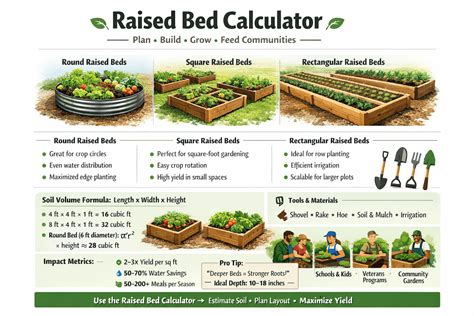
Figuring out how much soil a raised garden bed needs is easier than it sounds. The key is a simple formula: Length × Width × Depth = cubic feet of soil. First, make sure all measurements are in the same unit, usually feet. If your depth is in inches, divide by 12 to convert it to feet before multiplying. This formula works for rectangular beds, but it can also be adapted for round or L-shaped beds. A quick online soil calculator can make things even easier, letting gardeners see exactly how many bags or cubic yards of soil will fill their bed without overbuying or running short.
So, what’s the best garden soil for raised beds? Using soil straight from the yard might seem like a good idea, but it isn’t enough for a raised bed. Backyard soil can be too dense, hold water in the wrong places or lack the nutrients plants need to thrive. For plants, a lighter, well-balanced mix gives roots room to grow, holds just the right amount of moisture and provides the nutrients that plants need to flourish.
A tried-and-true mix for raised beds is 60% topsoil, 30% compost and 10% potting mix or perlite. Topsoil provides bulk and minerals, compost adds nutrients and improves texture, and the potting mix or perlite keeps the soil airy for healthy roots and proper drainage. For gardeners looking for a simpler option, a 50/50 blend of topsoil and compost can also work well while keeping things straightforward.
Buying Soil: Bulk vs. Bagged Options
Bagged soil is convenient and easy to find at most stores. It often comes in specialized mixes designed for flowers or raised beds. So, it’s ready to use right out of the bag. The downside is that it can get expensive quickly, especially for larger beds.
Bulk soil is usually more cost-effective for bigger projects. Ordering a cubic yard or more from a local supplier can save money and reduce trips to the store. The key is checking the quality to make sure the soil is screened, free of debris and comes from a reliable source. A quick conversation with your supplier can help ensure it’s a mix that will support healthy plants.
As a general guideline, if a bed requires more than about one cubic yard of soil, bulk delivery is often the better option. For smaller beds, bagged soil works perfectly. Filling a raised garden bed might seem simple, but a few small mistakes can make a big difference for your plants. Using only garden soil can make it dense and hard for roots to spread, while water may sit in the wrong spots. Mixing in compost and a bit of potting mix or perlite keeps the soil light, airy and full of nutrients.
Soil Layering, Weed Barriers, and Settlement
Skipping a weed barrier at the bottom is another common problem. Weeds can creep in and compete with plants and flowers, even if the soil on top is perfect. Soil also settles over time, usually 10-20%, so it helps to slightly overfill the bed at first.
It’s important to avoid treated wood or fillers that could add chemicals, and loosening the ground underneath can improve drainage. Doing these little things makes sure the raised garden bed soil stays healthy and gives plants plenty of room to grow strong and productive.
Practical Steps to Get the Right Amount of Soil
Getting the right amount of soil for a raised garden bed doesn’t have to be confusing. Taking these steps gives every plant the space, nutrients and drainage it needs to thrive. With the right soil and a sturdy raised bed, it’s easy to create a productive garden that’s simple to maintain and full of healthy plants.
Measure the inside length, inside width, and the soil depth you plan to fill. Convert inches to feet, then calculate length × width × depth to get total cubic feet. If your measurements are in inches, divide each number by 12 first. The depth depends on what you plan to grow, but most common vegetables benefit from about 10-12 inches of soil, while deeper-rooted crops may require more.
Most bagged soil is sold in 1.0, 1.5, or 2.0 cubic foot bags. These numbers are estimates. Once you know your total volume, the next step is choosing a mix. If you are filling a deep bed, it is common to use the “layered” method with coarse wood or branches in the bottom quarter, then your main mix above it. Once the calculator shows your total, divide by the bag size you plan to use.
Presets for specific bed types (like Timberlake or Select Cedar raised beds) provide interior dimensions that help refine your calculation. A typical 4 ft × 8 ft bed filled 12 inches deep requires about 1.2 cubic yards of soil mix. For a bed that needs more precise planning, you can use a soil calculator to see how many bags of topsoil, compost, and sand to buy, or how much bulk material to order.
When designing a mixed bed, these proportions work well: 40% topsoil, 40% compost and 20% coarse sand or perlite for drainage and airflow. You can also use common equivalents like the 60/30/10 mix (topsoil/compost/aeration) or Mel’s Mix (equal thirds compost, coir or peat, and vermiculite). The principle remains: roughly half structure, a generous share of compost, and something to keep it airy.
Practical Examples and Common Questions
A standard 4×8 raised bed filled 12 inches deep needs about 32 cubic feet, or 1.2 cubic yards, of soil mix. A 3×6 bed with 10" sides would need about 15 cubic feet of soil. For containers or pots, measure diameter and depth in inches, multiply, then divide by 1,728 to get cubic feet, and fill accordingly with a lighter potting mix to ensure drainage.
If you’re unsure about exact numbers, consider ordering a little extra to account for settling. Most beds settle by 10-20% in the first weeks. Fresh soil contains air pockets and organic matter that haven’t decomposed yet, so topping up with fresh compost after settling supports continued plant health. Wet soil weighs significantly more than dry soil, so keep weight in mind when ordering bulk.
Common questions often revolve around whether to use bagged or bulk soil, how to handle irregular bed shapes, and how to adjust for slopes. For irregular shapes, split the bed into simpler shapes (rectangles, triangles, circles) and calculate each section separately, then add them together. For slopes, measure height at several points and use the average height in your calculations. And yes, you can reuse old soil in beds and planters, though you may want to refresh it with fresh compost or a top-dressing in spring.
Recommended Soil Mixes and Resources
Blended garden mixes (often called “raised bed mix” or “garden blend”) typically offer the best balance. They usually combine topsoil for stability, compost for nutrients, and lighter amendments like peat moss or coconut coir for drainage. For containers, a lightweight, well-draining potting mix is essential, and you can buy pre-mixed bags or make your own mix with compost, peat or coir, and perlite.
If you’re new to planning, a simple rule of thumb is to fill to within about an inch of the rim, ensuring good drainage and preventing water from overflowing during watering. And remember to plant with depth in mind: shallow-rooted greens need less depth, while carrots and parsnips benefit from deeper soil.
Build Your First Raised Bed Garden With the Perfect Dimensions (Design, Filling, & Planting Lettuce)
Tables and Quick References
Table: Common bed sizes and approximate soil needs (cubic feet and cubic yards)
| Bed size (ft) | Depth (in) | Soil needed (cu ft) | Soil needed (cu yd) |
|---|---|---|---|
| 4×8 | 12 | 32 | 1.2 |
| 3×6 | 10 | 15 | 0.56 |
| 6×6 | 12 | 48 | 1.78 |
Weight considerations: a cubic yard of garden soil weighs roughly 1,800-2,200 pounds. Bulk orders are priced by the cubic yard, while bags are convenient for small projects. For beds larger than about two cubic yards, bulk delivery can save money and reduce handling. Always account for settling and plan to top off with fresh compost or soil as needed.