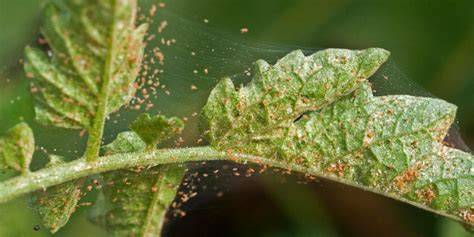
Spider mites are common pests of fruit trees, vegetables, berries, vines, houseplants, and ornamental plants. Mites are tiny and difficult to see. Although related to insects, mites are arachnids just like spiders and ticks. If leaves are stippled with white dots or have webbing, check the undersides to see if spider mites are present. Sprays of water, insecticidal oils, or insecticidal soaps can be used for management. To the naked eye, spider mites look like tiny, moving dots. Often, damage first appears as a stippling of light dots on the leaves; sometimes leaves turn a bronze color.
What spider mites are and how they look
Spider mites are tiny arachnids that belong to the Tetranychidae family. Appearance: Spider mites are extremely small, often less than 0.5 mm in size. Adult females, the largest forms, are less than 1/20 inch long. Immatures resemble adults (except they are much smaller), and the newly hatched larvae have only six legs. Eggs are spherical and translucent, like tiny droplets, becoming cream colored before hatching. To the naked eye, they look like tiny, moving dots; you can see them easily with a 10X hand lens. Spider mites live in colonies, mostly on the undersides of leaves; a single colony may contain hundreds of individuals. The names “spider mite” and “webspinning mite” come from the silk webbing most species produce on infested leaves.
Spider mites reproduce rapidly in hot weather and commonly become numerous in June through September. In some parts of California, spider mites may feed and reproduce all year on plants that retain their green leaves throughout the winter. They overwinter as red or orange mated females under rough bark scales and in ground litter and trash. If the temperature and food supplies are favorable, a generation can be completed in less than a week. Spider mites prefer hot, dusty conditions and usually are first found on trees or plants adjacent to dusty roadways or at margins of gardens. Plants under water stress also are highly susceptible.
Damage and symptoms
Mites cause damage by sucking cell contents from leaves. At first, the damage shows up as a stippling of light dots on the leaves; sometimes the leaves take on a bronze color. As feeding continues, the leaves turn yellowish or reddish and drop off. Often, large amounts of webbing cover leaves, twigs, and fruit. Loss of leaves won’t cause yield losses in fruit trees during the year of infestation unless it occurs in spring or very early summer, but it may impact next year’s crop. On annual vegetable crops, such as squash, melons, and watermelons, loss of leaves can have a significant impact on yield and lead to sunburning. On crops such as sugar peas and beans, where pods are attacked, spider mites can cause direct damage. On ornamentals, mites are primarily an aesthetic concern, but they can kill plants if populations become very high on annual plants. Spider mites are also important pests of field-grown roses.
Lifecycle and spread
Spider mites live in colonies, mostly on the undersides of leaves. Eggs are laid on the undersides of leaves. The lifecycle includes egg, larva, several nymphal stages, and adult. Eggs hatch into larvae, which then molt into nymphs and finally adults. A generation can be completed in less than a week in warm conditions, leading to rapid population growth. Foliage quality declines on infested plants, and female mites catch wind currents to disperse to other plants. High populations may decline rapidly in late summer when predators increase and weather becomes less favorable.
Natural enemies and biological control
Spider mites have many natural enemies that often limit populations. Important predators include predatory mites such as western predatory mite (Galendromus occidentalis) and Phytoseiulus species, sixspotted thrips, the larvae and adults of the spider mite destroyer lady beetle (Stethorus picipes), Feltiella acarivora (a cecidomyid fly larva), and various general predators like minute pirate bugs and lacewing larvae. Predatory mites can be released in large plantings or orchards, but best results come from creating favorable conditions for naturally occurring predators, such as avoiding dusty conditions and insecticide sprays. The major predator mites commercially available for release are the western predatory mite and Phytoseiulus; the western predator mite is more effective under hot, dry conditions. A guideline is one predator for every 10 spider mites, though more may be needed for rapid reduction. Concentrate releases in hot spots where numbers are highest.
Management: cultural, physical, and chemical controls
Adequate irrigation is important, because water-stressed plants are most likely to be damaged. Dusty conditions often lead to mite outbreaks; apply water to pathways and dusty areas regularly. In gardens and on small fruit trees, regular, forceful spraying of plants with water often will reduce spider mite numbers, with good coverage especially on undersides of leaves. If more control is required, use an insecticidal soap or oil in your spray, but test on one or two plants first to ensure it isn’t damaging. Broad-spectrum insecticide treatments for other pests frequently cause mite outbreaks, so avoid these pesticides when possible. Sprays of water, insecticidal oils, or insecticidal soaps can be used for management. Don’t spray when plants are water-stressed or if it is very hot.
If an insecticide is needed, use an insecticidal oil or insecticidal soap (or a combination of the two). Completely cover the undersides of leaves. Be sure mites are present before treating. Spider mites frequently become a problem after applying certain insecticides such as some organophosphates or pyrethroids. For example, carbaryl (Sevin) has been shown to cause faster reproduction in treated populations. Prefer selective materials, such as insecticidal soap or insecticidal oil, and consider using sulfur carefully depending on plant tolerance and temperature. Don’t use sulfur if temperatures exceed 90°F, and don’t apply sulfur within 30 days of an oil spray. Some plant extracts formulated as acaricides (like garlic extract, clove oil, mint oils, rosemary oil, cinnamon oil) can exert effects on spider mites. There are also miticides designed specifically for spider mites. Always follow label instructions and test products on a small part of the plant first.
In addition to chemical options, you can use water sprays, beneficial insects, neem oil, and integrated approaches. Water sprays can physically remove mites and webs. Beneficial insects, including predatory mites and ladybirds, can naturally reduce populations. Neem oil disrupts feeding and reproduction cycles. If pesticides are used, prefer products that are less harmful to beneficials and rotate modes of action to prevent resistance. Sequential treatment-start with natural methods, then add selective treatments if needed-often provides effective control. Record-keeping of treatments and outcomes helps refine management over time.
Indoor plants and calathea considerations
Spider mites are a significant challenge for indoor gardeners, especially if left unchecked. Indoor environments that are too hot or lack humidity can accelerate their life cycle, leading to quicker outbreaks. Calathea and other patterned indoor plants can be especially vulnerable. Early detection is key: look for stippling, yellowing, bronzing, or webbing on the undersides of leaves. Shake a few mites onto a white sheet of paper to observe them more closely if needed. Visual inspection with a magnifying glass helps confirm presence.
Preventative care is the best defense: maintain proper watering to avoid stress, ensure adequate light and nutrition, improve air circulation, and keep dust down. Regular forceful water sprays can help reduce populations, and if necessary, apply insecticidal soap or oil with careful testing on a small leaf area. When introducing predators, concentrate releases in hotspots and avoid dusty or recently sprayed areas that could hinder establishment.
Common questions
- What do spider mites look like? Spider mites are very small, typically less than 0.5 mm in size, and look like moving dots under close inspection.
- Where do spider mites come from? They can be introduced to indoor gardens through new plant arrivals, open windows, or clothing.
- How do I get rid of spider mites? Effective methods include water sprays, insecticidal soaps, neem oil, and, if necessary, targeted chemical treatments.
- How can I protect my calathea from spider mites? Calathea can be especially susceptible; maintain humidity and monitor undersides of leaves for early signs.
- What is the best spider mites treatment for indoor plants? A combination of water sprays, insecticidal soaps, and the introduction of beneficial predators usually provides effective control.