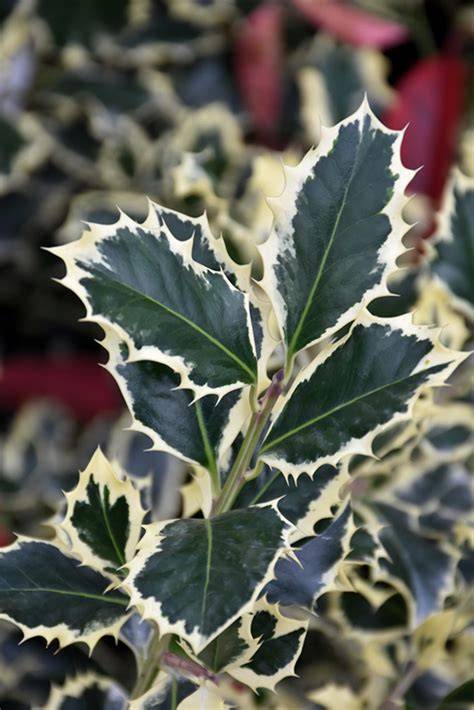
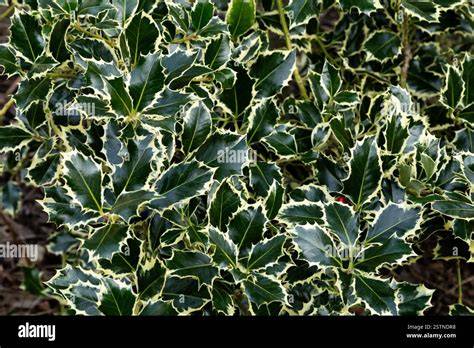
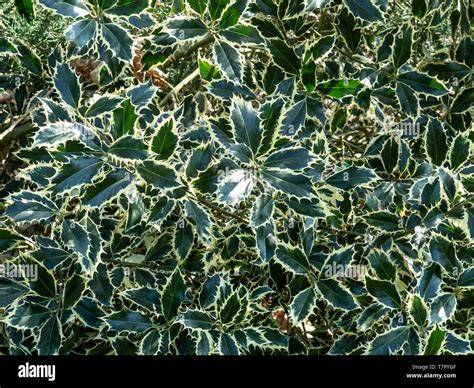
Variegated English Holly is a dense evergreen tree valued for its striking dark green leaves edged in silver and its abundant red berries, which emerge in mid-fall when pollinated by male counterparts. This cultivar is primarily grown for ornamental fruit and a refined pyramidal form, making it a popular choice for year-round interest in gardens and landscapes.
Botanical profile and appearance
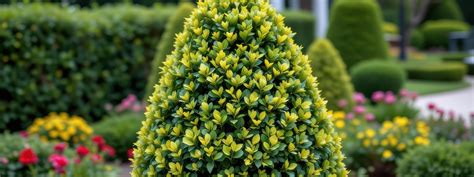
Variegated English Holly is a variegated form of Ilex aquifolium, distinguished by its foliage that features a silver-edged band along the leaf margins. It is a dense multi-stemmed evergreen tree with a distinctive and refined pyramidal form. It typically grows to about 20 feet tall at maturity, with a spread of 12 feet, and has a low canopy with a typical clearance of 1 foot from the ground. This form is suitable for planting under power lines and in smaller garden spaces where height control is desirable.
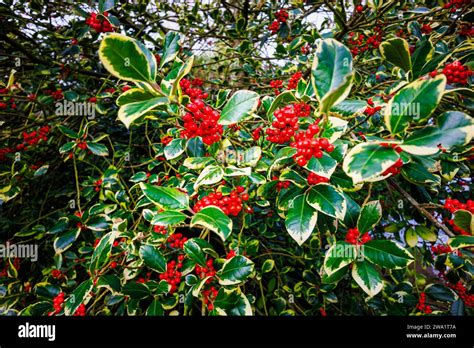
The tree is best known for its attractive foliage and its abundance of magnificent red berries in mid fall, which contribute to its ornamental value. In cultivation, it is appreciated as a low-maintenance plant that can be pruned in late winter once the threat of extreme cold has passed. It can be trained to grow as a large shrub, and with proper pruning, it maintains a pyramidal silhouette that enhances landscape structure.
Light, soil, and water requirements
This holly prefers full sun to partial shade. It grows best in fertile, acidic, moist soil and can tolerate moist to wet conditions, even standing water. It is quite intolerant of urban pollution, so urban plantings should be placed in relatively sheltered locations to minimize stress. A thick mulch around the root zone in winter helps protect the plant in exposed locations or colder microclimates.
For gardeners in cooler-summer climates such as the Pacific Northwest, Variegated English Holly is well-suited, especially where summers see cooler nights. Adequate irrigation is important during drought conditions to maintain foliage color and overall vigor.

Hardiness, growth rate, and life expectancy
In ideal conditions, the tree grows at a medium rate and can be expected to live for 50 years or more. Variegated English Holly will grow to be about 20 feet tall at maturity, with a spread of 12 feet. It has a low canopy and a typical clearance of 1 foot from the ground, making it suitable for planting in areas with clearance constraints.
The cultivar is best grown in regions with cooler summer nights, and it tolerates a range of temperatures once established. It thrives in full sun to partial shade and benefits from pruning after winter when extreme cold risk has passed. This species has a robust ornamental appeal but is not known for deer resistance, as deer may browse on more palatable alternatives.
Pollination, fruit, and attractiveness to wildlife
Variegated English Holly produces red fruits when male pollinizers are present. This makes the tree particularly attractive to birds and bees, who are drawn to the berries and the floral resources. It is noted that the plant is not especially attractive to deer, which tend to prefer other forage options.
Pollination success depends on the presence of compatible male plants nearby to provide pollen for fruit set. The dramatic berries provide seasonal color and can be used in decorative arrangements, though their ornamental value is closely tied to the plant’s health and pollination dynamics in the landscape.
Maintenance, pruning, and positioning in landscapes
This tree is relatively low maintenance. It is best pruned in late winter after the risk of extreme cold has passed, maintaining its refined pyramidal form. Because of its size potential, plan for adequate space, particularly in areas where overhead clearance or root zone considerations matter. For urban plantings, placing the holly in sheltered locations helps reduce stress from wind and pollution.
If grown under power lines or in tight spaces, the gazed pyramidal shape can be preserved with selective pruning to maintain height control and ensure a balanced appearance from multiple viewing angles. Dead or damaged branches should be removed promptly to promote vigor and reduce the risk of disease entry points.
Common problems and considerations
No major diseases or insect pests are widely associated with English holly in many settings, though site conditions and climate can influence vulnerability. It is important to avoid overly polluted urban sites and to select protected planting locations in harsher climates. As with many broadleaf evergreens, mulching and proper watering are crucial for winter protection and soil moisture management.
While this cultivar is valued for its aesthetics, some mentions in horticultural literature describe a history of marketing and distribution considerations, including regional performance differences and nursery availability. Nonetheless, Variegated English Holly remains a popular choice for its ornamental fruit, foliage, and structural form in suitable climates.
How to incorporate into garden design
In garden design, Variegated English Holly serves as a focal evergreen with seasonal fruit display and silver-edged foliage. Its pyramidal habit makes it suitable as a specimen tree, a backdrop for mixed borders, or as a structural element in formal or semi-formal landscapes. Pair it with plants that highlight silver margins or contrast with dark green foliage to maximize visual impact in different seasons.
Consider planting in sheltered locations or near windbreaks in colder microclimates to protect against winter winds. It also works well in areas where deer pressure is moderate to low, providing year-round greenery and winter interest with berries when pollination is effective.
| Aspect | Recommendation |
|---|---|
| Light | Full sun to partial shade |
| Soil | Fertile, acidic, moist |
| Water | Regular watering in drought; tolerant of moist to wet soils |
| Pruning | Late winter |
| Hardiness | Pacific Northwest-friendly; urban pollution sensitivity |
tags: #variegated #english #holly #tree