Good dill care comes down to respecting a few quirks most other herbs do not have. None of that makes dill hard. It makes dill specific. Get the setup right from the start and dill grows about as easily as anything else on a kitchen counter. Light matters most. Dill wants six or more hours of bright light a day to grow sturdy and productive.
Why dill is particular and how to set it up
Dill develops a long, deep taproot early in its life, and that root does not like being disturbed. This is the single biggest reason dill earns its reputation as delicate. It is not that the plant itself is fragile once established. The fix is simple once you know it: sow dill directly into the container it will live in permanently, and skip the transplant step entirely. It helps to compare dill to a carrot in this respect, since carrots share the same deep taproot structure and the same reputation for punishing transplants. Anyone who has tried to move a carrot seedling and watched it stall knows exactly what dill will do under the same treatment.
Light matters most. Dill wants six or more hours of bright light a day to grow sturdy and productive. A dill container needs real depth because of that taproot. Soil should be loose and well-draining, similar to what most Mediterranean herbs prefer, though dill is a bit more tolerant of consistent moisture than drought-loving herbs like rosemary. Temperature-wise, dill grows best in cooler conditions than many people expect, comfortable between 60 and 70 degrees Fahrenheit. A hydroponic setup removes a lot of the guesswork around these preferences. Airflow is a smaller factor worth mentioning too. Indoor spaces tend to have still air compared to an outdoor garden, and dill grown in perfectly still conditions develops thinner, weaker stems than dill exposed to at least some air movement.
Direct sowing and transplant considerations
- Since you will not be transplanting, pick the pot or net pot dill will live in for its entire life before you plant a single seed.
- Press dill seeds lightly into the surface of the growing medium, since like many herb seeds they need light to germinate and should not be buried deep.
- Dill germination time typically runs 10 to 14 days, sometimes longer in cooler conditions, which is slower than many people expect from a seed packet.
- If multiple seeds sprout close together, thin the extras by snipping them at the soil line with small scissors rather than pulling them out. A hydroponic setup like the Aquager Hydroponic Home Farm works well for dill precisely because the net pot becomes the plant's permanent home from seed to harvest, with no transplanting required at any stage.
- The first leaves a dill seedling produces look different from the feathery fronds that come later, and it is not fully established until those characteristic feathery leaves appear.
Dill grows surprisingly tall, often two to three feet, on a stem that is thinner than you would expect for that height. Support staking solves this cleanly. Add the stake early rather than waiting until the plant is already leaning. Loose ties matter here. A figure-eight loop, with the tie crossed between the stem and the stake before being fastened, gives the stem room to sway slightly and thicken without rubbing directly against the stake.
Growing window, succession, and harvest
Unlike woody herbs that keep producing for months from a single planting, dill has a shorter useful window. Succession planting solves the gap this creates. Instead of relying on one dill plant for an entire season, start a new container every two to three weeks. This rotation also fits naturally with dill's direct-sow requirement, since each new planting just needs its own container from the start rather than any transplanting between batches. Labeling each container with its start date makes the rotation much easier to track once you have more than one or two plantings going at once.
Do not feel obligated to save a bolting plant. Once dill starts flowering, the leaves turn noticeably more bitter and the plant's energy shifts toward seed production rather than fresh growth. Seedlings that suddenly wilt or die after looking fine for weeks often suffered root disturbance, either from transplanting or from something physically bumping the container. A plant that flowers and goes to seed within just a few weeks of maturity is bolting, usually triggered by heat or inconsistent light. Thin, pale, leggy stems point to insufficient light. A leaning or snapped stem despite staking usually means the tie was too tight or added too late. Yellowing lower leaves combined with a musty smell point to overwatering, a smaller risk with dill than with drought-loving herbs but still possible in a container without adequate drainage. Most dill problems trace back to one of two root causes: something disturbed the taproot early on, or the plant is fighting inconsistent light and temperature.
Direct sowing vs transplanting and broad setup
Starting with a reliable variety and growing information built around how dill actually behaves solves that mismatch from day one. It is also worth pairing with a broader growing setup. Dill can technically survive a very careful transplant while still small, but the risk of root damage is high enough that direct sowing is strongly preferred. Dill germination time normally runs 10 to 14 days, longer than many other herbs. Most indoor dill benefits from staking once it passes about a foot tall, since there is no wind indoors to help the stem develop strength the way it would outdoors. Every two to three weeks works well for most households, keeping a steady rotation of fresh plants as older ones bolt. It is possible, but dill's deep taproot and its bolting tendency make it a better candidate for its own dedicated container. Dill is often paired with plants that benefit from the pollinators it attracts once it flowers, though indoors this matters less than in an outdoor garden. Indoor dill often reaches one and a half to two and a half feet under good light, sometimes a bit less than it would outdoors where it gets more consistent sun.
Plant specifics and culinary uses
Dill is an annual, but also a strong self-seeder, and will develop seed heads after about 12 weeks. Dill is widely used in dressings, pickles, and fish dishes, with leaves or seeds providing aroma and flavor. Fernleaf dill is a compact variety, growing only 18 to 24 inches tall, and is favored for its abundant foliage. Dill can be dried or frozen; leaves are best fresh and chopped finely for flavor. Dill’s yellow blooms signal harvest time, and the plant can be cut back to delay flowering and extend harvest. Planting dill in pots requires a deep container to accommodate its deep roots.
Harvest dill foliage at any point between seedling and blooming stages. You may harvest the entire dill plant, preserving the foliage, as soon it flowers. You can freeze leaves by snipping off an entire branch, putting it in a plastic bag, and storing it in the freezer. When growing in a garden, regular sowing every 10 days or so helps maintain a steady supply of fresh leaves. If you plan to seed for future seasons, collect seeds when they brown and dry, then store in a cool, dry place.
Growing environment and care specifics
Dill likes direct sun and rich, well-drained soil with a pH between 5.5 and 6.5. Use compost or aged compost-enriched soil to prepare the bed before planting. If you grow dill in pots, fill them with premium quality potting mix for best results. This plant thrives in mild weather-spring and fall-and can be transplanted outdoors after the last spring frost. Space plants 12 to 15 inches apart, and consider staking to support tall stems in windy conditions. For ongoing nutrition, provide light feeding with a balanced fertilizer, and avoid overfeeding which can promote lush but weak growth.
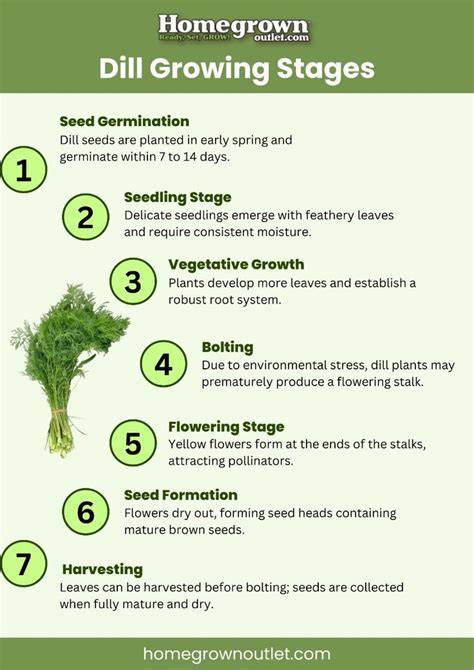
In addition to its culinary uses, dill flowers attract pollinators and can brighten the garden with yellow-green blooms in spring and fall. If you’re aiming for continuous harvest, keep succession planting and rotate containers to maintain a steady supply of foliage throughout the season.
How to Grow Dill from Seed in Pots🌿
Starting from seed is a practical choice for many gardeners, and dill is well-suited for beginners who follow a few key steps: use seed-starter mixes indoors, ensure ample light for 12-15 hours daily, provide airflow to prevent damping-off, and avoid burying seeds too deep since dill seeds require light to germinate. When sowing outdoors, direct sow after frost and space as recommended, with rows 12 inches apart and plants thinned to about 4 inches apart once they’re a few inches tall.
| Aspect | Recommended practice |
|---|---|
| Light | At least 6 hours bright light daily; indoors, consider a grow light |
| Container | Deep, with permanent transplant avoidance |
| Soil | Loose, well-draining; pH 5.5-6.5; moderate moisture |
| Temperature | 60-70°F (15-21°C) |
| Germination | 10-14 days; surface sow; light-sensitive |
| Space | Outdoor rows 12-18 inches apart; indoors 12-15 inches spacing |
| Succession | New container every 2-3 weeks |
| Harvest | Leaves when plants reach ~6 inches tall; flowers before seed formation for best leaves |
Direct sow outdoors after frost, with ideal soil temperatures around 60-70ºF and germination in about 10-14 days. Dill’s wide adaptability to light and temperature makes it a forgiving herb when you honor its deep taproot and light requirements. For herbal enthusiasts indoors, a setup with a dedicated deep pot, consistent bright light, and airflow will produce steady leaves and occasional blooms for pollinators when grown near other flowering herbs.