Top-performing columnar trees for privacy include Emerald Green Arborvitae, Taylor Juniper, and Italian Cypress. Yes, columnar fruit trees like Scarlet Sentinel Apple, Blushing Pearl Columnar Peach, and Flavor Gold Nectarine are designed for tight spaces. Columnar evergreens such as Blue Italian Cypress, Columnar Blue Spruce, and Hinoki Cypress provide consistent color in every season. Spacing depends on the mature spread of each variety. As a rule of thumb, plant columnar trees 2 to 4 feet apart for a tight screen or 5 to 10 feet apart for a more spaced ornamental look. Most columnar trees require minimal pruning due to their naturally narrow shape. Light pruning can help maintain shape or remove damaged branches. Ensure proper watering during establishment and mulch to retain moisture.
Vertical elements in the landscape become “visual beacons” and act not only as focal points but as elements of accent and contributors of scale. Narrow and columnar deciduous trees can be positioned and utilized to be major contributors throughout the landscape but also certainly have value in those smaller gardens and limited spaces that won’t accommodate a wider specimen. There is an enormous range of potential candidates to serve as a strong, vertical “exclamation point” in the landscape, and they are typically varietal selections of woody plant species that we might already have encountered at our local nurseries and garden centers.
Consider the value not only of scale and form of these narrow contributors as they grow in the garden, but also the individual characteristics provided by each selection. These features may include beautiful flowers, fragrance, intriguing texture, colorful foliage, fall color, ornamental stems or bark, and certainly a strong winter silhouette. It’s vital to consider, in advance, the needs of those selections in terms of proper siting, soil preferences, sunlight, and other cultural factors. Research available selections and pick a columnar candidate that is right for you. Become familiar with the ultimate height and width of these trees as well, and understand their increasingly dramatic contribution in the locations in which they are placed. Keep in mind that references to size might be based on a certain age and relative rate of growth.
Selected columnar cultivars and notable traits
- While there are many amazing selections of sugar maple (Acer saccharum and cvs., Zones 3-8) on the market, the variety ‘Monumentale’ (Acer saccharum subsp. nigrum ‘Monumentale’, syn. Acer saccharum subsp. nigrum ‘Temple’s Upright’) is a strikingly narrow and uniform tree that grows to 30 feet tall and 3 feet wide. Great for a tight spot or used in repetition as a strong vertical element in full sun to partial shade, it will also get some nice fall color in the orange range and needs very little pruning or shaping over time.
- The variety ‘Newton Sentry’ (Acer saccharum subsp. 2. I just planted five of these along the pathways of a small garden to offer a strong vertical element, consistent symmetry, and golden fall color and white ornamental bark.
- Narrow, upright, and dense, Parkland Pillar® Asian white birch (Betula platyphylla ‘JEFPARK’, Zones 3-7) is a great accent tree, or multiple specimens will work in tandem as a privacy screen in full sun to partial shade.
- The upswept branches of Prairie Sentinel® hackberry (Celtis occidentalis ‘JFS-KSU1’, Zones 4-7) make for a uniformly narrow look described as “tightly fastigiate.” At 40 feet tall and 10 feet wide, it has become quite popular as both an urban parkway tree in those traditional narrow street medians and in the home landscape in full-sun locations.
- Deep maroon, crinkled foliage makes ‘Red Obelisk’ European beech (Fagus sylvatica ‘Red Obelisk’, Zones 4-7) a very striking vertical specimen in the landscape. The form for this variety, regardless of age, is always rigid and uniformly proportional as a “maroon column.” The smooth silver bark is nice as well. This tree does require full sun, decent soil, and adequate moisture, so a bit of pampering is in order and will be worth the effort. Like other European beeches, ‘Red Obelisk’ is slow growing.
- It showcases beautiful foliage that turns a clear golden yellow in autumn and brings all the toughness of the ginkgo into a narrower presentation and tight form.
- If you ever find yourself at the beautiful Newfields campus right in front of the Indianapolis Museum of Art, check out the planting of ‘Slender Silhouette’ sweetgum (Liquidambar styraciflua ‘Slender Silhouette’, Zones 5-8; photo above). What a strong statement this uniformly erect, extremely narrow, and columnar tree provides! As with the straight species of sweetgum, moisture is important and slightly acidic soils in full sun are preferred. This variety has very few fruits and does exhibit nice hints of orange, yellow, and maroon fall color on the star-shaped leaves.
- It is a rarity to see an upright magnolia (Magnolia spp. and cvs., Zones 3-9), and this hybrid selection is conspicuously columnar with fastigiate branching. With age, ‘Sunspire’ magnolia (Magnolia ‘Sunspire’, Zones 5-8) reaches 25 feet tall and 8 feet wide with a slightly wider base that tapers to the top. The deep yellow flowers, held upright, arrive late in spring and avoid most of the later frosts that plague other early blooming species and varieties. Fun sun and evenly moist but well-drained soils are ideal for this tree. But watch out-‘Sunspire’ is not pollution tolerant.
- With quite a few columnar oaks on the market, Kindred Spirit® oak (Quercus × warei ‘Nadler’, Zones 4-9) is one of my favorites for a consistently tight form. This hybrid was created with the crossing of upright English oak (Quercus robur, Zones 5-8) and swamp white oak (Quercus bicolor, Zones 4-8). At 35 feet tall and 6 feet wide, it is a great selection for full-sun urban environments, where it displays drought, pollution, and salt tolerance and will handle clay soil. Kindred Spirit® stands up to wind and ice stress as well. It also has nice yellow color late in the fall.
- Thoughtful Combo: You will receive a bee feeder and 30 glass marbles. This thoughtful combo can provide clean water for the bees, you just need to put the marbles into the bee watering station, add water (note: the water level should not exceed the height of the marbles) and hang them in the right place. The round, colored marbles can provide a place for the bees to stand and prevent them from falling into the water, effectively keeping the bees safe. Fine Material: This exquisite bee bath is made of high quality iron material, smooth surface, rust and weather resistant, not easy to fade, sturdy and reliable. Bee cups for garden can well meet the drinking water needs of lovely bees, and it can also provide food for bees, such as sugar water, nectar, etc., attracting more bees to your outdoor area and making your garden full of vitality. Perfect Size: The butterfly watering station has an overall height of 13.4 inches, a bowl diameter of 9.4 inches, and a weight of 0.44 pounds. The bee cup serves the needs of the bees well without plunging them into dangerously deep water or taking up unnecessary space in your garden, and this compact and efficient design makes it a practical addition to any outdoor space. Elegant Design: Our bee watering cups are designed in unique flower shapes with vibrant and realistic colours to attract lovely bees to your garden and patio, bee feeders for outside are not only functional but can also be used as a landscaping element, their vibrant floral patterns enhance the beauty of your garden. Multicolored Decoration: Colorful bee water stations look like flowers in a garden, flower bed or pot and attract bees and butterflies.
Columnar trees deliver vertical impact. A single spire-like specimen can anchor a planting bed and provide a pleasing contrast of form to rounded or wide-spreading plants. Thoughtfully sited, a pair of slim Columnar Trees can elegantly frame a doorway or a gate. Columnar trees are often used to create a natural privacy fence. Because they grow narrow without need for excessive pruning they’re perfect for placing close together in a row. Besides privacy, these trees also act as a natural windbreaker, and noise buffer. This is why you might see them planted right up against a house that sits on a busy street. Columnar trees are narrow trees with crisp, clean outlines. This lends to their formal appearance. Many columnars appear to have been meticulously pruned, even though the shears may have never left the shed. Their stand-at-attention posture fits seamlessly into the formal areas around your foundation beds, entryway garden, or patio plantings, and their tiny footprint ensures that they can always squeeze themselves in wherever some structure is needed.
The slender silhouette Sweetgum is a whiplash-inducing Columnar Tree that grows like a cell phone tower. This tough and adaptable Southeastern native is clothed in star-shaped foliage that turns every color of the rainbow in fall. This Oak may be the tall, dark, and handsome Tree your landscape has been dreaming of! This striking Tree attracts attention but it's narrow and tidy, meaning it is never overbearing. In fall, its silver-backed foliage takes on gold and golden-brown tones before dropping to expose a sculptural framework of upswept branches. Kindred Spirit® is fast-growing in youth and long-lived. This beech is a magnificent Columnar Tree to plant for now and for posterity. Each spring, you’ll look forward to the shimmering red young leaves that emerge to usher in the start of the new growing season. This beautiful option gives you red foliage on a slim framework, but this trendy Tree also treats you to a springtime show of lovely, fragrant white flowers. These pole-type Trees not only lend structure to the landscape but also present you with beautiful Apple blossoms in spring and plenty of healthy snacking in fall. These narrow trees are a spire of steely blue foliage that can slip into any sunny spot in your landscape. And don't worry-it won't overwhelm any space! This upright grower maintains its tight and formal shape without pruning.
The Columnar Norway Spruce rises like a sentinel in the landscape, eventually standing tall and proud but remaining just a fraction of the size of a regular Norway Spruce Tree. Its forest-green needles make a wonderful backdrop to other plants’ flowers and foliage during the growing season, and it brings a welcomed dose of rich color to the bleak winter months. Although the weeping white spruce has pendulous branches its central leader grows straight up to the sky, giving this unique evergreen Tree an air of graceful strength. It can make a big impact in large and small gardens alike-in time, Weeping White Spruce can reach 30 feet or more in height. These favorites are a popular choice for many landscapers and homeowners when a columnar evergreen is needed in a tight space. A tight row of these arborvitaes makes an effective and attractive living privacy screen that holds its bright green color throughout the year. and Canada, this tough tree adapts to many garden environments and it flourishes in all but the hottest and driest regions of our country. This holly may have a standoffish name, but this special evergreen tree is a sleek and stylish pyramid of loveliness. Vibrant red berries accent its rich green foliage during winter for extra visual appeal.
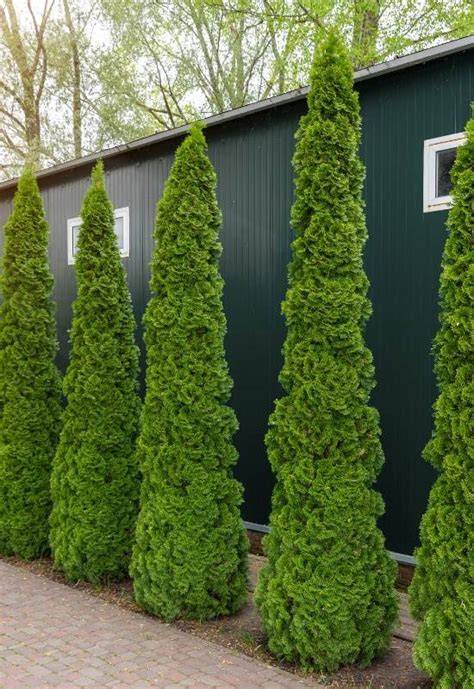
The Blue Italian Cypress is a Mediterranean masterpiece that brings timeless elegance to any landscape. With its tall, slender columnar form and lush blue-green foliage, this evergreen tree is perfect for creating a sophisticated privacy hedge, lining a driveway, or serving as a striking vertical accent. Reaching up to 40 - 50 feet tall and only 4-6 feet wide, it’s an excellent choice for tight spaces where height is essential.
Sleek, formal, and oh-so-versatile, the Sky Pencil Holly is a standout choice for elegant landscaping. With its narrow, columnar shape and smooth, soft-to-the-touch foliage, this evergreen shrub transforms blank spaces into sophisticated features. Growing 6-8 feet tall and only 2-3 feet wide, it’s perfect for tight areas, whether used as a striking garden accent, a potted statement on a patio, or a lush, vertical hedge. Native to Japan and East Asia, this cultivar thrives in zones 6-9 with full sun or partial shade, making it as hardy as it is graceful.
Living up to its name, the Blue Arrow Juniper is a stunning columnar evergreen that brings year-round beauty to your landscape with its striking silver-blue foliage. Growing 12-15 feet tall and only 2-3 feet wide, this slim conifer is perfect for tight spaces, making it an ideal choice for colorful privacy screens, windbreaks, container gardens, or vertical accents. Its dense, pyramidal shape provides four seasons of interest with minimal maintenance, while its berries attract birds, adding wildlife appeal to your garden.
In the language of trees, columnar trees communicate strength. These majestic sentinels grow straight and true, projecting confidence. They almost seem to guard our landscapes. These are the Trees that lend structure and definition to our borders, pleasantly contrasting the shrubs and flowering plants at their feet.
Top 10 Foundation Shrubs and Trees for Corner Plantings!
Columnar trees deliver vertical impact. A single spire-like specimen can anchor a planting bed and provide a pleasing contrast of form to rounded or wide-spreading plants. Thoughtfully sited, a pair of slim Columnar Trees can elegantly frame a doorway or a gate. Columnar trees are often used to create a natural privacy fence. Because they grow narrow without need for excessive pruning they’re perfect for placing close together in a row.
Spacing and care guidelines: plant columnar trees 2 to 4 feet apart for a tight privacy screen or 5 to 10 feet apart for a more open ornamental look. Ensure proper watering during establishment and mulch to retain moisture. Most columnar trees require minimal pruning due to their naturally narrow shape. Light pruning can help maintain shape or remove damaged branches. It’s vital to consider the needs of those selections in terms of proper siting, soil preferences, sunlight, and other cultural factors. Research available selections and pick a columnar candidate that is right for you.
| Tree/Selection | Height | Spread | Notes |
|---|---|---|---|
| Emerald Green Arborvitae | varies | narrow | privacy screen |
| Blue Italian Cypress | 40-50 ft | 4-6 ft | blue-green, tall column |
| Sky Pencil Holly | 6-8 ft | 2-3 ft | narrow, elegant |
| Blue Arrow Juniper | 12-15 ft | 2-3 ft | slim, year-round interest |
These examples illustrate how columnar forms can be used to create privacy, windbreaks, and architectural accents in both small and large landscapes. Always consider mature size, climate suitability, soil, and sun exposure when selecting a columnar candidate. By combining thoughtful placement with appropriate pruning and care, columnar trees become powerful, space-efficient instruments in garden design.