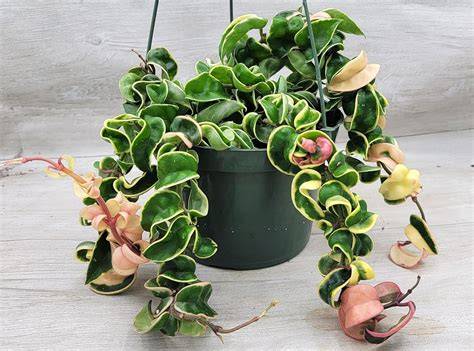
The Variegated Rope Plant, scientifically named Hoya carnosa 'Compacta Variegata', is a fantastic-looking succulent with many aliases, including Hindu Rope Hoya, Krinkle Kurl, Porcelain Flower, Wax Plant, and Honey Plant. This vining tropical has long stems of crinkled, curled leaves and produces amazingly sweet-scented flowers.
Hindu rope plants can be found in solid green or with variegated leaves. The thick, twisted, curly, cupped leaves of a Hindu rope plant are why it’s often called Krinkle Kurl. Rope Plant stores a lot of water in the leaves and can be considered drought tolerant, making it a striking yet relatively low-maintenance addition to indoor spaces.
Botanical and Common Names
Botanical Name: Hoya Hindu Rope Variegated
Common Name(s): Hindu Rope, Porcelain Flower, Wax Plant, Honey Plant, Krinkle Curl
Botanical Description
Unique Hindu rope plants, Hoya carnosa compacta, are draping succulent vines that produce clusters of star-shaped waxy flowers. The thick, twisted, curly, cupped leaves are the hallmark of this plant, earning it the nickname Krinkle Kurl.
Appearance and Variegation
The variegated form features leaves with creamy to pale yellow or white markings along with the deep green background, offering a dramatic contrast that enhances its cascading habit. Solid green forms are also popular and equally striking in the right light.
Light and Placement
Bright light is what succulents crave for compact growth. Place Rope Plant near a south-facing window. East- and west-facing windows with at least 4 hours of direct sunlight per day are also acceptable. Too little light may cause the stems to stretch and become leggy, diminishing the compact rope-like appearance.
Soil, Water, and Humidity
Use fast-draining indoor potting soil with extra perlite or sharp sand added to pot up Rope Plant. Hanging baskets should have removable saucers to catch excess moisture. Hoyas do not like to sit in standing water. Watering once every 2-3 weeks is typical and will depend on the humidity level around the plant. When the top 2-3 inches of soil are dry, water thoroughly, letting the excess drain away.
Low humidity can give the Rope Plant a dull, matte look, while high humidity can yield a glossier appearance. Fertilize with a formulation for succulents and cacti, aiming for a balanced NPK around 1-2-4 to encourage robust root growth alongside foliage development.
Care and Maintenance
Rope Plant is compact and looks great placed on a low shelf or in a hanging basket where the leaves can be seen up close. It can be used as a specimen or as part of a collection to provide great contrast to more typical houseplant foliage. Ensure proper drainage and avoid letting the plant sit in water to prevent root rot.
Flowers and Fragrance
Hoya Hindu Rope plants produce clusters of star-shaped, waxy flowers. The flowers are typically sweet-scented, adding an appealing fragrance to indoor spaces when in bloom, though blooms are not always frequent in home environments.
Availability and Care Warranty
All houseplants come with an extended 30-day warranty for added confidence, helping ensure your Variegated Rope Plant arrives in great condition and remains healthy after purchase.
Usage in Interiors
Due to its trailing habit and striking variegation, the Hindu Rope looks exceptional in hanging baskets or on a shelf where its leaves and curls can be admired up close. Its contrast against other foliage makes it a versatile choice for interior design and plant collections.
Hoya Hindu Rope Full Care Guide
tags: #variegated #hoya #hindu #rope