Quick Facts: Easy to grow and low maintenance. Mostly houseplants, but some grow outside. Plant in free-draining, gritty compost. Make new plants from cuttings or seeds. Many produce attractive flowers.
Before you get started
What are cacti and succulents? These plants mostly come from dry, arid regions, and are able to survive periods of drought by storing water in their fleshy leaves or stems. They usually like warm sunny conditions when in growth, with low atmospheric humidity, so most are grown indoors in the UK. Some, such as epiphytic cacti, come from rainforests and like partial shade, regular watering and higher humidity, so need to be treated more like a general houseplant than a cactus. A few cacti and sedums are hardy enough to survive outdoors, especially in milder or drier areas of the UK, but it is safest to give them winter protection.
Choosing the right cacti and succulents
Most cacti and succulents are grown as houseplants, thriving on sunny windowsills. They are ideal if you want small, easy-care, fascinating and even quirky plants to enjoy in your home. Some hardier or half-hardy types can be grown outdoors in sunny, sheltered spots, creating an exotic or Mediterranean look. They are drought tolerant, so perfect in dry summers or low-rainfall areas, and are best grown in containers. Most need additional protection over winter, or can be grown as temporary summer bedding. Check plant labels carefully for growing instructions.
Getting the right look
Cacti and succulents can differ hugely in appearance, from big and bold to small and intricate, tall or rounded, spiky, furry or glossy. Many are grey-green, but colours can range through all shades of green to yellows, dark purples and reds. They can be displayed singly, especially larger specimens, or grouped together in a small collection of contrasting or similar types. Another popular way of displaying small succulents indoors is in an open terrarium. Some hardier succulents can be grown outdoors and will add an exotic touch to containers and summer bedding displays in sheltered, sunny spots. They can also be grown in the thin, free-draining soil of rock gardens and green roofs. Large specimens - such as Aeonium 'Zwartkop' - in terracotta pots can look particularly impressive and sculptural on a sunny patio or doorstep in summer, although most will need protection over winter.
How and what to buy
Cacti and succulents are widely available in the houseplants section of garden centres, DIY stores and even large supermarkets, as well as from many online suppliers and specialist nurseries. Plants are often small and cheap, sold either singly or in small collections. Hardier succulents are usually sold with other drought-tolerant plants, or as summer bedding in spring and early summer, in garden centres and from online suppliers.
Where to get ideas and advice
To explore and narrow down your potential plant choices, you can: Visit gardens with collections of cacti and succulents in glasshouses or outdoors, so you can see which ones you like best. RHS Garden Wisley, in particular, has a huge diversity in its glasshouse and rock garden, and succulents often feature in its summer container and bedding displays. Look in garden centres and DIY stores, which usually offer a wide range in their houseplants section, or outdoors with other drought-tolerant sun-lovers and summer bedding. Go to RHS Find a Plant and select ‘cacti and succulents’ in the ‘plant type’ option, to browse the photographs and plant descriptions, and find out where to buy them. Visit RHS Flower Shows to meet specialist growers, and buy a wide range of quality plants. Visit a specialist nursery, in person or online.
Planting and general care
Indoor cacti and succulents are sold in pots of all sizes, depending on the age of the plant. Repotting is best done when the plant has outgrown its pot and the best time is in spring. If planting the more hardy types outdoors, such as sempervivums and stonecrops (Sedum), this is best done in late spring, once temperatures start warming up. Various half-hardy or tender succulents are sold as summer bedding in spring and summer, for planting once all risk of frost has passed.
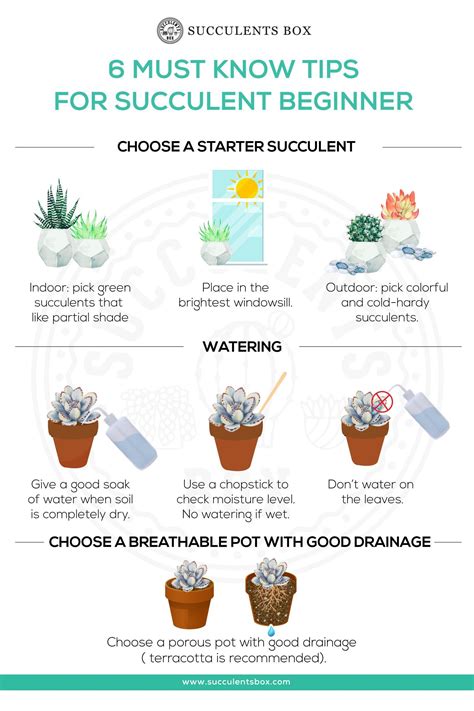
Most cacti and succulents are grown indoors as houseplants, in pots of free-draining, peat-free gritty compost. They like bright light, so put them on a sunny windowsill all year round, or even take them outdoors in summer to bask in the sunshine. Cacti and succulents generally like good air, especially in summer, and cope well with the dry air in centrally heated homes. There are a few notable exceptions - tropical rainforest-dwelling succulents, such as the Christmas cactus (Schlumbergera) and orchid cacti (Epiphyllum) and Rhipsalis, like more frequent watering and semi-shade, so prefer an east or west facing window, although a south facing window is fine if the plant is placed behind a net curtain to shield it from hot sunshine.
During winter, it's best to give most indoor cacti and succulents a period of rest, with a night temperature of only 8-10°C (46-50°F). Central heating is not usually a problem, as long as the plants are not close to radiators, but avoid watering during this period, as this will promote weak growth. Just offer enough to make sure they don’t dry out excessively and start shrivelling. Orchid cacti however, will require watering when the compost becomes dry. Hardier succulents, such as various sempervivums and stonecrops (Sedum), can be grown outdoors, especially in mild or dry areas of the UK, and in very sheltered gardens. Give them full sun and shelter from rain, especially in winter. They will fare best in containers of free-draining, peat-free gritty compost, rather than in the ground. They can also be grown on rock gardens and in dry-stone walls or other similarly well-drained locations. Slightly less hardy types, such as aeoniums and echeverias, may survive outdoors in the south of the country if given protection from frost and excessive wet over winter, but it is usually safest to bring them indoors.
Prepare your compost or soil
Most cacti and succulents, whether grown indoors or out, are best in containers of very free-draining, gritty compost that will not get waterlogged. You can buy ready-mixed peat-free cactus compost, or use peat-free John Innes No 2 compost and mix in up to 30 per cent grit or fine gravel by volume. Hardy succulents can also be grown in the ground in a warm, sunny spot, but the soil must be very free draining, so avoid planting them in heavy clay soils, as these will become too wet especially over winter.
How to plant and repot
After several years, a plant that has increased in size may benefit from repotting if its roots have filled the container or the plant has outgrown its pot. This is best done in spring. Avoid repotting into too large a pot as the excess volume of soil can stay too wet and cause rot. If grown as decorative houseplants, you may wish to group several plants which look good together into a container that's just large enough to accommodate all of them, or perhaps into an open terrarium. Use a proprietary peat-free cactus compost, or make your own using 2 parts by volume of peat-free John Innes No 2, with 1 part horticultural grit or mixed in. Top off with a mulch of horticultural grit or fine gravel.
Holding spiny plants can be tricky - use thick strips of folded newspaper as tongs or an oven glove to protect your hands. When planting hardy succulents outdoors in containers, simply follow our guide to container planting. Just be sure to use a proprietary peat-free cactus compost, or 2 parts by volume of peat-free John Innes No 2, with 1 part horticultural grit or sharp sand mixed in, and top off with a mulch of horticultural grit or fine gravel.
Ongoing care
Dust can build up on indoor cacti and succulents, especially the prickly ones. Use a soft paintbrush or blusher brush to remove it regularly. A damp cloth works well on smooth succulents.
Watering
The best practice is to water thoroughly when the surface of the compost feels dry to the touch during spring and summer, letting excess drain away. Use tepid rainwater if possible to avoid mineral buildup from tap water. In autumn and winter, provide a rest period with minimal watering. Orchid cacti can have more water, but let the compost dry out before watering again. Hardy outdoor succulents don’t need additional watering once settled, but protect them from winter rainfall.
Feeding
Feed once a month during the growing season (April-September) with a liquid feed high in potassium such as a tomato fertiliser, or a specialist liquid cactus feed. Overwintering outdoors may require reducing or stopping feeding.
Overwintering outdoors
If you can’t bring them under cover over winter, some hardier succulents, including various sempervivums and stonecrops (Sedum), will usually survive outside with protection: move the container to a warmest, driest sheltered spot, insulate the container, and cover with a cloche or bubblewrap while ensuring some air gaps for circulation. Give the plants a tidy-up and remove debris to prevent rot.
Caring for older plants
Cacti and succulents can live for many years. Some cacti are very slow growing and may need occasional repotting as they expand. Succulents tend to grow faster; if any have become leggy or ungainly, you can start new plants from cuttings to replace misshapen older plants.
How to encourage cacti toflower
Giving cacti cooler, drier conditions during their dormant period, and as much light as possible all year round, should help to stimulate flowering. The flowers are usually short lived but vibrant.
Pruning and propagation
Most cacti and succulents do not require pruning, though taller, branching succulents can be trimmed back if they become leggy. Cut stems cleanly just above a leaf node, and the plant should produce fresh growth. Any stems removed may be used to make new plants.
Propagation depends on the plant type: branching plants can be propagated from sideshoots; columnar cacti from stem cuttings; clump-forming or rosette-forming species readily produce offsets which can be detached when well rooted. Leaf cuttings are easy for echeveria or crassula. After taking cuttings, allow the cut ends to callus before planting in a mix of peat-free John Innes No 1 and grit; keep the medium slightly moist to root without rotting.
Growing from seed
Many cacti and succulents can be grown from seed. Sow in spring into pots or trays of peat-free John Innes No 1 with added grit; cover large seeds with grit and small seeds sparingly. Water with a fine spray and cover with glass or a clear plastic bag. Maintain about 21°C in a bright place, ventilating daily. Keep the compost moist but not soggy, and pot on when they are large enough to handle. It can take up to 12 months to reach transplant size.
- Ensure proper drainage and light
- Water sparingly and use tepid water
- Use cactus-specific or well-draining soil
Problems: Cacti and succulents are usually trouble-free if growing conditions are correct. Overwatering can cause rot and oedema; underwatering can cause shrivelling. Insufficient light leads to weak growth; too much cold can cause dieback. Pests such as mealybugs, red spider mites, and scale can occur. Use targeted treatments and improve growing conditions to prevent recurrence.
If you’re new to houseplants, succulents are a thoughtful choice. They’re easy to care for and visually striking, whether as a small collection or as focal specimens. A general care tip is to water infrequently, keep them in bright light, and maintain warmth. Avoid glass jars without drainage, and provide a well-draining soil mix for best results.
The ULTIMATE Succulent Care Guide 🌵 (Beginner to Pro)
Succulents originally come from dry, desert-like environments and there are over 10,000 types, each with different colours, textures and sizes. They store water in thick, fleshy leaves or stems, so watering should be minimized. For extra love, give succulents a feed occasionally with a succulent or cactus-specific fertiliser, typically once a month in spring and summer.