If you’re like me, you’ve probably found yourself standing in the garden center, staring at bags of perlite and vermiculite, trying to remember which is which. You might recall that one looks like little Styrofoam balls, but knowing the difference between perlite vs. vermiculite helps your soil thrive. While both are valuable soil additives, they offer different benefits when it comes to moisture, aeration, and drainage.
What is perlite and how does it work?
Perlite is a crystal-like mineral that expands when heated, making it light and porous. Its porosity makes it incredibly airy and light, and it is commonly added to potting mixes to improve aeration and drainage. Perlite is especially useful for plants that need their soil to dry out completely between waterings, such as cacti and succulents. Thanks to its porosity, it allows excess water to drain quickly. Perlite’s primary role is to improve soil structure by enhancing drainage, reducing compaction, and increasing oxygen flow to plant roots.
Perlite is a non-renewable mined material and has no nutritional benefit for plants. It is very lightweight and can actually blow away if on the soil’s surface, and it floats in water, so it can easily be washed away if your garden floods. Perlite can also generate a fine white dust when handled dry, which some people find irritating. Horticultural perlite is available in different grades; for general use, a fine to medium grade works well. Although it blends into the soil over time, you’ll want to monitor how much you add to avoid over-aeration.
What is vermiculite and how does it work?
Vermiculite is a hydrated mineral, like perlite, used to create airy soil. It is extracted from mica flakes heated under high pressure and temperature, which expands the flakes and forms the light, fibrous material. Vermiculite ranges in color from golden brown to dark brown, which can make it difficult to distinguish from the potting soil it’s mixed with. When exposed to water, the flakes expand into worm-like shapes and act like miniature sponges. If you’re tempted to poke these “vermiculite worms,” you’re not alone.
Vermiculite is ideal for plants that need consistently moist soil and don’t tolerate drying out. It absorbs more water than perlite and helps retain moisture effectively, making it excellent for seed starting and for plants that like moisture. Vermiculite is odorless and available in horticultural-grade bags, often with instructions for incorporating it into garden soil. Unlike compost, vermiculite is a permanent soil conditioner and won’t break down over time, providing long-term moisture retention. It’s also commonly used in mycology to help retain moisture in mushroom substrates.
Key differences: moisture, drainage, and suitability
- Moisture retention: Vermiculite holds more water and nutrients, keeping soil damp longer. Perlite drains quickly and holds almost no water.
- Drainage and aeration: Perlite provides superior drainage and aeration, reducing soil compaction. Vermiculite offers moisture retention with less impact on aeration.
- Best uses: Use perlite for plants that require good drainage and air to the roots (cacti, succulents, jars with drainage issues). Use vermiculite for plants that need consistent moisture (seed starting, cuttings, vegetables that like damp soil).
- Seed starting vs regular potting mix: Seed starting mixes often include vermiculite for moisture retention, while regular potting mixes feature perlite to promote drainage.
When to use them alone or together
Perlite and vermiculite are both beneficial in soil mixes, but they serve different purposes. If you want to tailor moisture and aeration, you can adjust the mix: use perlite for drainage-heavy mixes and vermiculite for moisture-heavy mixes. Some gardeners even mix equal parts of perlite and vermiculite to create a balanced potting mix that offers both drainage and moisture retention. For plants like calathea and maranta, a blend can be totally suitable.
Yes, you can also use perlite as a grow medium by placing it in a pot without a hole. Vermiculite, like perlite, can be used on its own and is recommended for germinating seeds due to its moisture-retaining properties. In some cases, combining them helps achieve both drainage and moisture buffering, though the exact ratio depends on your plant’s needs and the base compost.
Practical considerations and safety
Perlite may contain dust released during soil processing; inhaling this dust can cause respiratory irritation. Vermiculite has been associated with asbestos in some older products, but the vermiculite currently sold for gardening is specified to be asbestos-free, making it safe for plant use. Both materials are non-renewable resources and do not provide nutritional benefits to plants. They are sterile, weed-free, and disease-free, and can be reused in various soil mixes over time.
What about substitutes and alternatives?
If you’re seeking substitutes for vermiculite, options include worm castings, peat moss, or coconut coir, depending on your goals for moisture retention and nutrients. For drainage improvements, alternatives to perlite include pumice, which is denser, does not float, and holds its structure better over many years. Pumice can be a preferred choice for professional growers seeking long-term stability in the growing mix.
Practical guidance for mixing
In practice, you can create effective blends such as equal parts coir-based compost, 25% perlite, and 25% vermiculite to balance aeration and moisture retention. If your base is heavy clay soil, adding perlite can reduce surface crusting and puddling, while vermiculite can help retain moisture where appropriate. For plants that need rapid drainage, favor perlite; for moisture-loving plants, favor vermiculite. Mixing them in appropriate proportions can provide a well-rounded medium for a variety of plant types.
Summary of use-cases
- Perlite: best for drainage, aeration, and preventing root rot in well-draining soils; ideal for cacti, succulents, and arid-adapted plants.
- Vermiculite: best for moisture retention, seed starting, germination, and maintaining consistent dampness in the root zone.
Table: quick comparison
| Characteristic | Perlite | Vermiculite |
|---|---|---|
| Moisture retention | Low | High |
| Drainage | Excellent | |
| Aeration | Excellent | |
| Best use | Drainage-loving plants | Moisture-loving plants, seed starting |
| Weight | Very light | Light |
| Nutritional value | None | None |
| Reusability | Yes (non-biodegradable) | Yes (non-biodegradable) |
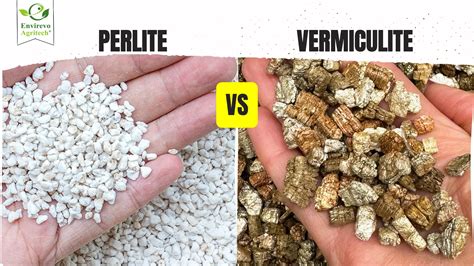
Below is a simple visual aid to reinforce the differences in texture, water interaction, and typical uses.
Which one - Perlite or Vermiculite?
In short, perlite and vermiculite are both valuable soil amendments with distinct roles. There isn’t a universal “better” option; the choice depends on the plant’s needs and the base soil. If you want a flexible approach, mixing both can yield a balanced potting mix that provides good drainage while retaining adequate moisture for roots to thrive.