Are you the proud owner of a magnolia tree? In this care guide, we'll dive into what makes these trees so captivating, and we'll show you how to keep yours healthy.
Magnolia trees command attention. Their flowering blooms are iconic, and they’re famous around the world for their versatility and beauty. Magnolia trees provide functional as well as aesthetic benefits. They attract pollinators such as beetles and bees, provide shelter for birds, and create a natural canopy that offers shade and cooling benefits for your landscape.
How to identify magnolia trees and basic care
Magnolia leaves are typically large and leathery, with a green top and a lighter, silvery underside. On younger trees, bark is most often smooth and gray, and the bark on older trees is more textured and scaly. Finally, magnolias’ showy blooms are likely their most distinctive trait. These flowers blossom in a range of colors, including white, pink, and yellow.
Magnolias perform best in USDA Hardiness Zones 5 to 9, depending on the tree variety. Typically, they prefer moist, well-drained, and slightly acidic soil. Most magnolias perform best with at least four to six hours of direct sunlight daily, though some varieties benefit from partial afternoon shade. Young magnolias need to be watered regularly during their first few growing seasons.
Proper planting techniques significantly impact long-term magnolia health and flowering potential. Success begins with site selection. Poor drainage and exposure to harsh winds can stress your magnolia, so it's important to choose a protected area with rich, well-drained soil. Timing is also important. In most climates, it’s best to plant your magnolia tree in early spring or early fall.
When planting, dig a hole 2 to 3 times as wide as the root ball, but no deeper than the root ball. Magnolias should be planted slightly above the surrounding soil level to account for settling. Gently loosen any circling roots before placement. Finally, backfill the hole with a mixture of native soil and compost, and water thoroughly to settle the soil and eliminate air pockets around the roots.
Once your tree is planted, take the steps below to make sure it thrives and flowers for many years. Water deeply once or twice a week during the first two growing seasons, adjusting based on rainfall. After your tree is established, continue to water during extended dry periods, but avoid overwatering, which can lead to root rot and fungal diseases. Magnolias naturally grow into attractive shapes and recover poorly (if at all) from heavy pruning. Because of this, we recommend light pruning only and advise against heavy pruning unless absolutely necessary.
Unlike pruning, mulching is typically recommended for all magnolia trees. For optimal mulching, apply 2 to 4 inches of organic mulch around your tree's base, extending to the drip line. And be sure to keep the mulch several inches away from the trunk to prevent rot and discourage girdling roots.
Common diseases affecting Magnolia grandiflora
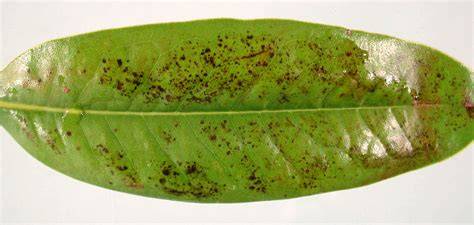
These trees can experience various diseases that lead to discolored leaves. A few different diseases can cause leaves to become discolored, covered in spots, or brown lesions. The most common magnolia tree diseases are leaf spot, powdery mildew, verticillium wilt, and root rot. Leaf spot diseases cause dark spots and premature leaf drop, often developing in warm, humid weather with poor air circulation. Powdery mildew creates a white, powdery coating on leaves and new growth, thriving in conditions with high humidity and limited sunlight. Root rot, often from poor drainage or overwatering, manifests as yellowing leaves, stunted growth, and branch dieback. Verticillium wilt is a soil-borne fungal disease that invades the tree’s vascular system, causing sudden wilting, yellowing leaves, and branch dieback, often just on one side of the tree.
Leaf spot diseases (Phyllosticta and other fungi, bacterial leaf spots)
Phyllosticta leaf spot is caused by the fungus Phyllosticta magnoliae. Phyllosticta leaf spot first appears as tiny purple to black spots on the upper surfaces of leaves. As the spots increase in size, the center turns off-white while the border remains purple to almost black. Spots may also be surrounded by a faint yellow halo. The fungi Cladosporium sp., Coniothyrium sp., Epicoccum sp., Phyllosticta magnoliae (genus also reported in BC), and Septoria sp. have been found by the OSU Plant Clinic in leaf spots of magnolia. Phyllosticta and Cladosporium were found most frequently. The bacterium Pseudomonas syringae pv. syringae also is often encountered as a leaf-spotting organism.
Many of the leaf-spotting fungi survive on infected leaves and plants. Both Phyllosticta leaf spot and leaf blight can be helped by quickly pruning away affected foliage. Don’t be conservative about removing any branches you think may be infected. If blight reaches the tree’s trunk, it is fatal.
Phyllosticta can be treated with a copper-based fungicide to control the infection. By doing this and careful pruning, this disease should be controllable. It typically does not kill a mature tree. Just know that fungicide sprays typically work better as a protectant, rather than a treatment. Wet, humid conditions promote disease spread, so avoid wetting the foliage and watering late in the day.
Anthracnose and leaf blight
Caused by species in the Colletotrichum genus of fungi, anthracnose produces spots that develop blister-like fruiting bodies, which ooze masses of pink spores. Foliage should be removed as soon as symptomatic spots are noticed. Leaf blight is another disease that can cause brown or black spots on the leaves. It generally affects trees that are under stress already. This can happen during drought or when there is a lack of nutrients.
Bacterial blight and bacterial infections
The notable symptoms of bacterial blight - caused by Pseudomonas syringae pv. - include foliar and stem symptoms. Magnolia branches with cankers can exhibit foliar and stem wilt. A systemic, chronic, and incurable disease can overwinter in the xylem year after year, and the bacteria can access any and all branches connected to the trunk. When branches start to turn brown and die off, remove them. Aside from avoiding wounds and removing severely symptomatic branches, not much can be done about wetwood.
Verticillium wilt
When it comes to killing your beloved magnolia trees, Verticillium wilt doesn’t waste time. Verticillium wilt kicks off with the invasion of fungal Verticillium species such as V. albo-atrum. This is a fungal infection that affects the water-conducting tissues of the plant. Leaves will turn yellow to brown, and foliage will appear wilted. Sadly, there is no fix for Verticillium wilt. Mature trees can outgrow the disease over several years, but the tree’s growth will be permanently stunted. The damage can be mitigated with pruning of affected tissues, proper watering, and fertilizing. Young trees are unlikely to survive. This fungus lives in the soil, so a tree that dies of this should be removed and disposed of.
Phytophthora root rot
Affecting many different trees and shrubs in the landscape, Phytophthora root rot is no joke. The tree bark at soil level will typically look unusually dark, and the wood underneath it will appear an unhealthy-looking reddish-brown. Make sure that your soil is very well-draining prior to planting. If you’d like, planting on a raised mound of soil can help keep water from pooling up around the roots.
Nectria canker and other cankers
Cankers are necrotic, localized lesions that manifest on the branches, trunks, and/or roots of trees. Caused by a variety of different bacterial or fungal pathogens after mechanical or environmental damage, cankers can cause local or systemic dysfunction in foliage and bark. When you notice a canker on a magnolia branch, prune the entire branch. The Nectria gallega fungus is the most common cause of perennial canker disease in hardwoods. Magnolias attract their own strain of canker, N. magnoliae. Both fungi behave the same way, entering magnolia trees through sun-scalded, wounded or cracked bark, leaf scars or branch stubs.
It's easy to miss Nectria canker's initial symptom, a sunken or discolored lesion near wounded bark or where dead twigs and branches attach to the tree. The tree responds to the infection by sealing off the lesion, or canker, with a corky ridge. During the magnolia's dormancy, the infection progresses through the bark and into the tree's inner tissues, and lemon-shaped, orange or reddish spore-producing bodies appear on new cankers. Magnolias with Nectria canker seldom die, but the cosmetic damage from the disease can severely decrease their ornamental value. Cankers merging to girdle a magnolia branch may kill it by cutting off its moisture and nutrient supply.
Drought-stressed and recently pruned or mechanically injured trees have the greatest risk of infection. Their risk is highest during fall and winter dormancy, when the magnolias’ wound-recovery response slows. While you can’t remove an existing Nectria infection from a magnolia, several measures slow its spread. Prune and destroy the canker-infested branches in cold, dry weather when the fungus won't spread to the pruning wounds. Rinsing the pruning tools in a solution of 1 part bleach to 9 parts water disinfects them after each cut. Watering regularly during drought and spreading a 2- to 3-inch layer of organic mulch around them to preserve soil moisture minimizes stress on the trees.
Insect problems and secondary issues
If you notice leaves beginning to shrivel and curl inward, you probably have an insect infestation. Insects like aphids, scales, and thrips like to feed on the sap of magnolia leaves. A mature tree will usually be able to endure insect damage with little overall damage to the plant’s health. Generally, no treatment is needed, as insecticides are damaging to beneficial insects as well as pests.
Magnolia scale is one of the largest soft scale insects, appearing as white or brown bumps on branches and stems. Heavy infestations weaken the tree, causing yellowing leaves, branch dieback, poor flowering, and the sticky honeydew they excrete leads to black sooty mold on leaves and surfaces below. If the infestation is severe, treating with insecticidal soaps or neem oil will help control the spread. Treating at night will help to mitigate the damage to pollinators.
Caterpillars are another common magnolia tree problem. The fruittree leafroller, fall webworm, and cotoneaster webworm are all larvae that feed on magnolia leaves. Generally, a mature magnolia will support these insects through their larval stage with no real damage. Remove all damaged foliage with clean hand shears. Inspect the trunk and branches for egg masses, and remove and dispose of them by dropping in a bucket of soapy water.
Practical treatment options: fungicides, cultural controls, and sanitation
Both Phyllosticta leaf spot and leaf blight can be helped by quickly pruning away affected foliage. Don’t be conservative about removing any branches you think may be infected. Many of the leaf-spotting fungi survive on infected leaves and plants. Properly prune your magnolia tree canopy to allow for airflow to dry the foliage. Wet, humid conditions promote disease spread, so avoid wetting the foliage and watering late in the day.
Mancozeb-based products can be used as mixing partners and provide some protection. Spectro 90 WDG at 1 to 2 lb/100 gal water is listed as a Group 1 + M5 fungicide. Monterey Liqui-Cop at 3 Tbsp/gal water is another option. Tourney EZ at 1 to 4 oz/100 gal water is a Group 3 fungicide. Heritage at 1 to 4 oz/100 gal water plus a non-silicone-based wetter sticker is a Group 11 fungicide. Banner MAXX at 5 to 8 fl oz/100 gal water is a Group 3 fungicide. Bonide Fung-onil Multi-purpose Fungicide at 2.25 teaspoons/gal water and Daconil Weather Stik at 1.38 pints/100 gal water are Group M5 fungicide products; see label precautions such as eye irritation. Concert at 22 to 35 fl oz/100 gal water is a Group 3 + M5 fungicide. Junction at 1.5 to 3.5 lb/A may be useful if the cause of the leaf spot is unknown. Mancozeb-based products can be used as mixing partners and provide some protection.
Phyllosticta can be treated with a copper-based fungicide to control the infection. Just know that fungicide sprays typically work better as a protectant, rather than a treatment. When these issues arise, the best way to deal with them is to remove infected wood. If the affected area cannot be removed, clean it with a solution of bleach and water or alcohol for bacterial infection and fungicide for fungal infections.
Prevention and ongoing maintenance
Prevention is the best defense against these issues. By that, I mean proper tree care. A healthy plant is better at fighting diseases than one that’s already struggling to stay alive. Most magnolia problems trace back to three things: poor site selection, overwatering, or heavy pruning. Get those right, and your tree will reward you with decades of spring blooms.
Properly prune your magnolia tree canopy to allow for airflow to dry the foliage. Avoid overhead watering when possible, as wet foliage can encourage disease development. Maintain consistent soil moisture without waterlogging. If you notice leaves dropping, determine whether it is normal seasonal shedding; deciduous magnolias will drop leaves in autumn while evergreen types shed older leaves occasionally.
If you suspect Verticillium wilt, young trees are unlikely to survive and a tree that dies of this should be removed and disposed of. If blight reaches the tree’s trunk, it is fatal. When you notice a canker on a magnolia branch, prune the entire branch. Rinsing the pruning tools in a solution of 1 part bleach to 9 parts water disinfects them after each cut.
Region-specific notes
In cold regions, select cold-hardy tree varieties like star magnolia (Magnolia stellata) or Kobus magnolia. In hot, arid climates, provide consistent irrigation during the growing season and 3 to 4 inches of mulch around the base to retain soil moisture and reduce heat stress. In humid areas, ensure adequate space between trees to promote air circulation and reduce fungal disease development.
When it comes to killing your beloved magnolia trees, Verticillium wilt doesn’t waste time. Avoid wounds and remove severely symptomatic branches; otherwise consult an arborist for diagnosis and management. If something looks off, such as yellowing leaves, sticky residue, dark spots, or dieback, a certified arborist can diagnose and treat it.
When to call an arborist
If you notice severe decline, widespread branch dieback, or symptoms of systemic disease such as Verticillium wilt, contact a certified arborist. One of our ISA Certified Arborists® can help diagnose and treat properly. If you’re curious about replacing a declining magnolia or managing severe cankers, consult an arborist to determine the best course of action.
| Issue | Key symptoms | Primary treatments |
|---|---|---|
| Phyllosticta leaf spot | Purple/black spots, white center, faint yellow halo | Prune infected foliage, copper fungicide, avoid wet foliage |
| Anthracnose / leaf blight | Blister-like fruiting bodies, pink spores, brown/black spots | Remove symptomatic foliage, fungicide protectants, reduce stress |
| Verticillium wilt | Wilting, yellowing leaves, branch dieback | Remove affected branches, soil removal if severe, replace tree |
| Nectria canker | Sunken lesions, corky ridges, orange spore bodies | Prune infested branches in dry weather, disinfect tools |
| Phytophthora root rot | Dark soil-level bark, reddish-brown wood under bark | Improve drainage, plant on raised mound, avoid overwatering |
Tree & Shrub Disease Control - Fungicide Tips | DoMyOwn.com
Ready to enhance your landscape? A healthy magnolia comes down to the basics: well-drained, slightly acidic soil, four to six hours of sun, deep watering during the first two growing seasons, and 2 to 4 inches of mulch kept clear of the trunk. Prune lightly, watch for leaf spot, powdery mildew, root rot, and magnolia scale, and adjust for your climate. If something looks off, a certified arborist can diagnose and treat it. Contact an arborist to schedule a consultation with an expert.
tags: #magnolia #grandiflora #diseases