Apogee F1 pumpkin is possibly the largest-fruited powdery-mildew-resistant hybrid on the market today. Its extra-large fruit has rough-textured ribbing, a dark-orange color, and long, thick-black handles. It has excellent potential for multiple marketable fruit per plant. The fruit weighs 40 to 60 pounds, and plants have large vines. Average maturity is 95 days.
Bayhorse Gold is a game-changing large pumpkin from Rupp. This 15- to 20-pound variety provides intermediate resistance to powdery mildew. Bayhorse Gold showcases uniform, slightly elevated fruit with strikingly gorgeous, very dark orange coloration and elongated black handles. It weighs between 20 and 25 pounds, matures in 95 days, and is resistant to powdery mildew.
Benchmark F1 pumpkin offers excellent potential for increased profit opportunity for the discerning pumpkin grower. Distinctive, extra-large handles. Fruits are medium size, dark orange, well ribbed, and average 20 to 30 pounds. Benchmark has homozygous resistance to powdery mildew.
Bisbee Gold is a NEXT generation variety from Rupp Breeding with gorgeous dark orange, 6- to 7-pound fruit and jet black handle. It features tremendously refined ribbing and high resistance to powdery mildew.
Blanco weighs 4 to 6 pounds and matures in 105 days. It has intermediate resistance to powdery mildew. This high-quality white pumpkin features a great shape and long handle and it holds its color well in the field.
Blaze is a uniform, colorful, and high yielding pumpkin. Flashy fruits are yellow with orange stripes with an interesting and flattened shape. Sturdy, short vine plants have excellent powdery mildew resistance and yield very well (approximately 10 to 12 fruits per plant). This is an excellent addition for any ornamental grower.
Conquest F1 pumpkin offers excellent potential for increased profit opportunity for the discerning pumpkin grower. Handles are distinctive and extra-large. Fruits are extra large, dark orange, well ribbed, and average 30 to 50 pounds. Conquest has heterozygous resistance to powdery mildew, and the plants have large vines.
Denali F1 pumpkin is one of the largest powdery-mildew-resistant hybrids on the market. Large, dark-orange fruit have good ribbing and large handle. Denali F1 has excellent potential for multiple marketable fruit per plant. The plants have large vines.
Dynasty F1 pumpkin has homozygous resistance to powdery mildew and is perhaps the largest-fruited semi-bush hybrid on the market. Dynasty F1 has excellent potential for multiple marketable fruit per plant.
Early King is productive and a great addition to our pumpkin line. This hybrid is very large in size weighing approximately 22 to 28 pounds. It has a great deep-orange color, paired with an excellent handle. Maturing early at 90 days, it has nice distinct ribs, a full vine, and has intermediate resistance to powdery mildew.
Gemini F1 pumpkin has homozygous resistance to powdery mildew, large, dark-orange fruit, with good ribbing and a large handle on a semi-bush plant. Gemini F1 has excellent potential for multiple marketable fruit per plant.
Hulk is a large, barrel-shaped pumpkin with very dark-orange color and a large, dark, embedded handle. It is fairly early maturing and has the ability to set several large uniform fruit per plant.
Jason produces very uniform, slightly upright shaped 20-22 pound fruit on a full vine plant that offers intermediate resistance to powdery mildew. The fruit have a rich orange color, medium ribbing, and thick stems that are firmly attached and dark green.
Kratos, a mighty, strong pumpkin, has a large, firmly attached handle, hearty vine, large fruit (20 to 30 pounds), and an excellent yield. Magnum F1 offers homozygous resistance to powdery mildew. Medium-size fruit has extra-large handles, dark-orange color, and good ribbing. The fruits average 15 to 20 pounds, and average maturity is 105 days.
Weighing between 14 and 18 pounds, Mrs. Wrinkles matures in 100 days. The deep-wrinkled ribs and burnt-orange color make this pumpkin unique and an attention grabber. When you are looking for something different that stands out from the traditional Jack O’Lantern pumpkin, Mrs. Wrinkles is your choice.
Orange Sunrise has intermediate resistance to powdery mildew and weighs between 12 and 18 pounds. It has a high yield potential and is well suited for production in the Northeast. This fresh market pumpkin is early maturing, round in shape, 10 inches tall, and features a deep-orange color.
Pepitas is for fresh market or processing. This 9- to 12-pound pumpkin matures in 90 days. A 2016 All-America Selections award winning pumpkin, Pepitas is a winner in both the decorative and culinary arenas.
Prudence F1 pumpkin has homozygous resistance to powdery mildew. Fruits average 20 to 25 pounds, are dark orange, and well ribbed with a large, thick handle. The plant is semi-bush.
Skidoo Gold, from Rupp, is a new blocky, heavily ribbed, mid-sized hybrid with powdery mildew tolerance.
Summit F1 pumpkin has homozygous resistance to powdery mildew. The plant is semi-bush. Large, dark-orange fruit has good ribbing and a good handle.
As king of the pumpkins, Zeus features a large, firmly-attached handle, and attractive, medium-sized fruit (16 to 20 pounds).
Spicy Mocha F1 Hybrid Pumpkin is brand new this year! With its unique dark coffee hue, this pumpkin will add a touch of sophistication to your fall decor. But it's not just about looks - this hybrid pumpkin also boasts intermediate resistance to powdery mildew, a common fungal disease that can damage and even kill pumpkins. This means you can enjoy a bountiful harvest without the worry of losing your crop to disease. Not only is this pumpkin disease-resistant, but it also produces large, round fruit that is perfect for carving, cooking, and decorating. Its flesh is sweet and perfect for pies, soups, and other fall recipes. Mocha F1 Pumpkin is easy to grow, making it perfect for both novice and experienced gardeners alike. It requires full sun, regular watering, and well-drained soil. With the proper care, you can expect a plentiful harvest of beautiful and delicious pumpkins that are sure to impress.
SCIENTIFIC NAME: Cucurbita spp. CULTURE: Fertile, well-drained soil with a pH of 5.8-6.8 is best. Plastic mulch and fabric row covers (AG-19 grade) can aide plant establishment and exclude insect pests during the seedling stage. Row covers should be removed when plants begin to flower. Poor fruit development may indicate insufficient pollination. Time plantings so that varieties will mature for the fall market. Overexposure to sun in the field after maturity and foliage dieback reduces fruit and handle color quality.
DAYS TO MATURITY: From date of direct seeding. Subtract 14 days if transplanting. TRANSPLANTING: Sow 2-3 seeds per 2" container or plug flat about 3 weeks prior to transplanting. Germinate at 75-95°F (24-35°C). Thin with scissors to 1 plant/container or cell with scissors. Harden plants 4-7 days prior to transplanting. After danger of frost has passed, transplant out according to the spacing recommendations for each variety. Handle seedlings carefully; minimal root disturbance is best. DIRECT SEEDING: Sow in late spring when soil is at least 70°F (21°C) and frost danger has passed. Sow 2 seeds at the appropriate spacing interval for the variety's vine length, 1/2-1" deep. Thin to 1 plant per spacing interval after seedlings are established. AVG. DIRECT SEEDING RATE: 250 seeds/125', 500 seeds/250', 1,000 seeds/500', 15M/acre at 2 seeds/ft rows 6' apart. PLANT SPACING: For between-row spacing, bush plants require 4-5', short-vine habits require 6', and long-vine habits generally require 12'. In-row spacing varies depending on fruit size and is generally: small, 18-24"; medium, 24-36" and large to extra-large, 36-72". Spacing requirements may vary, so check for individual variety recommendations.
INSECT PESTS: Cucumber beetles, squash bugs, and vine borers are all common pests for cucurbits. Protect young plants with floating row covers. Squash bug eggs found on the undersides of leaves may be crushed by hand. For vine borers, cut out of vines and hill soil over the wound. Keep field borders mowed and remove plant refuse in the fall; spring plow to bury pupae. C. moschata types are less susceptible to vine borers. Insecticides (specifically, pyrethrin sprays) may offer some control.
DISEASE: Common cucurbit diseases include powdery mildew, downy mildew, bacterial wilt, and phytophthora. Avoid problems with adequate soil drainage, good air flow, insect pest control, and crop rotation. If necessary, check with your local Cooperative Extension Service agent for specific control options.
HARVEST: Fruits can tolerate 1-2 light frosts, however, temperatures below 28°F (-2°C) can damage fruit. When fruit color is fully developed, clip handles close to the vine. Avoid picking up fruits by handles and take care not to damage the skin/rind. Sun cure in the field for 5-7 days or cure indoors by keeping fruits at 80-85°F (27-29°C) with good air ventilation. Black pumpkins and white pumpkins are both sensitive to sunscald and should be brought out of direct sunlight once foliage starts to die back; cure inside and keep out of sun to avoid yellowing.
STORAGE: Store at 50-60°F (10-15°C) with 50-70% relative humidity and good ventilation.
SEEDS/LB. Whether you are a home gardener or a professional grower, you'll find all kinds of disease-resistant pumpkin seeds at Harris Seeds. From traditional orange to small yellow and white pumpkins, you can enjoy attract ive varieties - all without powdery mildew disease. Harris Seeds is here to help you make growing hearty, healthy pumpkins easier than ever.
Powdery mildew is a fungal disease that commonly affects pumpkins with a white powder covering the foliage. Looking for a little guidance on where to begin? Two experiments with field-grown pumpkins were conducted at the Long Island Horticultural Research and Extension Center (LIHREC) in Riverhead, NY. Controlled release fertilizer (N-P-K, 19-10-9) at 525 lb/A (101 lb/A of N) was broadcast over the bed area and incorporated. Beds were formed, drip tape was laid, and beds were covered with black plastic mulch. Plots were three adjacent rows each with three plants spaced 48 in. apart. Seed were hand planted. To separate plots and provide a source of inoculum, two plants of a powdery mildew-susceptible zucchini squash variety (Spineless Beauty) were planted between each plot in each row. The experiment that received a fungicide program for additional control of powdery mildew was sprayed with a tractor-drawn sprayer at weekly intervals starting at first observation of symptoms. The program was: Vivando 15 oz/A on 7 Aug, Torino 3.4 oz/A on 14 Aug, Procure 8 oz/A on 21 Aug, Vivando on 28 Aug, Procure on 5 Sep, Quintec 6 oz/A on 11 Sep, and Vivando on 18 Sep. In the second experiment, the same pumpkin varieties were assessed for powdery mildew resistance with a fungicide program for powdery mildew. Disease levels were very low, as expected, especially on the upper leaf surface, thus there were no significant differences between any of the varieties in those measurements. Progress, Millionaire, Magnum F1, and Eureka F1 were all significantly less severely affected by powdery mildew on the lower leaf surface than the susceptible variety Gold Challenger, documenting the benefit of using an integrated program rather than relying on fungicides alone for managing powdery mildew. While not significant, severity of powdery mildew was numerically less for all of the resistant varieties than for Gold Challenger. Overall larger fruit size and higher percentage of fruit with good handles in the second experiment may be due to the fungicide program improving powdery mildew control. Mature fruit from the fungicide-treated experiment were collected and evaluated for overall fruit appearance and handle quality. All of the varieties received the highest possible score for handle quality, 9 out of 9. All also produced high quality fruit based on appearance with Bayhorse Gold receiving a perfect score of 9 and Magnum F1 receiving the lowest score (7). The results provide growers information they need to effectively manage powdery mildew, namely that resistant pumpkin varieties are an effective component of the control program, those with homozygous resistance are the best choice, and targeted fungicides also need to be applied to achieve a commercially-acceptable level of control.
- Powdery mildew resistant hybrids for high-yielding crops
- Homozygous resistance vs heterozygous resistance in pumpkins
- Planting, spacing, and field management for powdery mildew tolerance
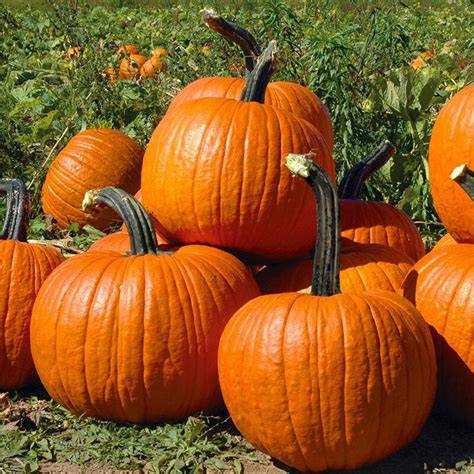
Key Characteristics of Notable Varieties
- Apogee F1: largest-fruited, powdery mildew resistant, 40-60 lb, 95-day maturity
- Bayhorse Gold: 20-25 lb, intermediate resistance, 95 days, dark orange
- Benchmark F1: 20-30 lb, homozygous resistance, extra-large handles
- Denali F1, Dynasty F1, Gemini F1: homozygous resistance, large fruit, multiple fruits per plant
- Conquest F1, Summit F1: extra-large or large fruit, resistant or homozygous resistant
- Spicy Mocha F1: brand new, intermediate resistance, dark coffee hue
For growers prioritizing visual impact and versatility, several varieties combine striking color, robust ribbing, and strong handles with powdery mildew resistance, enabling both marketable aesthetic appeal and reliable yields. In addition to hybrid performance, management practices such as proper soil drainage, air flow, row covers, and targeted fungicide use can enhance disease control and fruit quality, ensuring a commercially viable crop across diverse growing regions.