In our interconnected world, the health of humans, animals, plants, and the environment is inseparable. Soil, a vital but often overlooked component of this balance, is central to the One Health approach, which seeks to integrate the well-being of all life forms to promote sustainable living and combat global challenges like climate change, food insecurity, and disease outbreaks.
The essential role of soil in ecosystem health
Soil is more than just dirt beneath our feet-it is a living ecosystem that supports life on Earth. It provides the foundation for agriculture, ensuring food and nutrition security for billions. Healthy soils harbour a rich diversity of organisms that recycle nutrients, decompose organic matter, and suppress pests and diseases in plants. Yet, soil degradation, fueled by unsustainable agricultural practices, deforestation, and climate change, threatens this delicate ecosystem. According to FAO, 33 percent of global soils are already degraded, reducing agricultural productivity and increasing vulnerability of crops and livestock to pests and diseases.
Soil and human health: A direct link
Healthy soils are directly tied to human health in surprising ways. They act as a natural filter, removing contaminants from water bodies. Moreover, the nutrient quality of crops is inherently linked to the health of the soil in which they grow. Depleted soils lead to nutrient-poor food, exacerbating global malnutrition and "hidden hunger" caused by deficiencies in vitamins and minerals. Getting our hands dirty as children exposes us to the diversity of bacteria and fungi in healthy soils, decreasing incidence of asthma, strengthening our immune system and seeding our own gut microbiome. Playing in the dirt as adults puts us in contact with soil organisms that can release compounds that are beneficial for our mental health.
Degraded soils also pose risks to public health through erosion of soils through water, which decreases water quality, and dust storms, which can carry harmful pathogens and contaminants. Degraded soils also release stored carbon in the form of carbon dioxide, accelerating climate change-a recognized driver of health crises.
Sustainable Organic Integrated Livelihoods (SOIL) is building composting toilets in Haiti, reducing the spread of diseases like cholera and typhoid, creating jobs, and restoring local environments. With their toilet service (EkoLakay), SOIL provides over 1,100 households with ecological sanitation toilets and waste treatment services. Currently, this service produces over 100 tonnes of compost annually, but the amount increases concurrently with the expansion of the EkoLakay service. The compost is used to support agriculture and reforestation efforts in Haiti, ensuring nutrient recirculation and improved soil carbon sequestration. Over 75 percent of Haiti’s population lacks access to safe sanitation. Without safe waste treatment, water supplies are contaminated with dangerous pathogens from human waste. Additionally, soil degradation is a serious challenge in Haiti. The country was once one of the most agriculturally productive countries in the world.
This project provides sanitation to people who often otherwise have no access to a toilet. SOIL works within Haitian communities to develop affordable household sanitation services that allow those living in dense urban settlements to have access to their own toilet. Having an in-home toilet also means that women have a safe space to use the toilet and manage menstruation. Ecological sanitation has the power to combat climate change via three mechanisms: reducing greenhouse gas emissions compared to alternative sanitation practices, offsetting synthetic fertilizer use, and sequestering carbon in soils through compost amendments. Healthier soils are less vulnerable to natural disasters and climate change-induced severe weather events because they protect against drought and erosion. The use of compost for reforestation stabilizes soils, helping to prevent catastrophic floods and mudslides.
SOIL’s EkoLakay household toilets provide access to a dignified toilet for over 6,000 people who would otherwise go without one. SOIL is committed to developing open source restorative sanitation solutions as alternatives to sewer systems. On the global stage, SOIL is a founding member of the Container-based Sanitation Alliance (CBSA) - a group of pioneering sanitation innovators working to develop these alternatives for urban areas. The goal of the Alliance is to formalize container-based sanitation as a widely accepted and endorsed approach among municipalities and regulators, help sanitation services to reach scale, and achieve sustainable impact in urban areas around the world.
Flagship initiatives and diverse approaches to soil health
Imarisha Maisha Initiative (IMI Kenya) is implementing a flagship rangeland restoration and climate resilience programme in Narupa Community Conservancy, Isiolo County. The initiative focuses on restoring degraded rangelands through community-led rehabilitation of grazing zones, reseeding of indigenous pasture species, controlled grazing, and regeneration of Acacia senegal trees - a key dryland species with high ecological and livelihood value. The project supports community stewardship of natural resources while enhancing soil structure, soil organic matter, infiltration, and long-term soil health outcomes in ASAL dryland ecosystems. The programme also strengthens governance and management structures for sustainable rangeland use, integrates local customary systems with modern rangeland management approaches, and builds community capacity on soil and landscape restoration.
The Gastro Forestry Project focuses on providing access to sports spaces in rural areas of Indonesia while integrating environmental awareness through sports activities. This initiative not only builds inclusive sports facilities but also encourages community participation in preserving soil health and the natural environment. By combining sports and ecological education, the Gastro Forestry Project instills a sense of environmental responsibility from an early age, strengthens community bonds, and nurtures a younger generation that cares about soil health and sustainability. In addition, the initiative is closely linked to conservation in agroforestry areas, where communities are encouraged to protect tree cover, prevent soil erosion, and apply sustainable land management practices. Sports activities are often held near or within agroforestry landscapes, creating a living classroom for participants to connect physical well-being with ecological stewardship. By promoting tree planting, soil enrichment, and biodiversity conservation, the project supports both climate resilience and the livelihoods of local families.
This is a development-focused video channel from the African Centre for Community and Development, led by Arrey Mbongaya Ivo. It shares tested agricultural models, community innovations, and multidisciplinary research that prioritize people, soils, and planet health. The channel supports food security, poverty reduction, youth and women empowerment, arts and cultural preservation, startups, and sustainable livelihoods through holistic approaches. It seeks to promote knowledge sharing, capacity building, advocacy, and consulting, fostering partnerships with governments, civil society, international organisations, and the public. Supporting UN SDGs and efforts across health, agriculture, ICTs, culture, education, and the circular economy, this platform drives data-informed development planning and collaboration.
Generation Restoration (GenR) is an international non-profit initiative dedicated to transforming refugee settlements into hubs of regenerative resilience. We work at the intersection of climate justice, ecosystem restoration, and livelihood creation, with a special focus on refugee-led action. In Nakivale Refugee Settlement (Uganda), one of Africa’s largest and longest-standing camps, we’ve launched a pilot with the goal to train local youth and farmer cooperatives in sustainable biochar production, restore degraded soils through regenerative practices, and generate income through certified CO₂ removals. This initiative is implemented in collaboration with UNIDOS, a grassroots refugee-led organization, and technical partners like RecyCoal and Carbon Standards International (CSI). The Resilience through Agriculture in South Sudan (RASS) project strengthens food and nutrition security through climate-resilient agricultural practices, empowering smallholder farmers, particularly women and youth, through training in sustainable land use, soil restoration, and agroecological practices. RASS has established over five Inter-County Farmer Networks (ICFNs), promoted local innovations to reduce post-harvest losses, and developed county-level farmer databases and DRR plans.
At Sand to Green, we are developing and testing innovative agroecological solutions to valorize brine produced by solar-powered desalination units in extremely arid regions of southern Morocco. The long-term trial combines halophyte-based agroforestry systems with microbial soil inoculation, aiming to rehabilitate saline and degraded soils while producing biomass for both food and fodder. The trial uses brine water often exceeding 30 mS/cm in conductivity as the main irrigation source, with occasional freshwater supplementation. Early results show encouraging levels of crop growth and a marked increase in mycorrhizal spore abundance, a key soil health indicator. This work is part of Sand to Green’s broader mission to regenerate arid lands using science-based, scalable approaches. Six0 to sixty analyses combine sequencing of microbial communities, soil physicochemical characterization, and trace element dynamics to assess irrigation and vegetation effects on soil function over time.
The Soils and Stones project is an influential cross-sector network of environmental professionals coordinated by the Society for the Environment (SocEnv). Established in 2019, sectors include construction, resource management, forestry, engineering, agriculture, and land management. The core message is that safeguarding soil and soil-related material for use and reuse benefits the economy, environment, and society. Volunteers unite to recognize soils and stones as essential natural capital and to share knowledge and solutions across experts.
Connecting pesticide reduction, biodiverse soils, and climate resilience
The increasing reliance on chemical pesticides poses severe risks to human health and the environment. Pesticides contaminate soil, water, and air, and their misuse has led to a decline in soil fertility, biodiversity, and public health. Organic solutions, particularly organic manure, offer a sustainable alternative to harmful chemicals. This youth-led project aims to raise awareness in schools and communities in Nepal about the negative effects of pesticide use and the benefits of transitioning to organic practices for soil health and crop sustainability. The project consists of three major components: surveys to understand pesticide use; awareness campaigns in schools and rural communities; and hands-on training in creating organic manure.
PxD's Digital Agricultural Advisory Services (DAAS) model provides tailored, digital information to smallholder farmers in the Global South, optimizing productivity, income, and environmental sustainability. This model integrates good agricultural practices (GAP), like soil health strategies, and offers real-time services like weather forecasting and connects farmers to vital resources such as agricultural loans and carbon markets.
Soil health principles and management systems
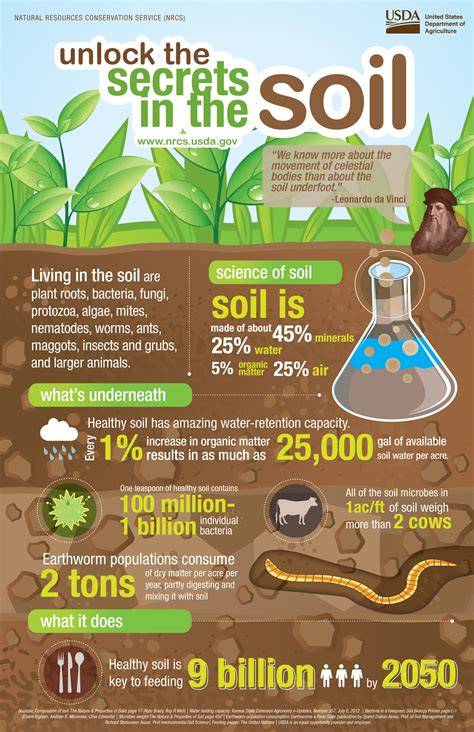
As the world population and food production demands rise, keeping our soil healthy and productive is of paramount importance. By farming using soil health principles and systems that include no-till, cover cropping, and diverse rotations, more and more farmers are increasing their soil’s organic matter and improving microbial activity. The four principles of a soil health management system are: maximize presence of living roots, minimize disturbance, maximize soil cover, and maximize biodiversity. Implementing these systems can lead to increased organic matter, more diverse soil organisms, reduced soil compaction, improved nutrient storage and cycling, and enhanced water infiltration. This makes soils less susceptible to runoff and erosion, providing a buffer for precipitation extremes and potentially lowering input costs over time.
Maximize presence of living roots: the rhizosphere is the most active part of the soil ecosystem where microbial activity fuels nutrient and water cycling. Minimize disturbance: reduced tillage preserves soil structure, organic matter, and moisture, while increasing biodiversity and reducing erosion. Maximize soil cover: year-round cover crops and residues protect against erosion and support soil biology, wildlife, and nutrient retention. Maximize biodiversity: diversified rotations and cover crop mixes support above- and below-ground life, reducing disease and pest problems associated with monocultures. These principles underpin resilient farm systems capable of withstanding climate variability while sustaining yields and profits.
- Maximize Presence of Living Roots
- Minimize Disturbance
- Maximize Soil Cover
- Maximize Biodiversity
The Water, Carbon, and Nutrient cycles are interlinked with soil health, and healthy soils absorb and retain more water, acting as a buffer against drought. Cover crops provide multiple benefits: improving soil structure, enhancing nutrient cycling, protecting against erosion, and offering livestock feed and wildlife habitat. NRCS can assist with cover crop adoption through guidance documents, site-specific planning, and financial programs such as EQIP and CSP.
In rangelands, restoration supports livelihoods and biodiversity, maintaining carbon storage potential and offering a pathway to climate adaptation and mitigation. Effective soil management is foundational to climate resilience, food security, and public health, linking environmental stewardship with human well-being.
Table: Examples of soil health practices and benefits
| Soil Health Benefit | Added Co-benefit | |
|---|---|---|
| No-till or Reduced tillage | Increases organic matter and moisture retention | Reduces fuel and labor costs |
| Cover crops | Improves soil cover, structure, and biodiversity | Provides livestock feed and wildlife habitat |
| Diversified rotations | Boosts microbial diversity and nutrient cycling | Reduces disease pressure |
| Organic manure | Enhances soil fertility without synthetic inputs | Supports sustainable pest management |