Compost is my favorite amendment for improving any soil. It makes heavy soil lighter and improves drainage. In sandy soil, it helps retain moisture. Learning how to improve your soil can be a game changer to any gardener or weekend warrior who thought their soil was impossible to grow in. Starting off with bad soil doesn’t have to be a deal-breaker. In fact, it doesn’t matter if you have impossible, heavy clay soil where water just sits there, and it seems impossible to dig, or loose, sandy soil where water quickly runs right through.
Your soil, any soil, is made up of a combination of up to six components. In sandy soil, water runs through, and we can’t keep our plants hydrated enough.
1. Organic matter: the single most important ingredient
Organic matter is the single most important ingredient to improving any soil. It can make heavy clay soil drain better, easier to dig and not so hard or sticky. A small amount of organic matter added to the soil surface goes a long way. I strive for about an inch of compost or other amendments twice a year. I love nature’s gift to gardeners each fall with all the leaves. I collect and shred them with a mulching mower. While you could add these items directly to your soil, it’s best to store these ingredients somewhere on your property in a pile or bin and allow them to decompose first. The process just described is the essence of making compost-the collective product of all this combined organic matter breaking down en masse, and the single best ingredient for improving any soil. I like to add about an inch of composted organic matter twice a year to all my beds and work it lightly into the soil.
So why does organic matter work so well for both soil extremes? The answer lies in the living network of soil organisms that develop in this mass of biodegradable goodness. The very organisms that break down the raw material into soil particles are the ones creating the ingredients that allow these particulates to bind together in various sizes. In heavy clay, the introduction of organic matter makes soil less dense. Roots can spread more, and breathe. In loose soil, large sandy particles are now sharing space with smaller, stickier particles that create variable sizes and reduce space between particulates beneath the surface. In both cases, the organisms that live and thrive in organic matter are being fed a carbohydrate-rich diet excreted from plant roots and surrounding matter.
2. After adding organic matter: test, balance, and fine-tune
While this could easily be step 1, I like to have this happen after I’ve added organic matter. You can’t go wrong adding organic material to your soil-ever. The simple act of adding organic matter back into the soil will increase the nutrients as a part of that. A soil test that you get through your county extension service is a small investment that offers valuable returns with the information you need to optimize the growing conditions below the surface. But it’s not the end of the story. Even if your soil is nutrient sufficient, unless the soil chemistry is in balance, some of those nutrients will be chemically unavailable. Depending on where you live, the soil will tend towards naturally acidic or alkaline. Once you’re able to adjust the pH level, it will make the soil that you have better at making the nutrients in the soil available to your plants.
3. Ongoing care: don’t neglect the soil
It’s important to keep in mind that while the addition of organic matter is critical to the health of any soil, it’s not something you just apply or mix in one time and forget about it. Mother Nature’s army of microscopic organisms, arthropods and earthworms will do the work of breaking it down, and take it deeper into the soil right where it’s needed. However, if you can work it into the top several inches of existing soil, it will go to work faster and reduce exposure at the surface. Adding an organic fertilizer that promotes above- and below-ground growth, without harming the existing soil organisms with a salt-based product like synthetic fertilizers. No matter how bad your soil is, following these 3 simple steps will make it better. Just continue to work on improving it over time. It’s not a one-time fix but rather a process.
Garden soil types and how they differ
When it comes to growing plants, garden soil vs. other soils is not a simple topic. There are many types of soil. They vary by content, particle size, nutrients, additives, and purpose. Garden soil is one of many labels you will see at your local garden center among the bags of topsoil and potting soil.
What Is Garden Soil?
Any type of soil is a blend of silt clay, sand, and organic matter. Some soil mixes have other materials added, like perlite or sphagnum moss. These other materials are considered soilless. Garden soil is a mixture of true soil and soilless components. It is meant to be used in beds, mixed into existing soil in gardens, or used in very large containers.
What’s in Garden Soil?
Garden soil includes soil and soilless materials. It is made by mixing some soilless components into topsoil. The type of materials and the ratios vary by product and manufacturer. Some of the soilless components of garden soil can include:
- Compost
- Peat
- Coir
- Bark
- Perlite
Garden Soil vs Potting Soil
Garden soil and potting soil are very different and should not be used interchangeably. Potting soil-not to be confused with potting mix, which actually contains no soil-is a mixture of soil with a high organic matter content and soilless components. Potting soil is much lighter than garden soil. Garden soil can quickly become compacted and heavy, while potting soil remains light and aerated, allowing water to drain through it readily.
Garden Soil vs Topsoil
Topsoil is the least expensive and lowest quality soil you’ll find in the garden center. The composition of topsoil varies a lot by product, but it is generally only used to fill in holes, create berms, level out garden areas, or otherwise change the structure of a yard or garden. This is because it is inexpensive, so you can use a lot of topsoil for these larger products. However, it does not contain adequate nutrients or have good enough drainage or aeration to be used to grow plants unless mixed well with better soils.
How to Use Garden Soil
Consider garden soil the choice that falls between inexpensive, low-quality topsoil and expensive, high-quality potting soil. You wouldn’t use it simply to fill spaces or create structure. You also wouldn’t use garden soil as the sole component in containers. Use garden soil to mix into large beds if your soil is of poor quality or is heavy. Mix it with potting soil for larger containers. The best soil for raised garden beds is of good quality but not too expensive because you need a lot of it. Garden soil with a little organic matter or potting soil mixed in is a good choice.
Never use garden soil alone for containers. It will compact too quickly, retain too much water, and restrict drainage and aeration. You can mix it with a high quality potting soil or potting mix for containers. However, the soil leaves a little lot to be desired.
Additional notes: For best results, blend garden soil with compost and organic matter, and consider raised beds when native soil is poor. The key is to introduce a diverse, living soil community through organic materials and mindful testing.
- Turn kitchen and yard waste into a fantastic soil amendment with very little effort. Compost adds both nutrients and organic matter to soil, and it also helps with water retention.
- Composted manure can be a powerful soil amendment, but avoid using fresh manure directly on plants; use aged or composted manure instead.
- Mulch and cover crops are effective for moisture retention, nutrient addition, and soil structure over time.
- Worms and worm castings improve soil structure and nutrient availability; add them to your beds when possible.
- Raised beds provide control over soil quality and drainage, especially in regions with poor native soil.
Soil testing, pH, and nutrients: a quick guide
Soil tests tell you about nutrient levels and pH, guiding amendments for optimal nutrient availability. Vegetable crops grow best in soils with a pH around 6.5-6.8. If your soil is too acidic or too alkaline, adjust with lime or sulfur, but always test first. The big three macronutrients are nitrogen (N), phosphorus (P), and potassium (K), often shown as NPK on fertilizer labels. Organic options to boost these nutrients include aged manure, bone meal, and kelp meal, among others. For calcium and magnesium, test results guide clean, balanced additions.
Fall is the best time to amend with compost and organic matter, giving them winter to break down and enrich the soil by spring. If you miss fall, you can still amend in early spring before planting. For raised beds, combine native soil with rich organic matter to ensure long-term fertility and structure. A simple three-step plan helps: clear rocks and debris, loosen the soil, and add organic matter, ideally 2-3 inches, then mix into the top 6-8 inches. Test and adjust, then plant.
A Step-by-Step Guide to Conducting a Soil Slurry Test for pH & EC Analysis at Home
Practical takeaways and ongoing practice
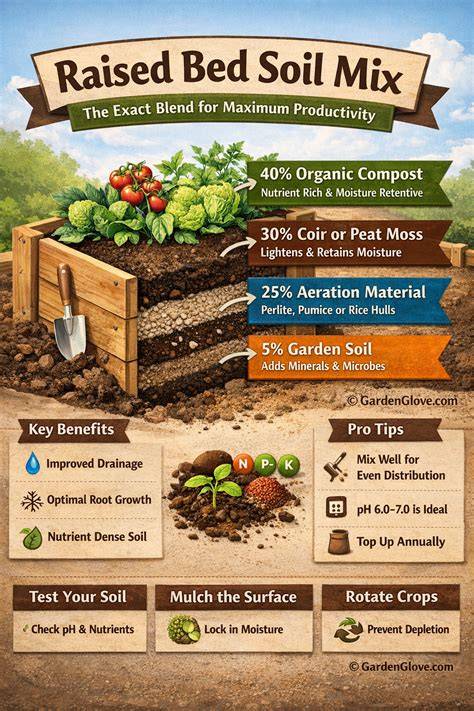
The best formula for raised beds, according to practical experiments, is a 50/50 blend of compost and topsoil, layered or mixed as needed. The exact mix may vary due to local conditions, but the principle remains: diverse, living organic matter supports soil biology, structure, and nutrient availability. The goal is a resilient soil that improves year after year through mindful feeding, testing, and adapting to your garden’s needs.
Miscellaneous tips
When using manure, ensure it is non-toxic to plants and that animals haven’t grazed on sprayed fields. Avoid raw or uncomposted bark or sawdust, which can deplete nitrogen. If you’re unsure of your soil’s characteristics, consider a soil calculator or local extension service for guidance on amendments and quantities.